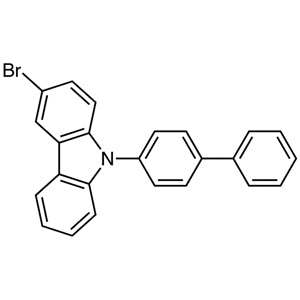
9-(4-Biphenylyl)-2-bromocarbazole is an organic compound widely used in semiconductor material research. This compound plays a crucial role in the development of advanced optoelectronic devices and organic light-emitting diodes (OLEDs). It serves as a building block for creating new materials with unique optical and electronic properties. In the laboratory, it is essential for synthesizing and characterizing compounds that exhibit high conductivity and thermal stability. Its structural complexity, derived from the combination of a carbazole and biphenyl core, makes it a valuable tool in material science research.
The compound's unique properties, including its ability to act as an electron donor or acceptor, make it a preferred choice for semiconductor applications. These properties enable it to function effectively in various electronic systems, enhancing the performance of optoelectronic devices. Its molecular structure provides stability under different experimental conditions, making it reliable for repeated use in research settings. The compound's versatility allows it to be integrated into a wide range of material synthesis processes, supporting innovation in both academic and industrial research.
In Indonesian laboratories, 9-(4-Biphenylyl)-2-bromocarbazole is commonly used in research related to information technology, renewable energy, and innovative materials. Scientists and researchers in universities and research institutions rely on this compound to develop efficient and sustainable optoelectronic devices. Its role in advancing material science in Indonesia underscores its importance in modern scientific exploration and technological development.
TCI brochures (PDF)
- Carbazoles 2025-06-27 · p. 5
- Building Blocks for Organic Semiconductor 2026-03-24 · p. 18
- Organic Light-Emitting Diodes (OLEDs) development benefits from this compound’s ability to enhance light emission efficiency and stability.
- Semiconductor material synthesis requires its unique electronic properties for creating high-performance conductive materials.
- Optoelectronic device characterization relies on its structural stability and optical characteristics for accurate testing.
- Renewable energy research utilizes its conductivity and thermal stability for developing advanced photovoltaic materials.
- Material innovation projects depend on its versatility for creating novel compounds with tailored electronic and optical properties.
| Brand | TCI |
|---|---|
| CAS number | 1393835-87-4 |
| Molecular formula | — |
| Purity | — |
| Category | Materials Science > Material Building Blocks > Small Molecule Semiconductor Building Blocks |
| Pack sizes | Available in standard laboratory quantities as per supplier specifications |
| Physical form | Solid, crystalline appearance |
| Storage | Store in a cool, dry place away from light and moisture |
This compound should be stored in a cool, dry environment, away from direct sunlight and moisture. It is recommended to use airtight containers made of glass or high-density polyethylene to prevent contamination and degradation. Due to its chemical nature, it should be handled with appropriate personal protective equipment, including gloves and safety goggles. Avoid exposure to heat or open flames to ensure safe storage. In laboratory settings, it should be kept in a designated chemical storage cabinet to maintain safety and compliance with standard operating procedures. Always ensure proper ventilation when handling this material to minimize inhalation risks.
—
Produk Terkait
-
9-(4-Biphenylyl)-3-bromocarbazole TCI B4538
Regular price From Rp 1.220.100,00Regular priceRp 868.350,00Sale price From Rp 1.220.100,00 -
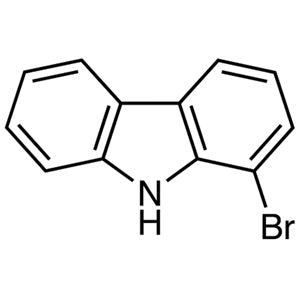
1-Bromocarbazole TCI B4816
Regular price From Rp 1.431.150,00Regular priceRp 1.016.400,00Sale price From Rp 1.431.150,00 -
4-Bromocarbazole TCI B4752
Regular price From Rp 1.510.950,00Regular priceRp 1.072.050,00Sale price From Rp 1.510.950,00 -
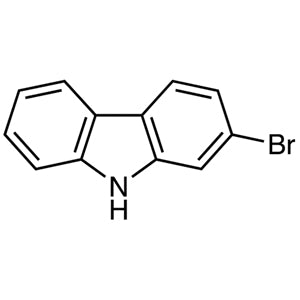
2-Bromocarbazole TCI B4381
Regular price From Rp 2.439.150,00Regular priceRp 1.720.950,00Sale price From Rp 2.439.150,00 -
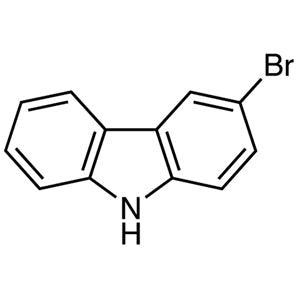
3-Bromocarbazole TCI B3458
Regular price From Rp 3.790.500,00Regular priceRp 2.665.950,00Sale price From Rp 3.790.500,00 -
9-(2'-Bromo-4-biphenylyl)carbazole TCI B5312
Regular price From Rp 1.008.000,00Regular priceRp 720.300,00Sale price From Rp 1.008.000,00 -
9-(4-Biphenylyl)carbazole TCI B5128
Regular price From Rp 848.400,00Regular priceRp 609.000,00Sale price From Rp 848.400,00 -
9-(4-Biphenylyl)-3-(4-bromophenyl)carbazole TCI B5111
Regular price From Rp 1.192.800,00Regular priceRp 849.450,00Sale price From Rp 1.192.800,00