Barium(II) Bis(trifluoromethanesulfonyl)imide is a chemical compound widely used in laboratory settings for its unique catalytic and reagent properties. This inorganic compound plays a crucial role in various chemical reactions and catalytic processes, particularly in the field of inorganic chemistry. Its complex structure and strong ionic characteristics make it a valuable tool for researchers aiming to achieve controlled and stable chemical transformations. The compound is known for its stability under normal conditions, making it a reliable choice for experimental work that requires consistent results.
The compound's non-volatility and high stability contribute to its effectiveness as a reagent in both synthetic and analytical applications. Its ability to act as an efficient ligand ion enhances its utility in catalytic reactions, particularly those involving ionization or complex formation. These properties make it a preferred choice for scientists who require a substance that remains inert yet reactive under specific conditions. The compound's reliability and performance in controlled environments further solidify its position as a key component in modern chemical research.
In Indonesian laboratories, this compound is commonly used in chemical research, especially in catalysis and organic synthesis. Its role in supporting scientific experiments that require precision and consistency is well recognized. As part of the standard chemical tools available through AMI Scientific, it supports a wide range of experimental needs in both academic and industrial research settings.
TCI brochures (PDF)
- Metallic Salts 2025-11-06 · p. 13
Related TCI products
- TCI Z0027 168106-25-0 Zinc(II) Bis(trifluoromethanesulfonyl)imide
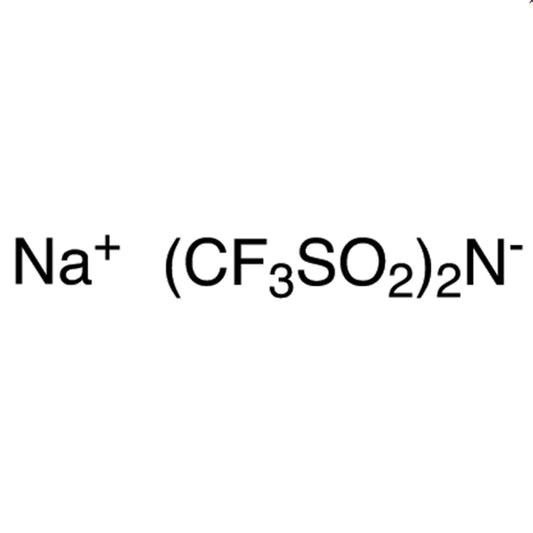
- TCI S0989 91742-21-1 Sodium Bis(trifluoromethanesulfonyl)imide
- TCI P2410 860653-59-4 Potassium (Fluorosulfonyl)(trifluoromethanesulfonyl)imide
- TCI M2861 133395-16-1 Magnesium(II) Bis(trifluoromethanesulfonyl)imide
- TCI L0295 192998-62-2 Lithium (Fluorosulfonyl)(trifluoromethanesulfonyl)imide
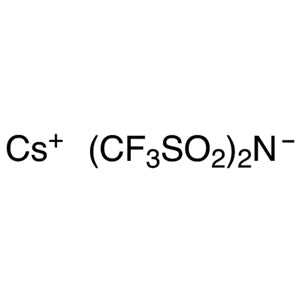
- TCI C3264 91742-16-4 Cesium(I) Bis(trifluoromethanesulfonyl)imide
- Catalytic Reactions: This compound is ideal for catalytic processes due to its strong ionic properties and ability to act as an effective ligand ion, enhancing reaction efficiency and selectivity.
- Organic Synthesis: It is frequently used in organic synthesis to facilitate complex chemical transformations, particularly those requiring controlled ionization and reactivity.
- Inorganic Chemistry Experiments: Its complex structure and stability make it a preferred choice for experiments involving inorganic compounds and ion exchange processes.
- Ionization Studies: The compound's high ionic strength and stability make it suitable for research focused on ionization mechanisms and electrochemical processes.
- Analytical Chemistry: It is used in analytical techniques to provide stable and consistent reagent performance, supporting accurate and reproducible results.
| Brand | TCI |
|---|---|
| CAS number | 168106-22-7 |
| Molecular formula | — |
| Purity | — |
| Category | Chemistry > Catalysis and Inorganic Chemistry > Main-group Elements |
| Pack sizes | Available in various quantities as per standard laboratory requirements |
| Physical form | Solid |
| Storage | Store in a cool, dry place away from moisture and direct sunlight |
This compound should be stored in a cool, dry environment to maintain its stability and prevent degradation. It is recommended to use airtight containers to protect it from moisture and humidity, which can affect its chemical integrity. Due to its ionic nature, it is important to handle it with care to avoid contamination. Proper labeling of storage containers is essential for safety and identification. In laboratory settings, it should be kept away from incompatible substances to ensure safe handling and storage. Regular inspection of storage conditions is advised to maintain optimal performance and safety.
—
Produk Terkait
-
Zinc(II)Bis(trifluoromethanesulfonyl)imide TCI Z0027
Regular price From Rp 1.618.050,00Regular priceRp 1.146.600,00Sale price From Rp 1.618.050,00 -
SodiumBis(trifluoromethanesulfonyl)imide TCI S0989
Regular price From Rp 1.405.950,00Regular priceRp 998.550,00Sale price From Rp 1.405.950,00 -
Potassium(Fluorosulfonyl)(trifluoromethanesulfonyl)imide TCI P2410
Regular price From Rp 2.041.200,00Regular priceRp 1.442.700,00Sale price From Rp 2.041.200,00 -
Magnesium(II)Bis(trifluoromethanesulfonyl)imide TCI M2861
Regular price From Rp 1.351.350,00Regular priceRp 960.750,00Sale price From Rp 1.351.350,00 -
Lithium(Fluorosulfonyl)(trifluoromethanesulfonyl)imide TCI L0295
Regular price From Rp 2.809.800,00Regular priceRp 1.980.300,00Sale price From Rp 2.809.800,00 -
Cesium(I)Bis(trifluoromethanesulfonyl)imide TCI C3264
Regular price Rp 2.384.550,00Regular priceRp 1.683.150,00Sale price Rp 2.384.550,00 -
Calcium(II)Bis(trifluoromethanesulfonyl)imide TCI C3263
Regular price From Rp 1.961.400,00Regular priceRp 1.387.050,00Sale price From Rp 1.961.400,00 -
PotassiumBis(trifluoromethanesulfonyl)imide TCI B2543
Regular price From Rp 717.150,00Regular priceRp 516.600,00Sale price From Rp 717.150,00