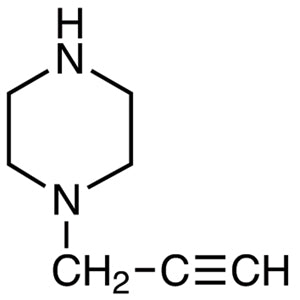
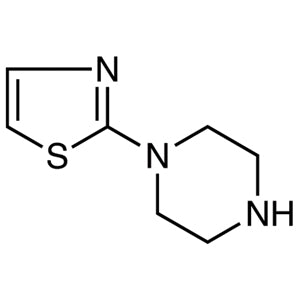
1-(tert-Butoxycarbonyl)-4-(2-propynyl)piperazine is a chemical compound widely used in laboratory settings, particularly in organic synthesis and pharmacological research. This compound plays a crucial role in the development of new chemical entities and pharmaceuticals due to its versatile reactivity. Its unique molecular structure allows for efficient participation in various chemical reactions, making it a valuable tool for chemists and researchers. It is commonly employed in the modification of molecular structures to enhance desired biological properties, such as improved pharmacological activity or selectivity.
The compound's high purity and stable chemical properties make it a preferred choice for laboratory applications. Its ability to form stable intermediates and react selectively with functional groups contributes to its effectiveness in synthetic pathways. The solid form of the compound ensures ease of handling and storage, while its chemical stability allows for reliable performance in controlled experimental conditions. These characteristics ensure consistent results and support the reproducibility of scientific experiments.
In Indonesian laboratories, this compound is utilized by researchers and academic institutions for a wide range of experimental purposes. It is commonly found in chemical, pharmaceutical, and biochemical laboratories where its properties are leveraged for drug development, molecular modification, and analytical studies. Its application requires careful handling and adherence to standard laboratory protocols to ensure safety and accuracy in experimental outcomes.
Related TCI products
- TCI B2415 57260-71-6 1-(tert-Butoxycarbonyl)piperazine
- TCI P2228 52070-67-4 1-(2-Propynyl)piperazine
- TCI T3114 208827-90-1 Triethylene Glycol Mono(2-propynyl) Ether
- TCI P2191 10478-33-8 N-(2-Propynyl)succinimide
- TCI M2757 1240685-26-0 4-(1-Propynyl)phthalic Anhydride
- TCI A0304 140-31-8 N-(2-Aminoethyl)piperazine
- Organic synthesis where the compound serves as a key intermediate in the preparation of complex molecules due to its reactivity and structural versatility.
- Pharmacological research to develop new drugs by modifying molecular structures to enhance biological activity and selectivity.
- Chemical modification processes in laboratories aiming to create compounds with specific functional groups and improved chemical properties.
- Analytical chemistry applications where the compound is used as a reference standard for qualitative and quantitative analysis.
- Biochemical studies involving the synthesis of compounds with potential therapeutic applications in drug discovery and development.
| Brand | TCI |
|---|---|
| CAS number | 199538-99-3 |
| Molecular formula | — |
| Purity | — |
| Category | TCI |
| Pack sizes | Available in various quantities as per standard laboratory supply practices |
| Physical form | Solid |
| Storage | Store in a cool, dry place away from direct sunlight and moisture |
This compound should be stored in a cool, dry environment to maintain its chemical stability and prevent degradation. It is recommended to use airtight containers to protect it from moisture and contaminants. Due to its chemical reactivity, it should be handled with appropriate personal protective equipment, including gloves and safety goggles. In laboratory settings, it is essential to follow standard safety protocols to minimize exposure risks. The compound should not be stored near incompatible materials such as strong acids or bases. Regular monitoring of storage conditions ensures the compound remains in optimal condition for use in research applications.
—
Produk Terkait
-
1-(tert-Butoxycarbonyl)piperazine TCI B2415
Regular price From Rp 1.749.300,00Regular priceRp 1.239.000,00Sale price From Rp 1.749.300,00 -
1-(2-Propynyl)piperazine TCI P2228
Regular price From Rp 2.702.700,00Regular priceRp 1.905.750,00Sale price From Rp 2.702.700,00 -
TriethyleneGlycolMono(2-propynyl)Ether TCI T3114
Regular price From Rp 2.464.350,00Regular priceRp 1.738.800,00Sale price From Rp 2.464.350,00 -
N-(2-Propynyl)succinimide TCI P2191
Regular price From Rp 2.994.600,00Regular priceRp 2.109.450,00Sale price From Rp 2.994.600,00 -
4-(1-Propynyl)phthalicAnhydride TCI M2757
Regular price From Rp 2.597.700,00Regular priceRp 1.816.500,00Sale price From Rp 2.597.700,00 -
N-(2-Aminoethyl)piperazine TCI A0304
Regular price From Rp 557.550,00Regular priceRp 405.300,00Sale price From Rp 557.550,00 -
1-(o-Tolyl)piperazine TCI T3404
Regular price From Rp 1.723.050,00Regular priceRp 1.220.100,00Sale price From Rp 1.723.050,00 -
1-(2-Thiazolyl)piperazine TCI T3273
Regular price Rp 1.378.650,00Regular priceRp 979.650,00Sale price Rp 1.378.650,00