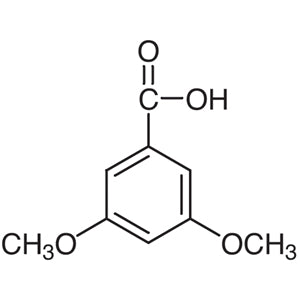
3-Bromo-4,5-dimethoxybenzoic Acid is a versatile organic compound widely used in laboratory settings for its role in synthetic chemistry. This compound serves as a key building block in the creation of complex molecular structures, particularly in the development of aromatic and heterocyclic compounds. Its presence in various chemical reactions makes it an essential tool for researchers aiming to synthesize new materials and pharmaceuticals. Due to its stability and controlled reactivity, it is a preferred choice for a wide range of chemical experiments.
The compound's unique molecular structure, featuring a bromo group and dimethoxy substituents, contributes to its reactivity and specificity. These functional groups enable it to participate in various substitution and electrophilic reactions, such as nitration, sulfonation, and halogen substitution. Its ability to interact with a variety of reagents enhances its utility in synthetic pathways. The predictable behavior of this compound under different reaction conditions makes it a reliable component in laboratory workflows.
In Indonesian laboratories, 3-Bromo-4,5-dimethoxybenzoic Acid is commonly used in organic chemistry research, especially in pharmacological studies and the synthesis of bioactive compounds. It is a staple in academic and industrial research settings, supporting the development of new drugs and materials. Its widespread application in both educational and research institutions highlights its importance in advancing chemical science in Indonesia.
Related TCI products
- Organic synthesis applications benefit from this compound's reactivity and structural versatility, enabling the creation of complex molecules with precise functional groups.
- Pharmaceutical research utilizes it as a building block for synthesizing bioactive compounds, contributing to drug development and medicinal chemistry.
- Heterocyclic compound synthesis leverages its bromo and dimethoxy groups for introducing specific functionalities into ring structures.
- Analytical chemistry uses it as a reference standard for identifying and quantifying similar compounds in complex mixtures.
- Educational laboratories incorporate it into teaching modules to demonstrate synthetic strategies and reaction mechanisms in organic chemistry.
| Brand | TCI |
|---|---|
| CAS number | 20731-48-0 |
| Molecular formula | — |
| Purity | — |
| Category | Chemistry > Building Blocks > Non-Heterocyclic Building Blocks |
| Pack sizes | Available in various quantities as per standard laboratory supply practices |
| Physical form | Solid, typically in crystalline or powder form |
| Storage | Store in a cool, dry place away from light and moisture |
This compound should be stored in a cool, dry environment, away from direct sunlight and moisture to maintain its chemical integrity. It is recommended to use airtight containers made of glass or high-density polyethylene to prevent contamination and degradation. Due to its bromo group, it may react with strong oxidizing agents, so it should be handled with care in the laboratory. Always use appropriate personal protective equipment, such as gloves and safety goggles, when handling this material. It should be kept in a well-ventilated area to minimize exposure to vapors. Proper labeling and storage in designated chemical cabinets are essential for safe laboratory practices.
—
Produk Terkait
-
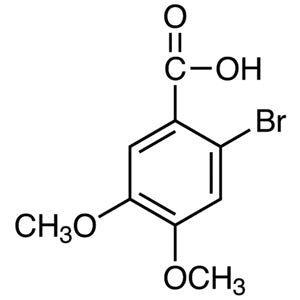
2-Bromo-4,5-dimethoxybenzoicAcid TCI B3891
Regular price From Rp 1.140.300,00Regular priceRp 812.700,00Sale price From Rp 1.140.300,00 -
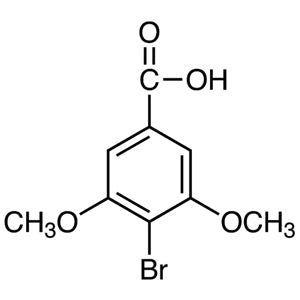
4-Bromo-3,5-dimethoxybenzoicAcid TCI B2838
Regular price From Rp 742.350,00Regular priceRp 534.450,00Sale price From Rp 742.350,00 -
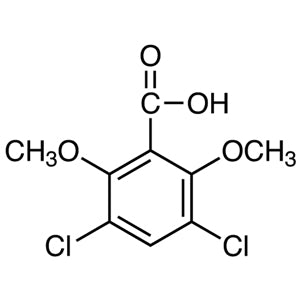
3,5-Dichloro-2,6-dimethoxybenzoicAcid TCI D4133
Regular price Rp 1.618.050,00Regular priceRp 1.146.600,00Sale price Rp 1.618.050,00 -
2,6-DimethoxybenzoicAcid TCI D1959
Regular price Rp 1.351.350,00Regular priceRp 960.750,00Sale price Rp 1.351.350,00 -
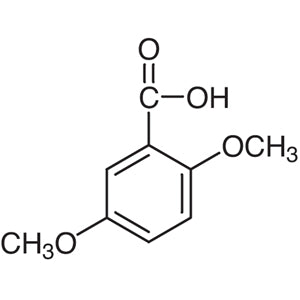
2,5-DimethoxybenzoicAcid TCI D1894
Regular price From Rp 2.068.500,00Regular priceRp 1.461.600,00Sale price From Rp 2.068.500,00 -
2,4-DimethoxybenzoicAcid TCI D1675
Regular price From Rp 662.550,00Regular priceRp 478.800,00Sale price From Rp 662.550,00 -
3,5-DimethoxybenzoicAcid TCI D1534
Regular price From Rp 1.510.950,00Regular priceRp 1.072.050,00Sale price From Rp 1.510.950,00 -
3,4-DimethoxybenzoicAcid TCI D0631
Regular price From Rp 928.200,00Regular priceRp 664.650,00Sale price From Rp 928.200,00