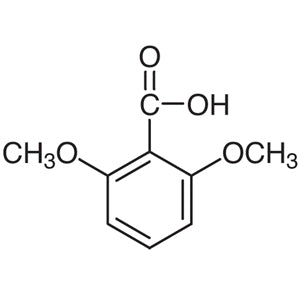
2,6-Dimethoxybenzoic Acid is a chemical compound widely used in laboratory settings for the synthesis of complex molecules. As a key building block in organic chemistry, it plays a crucial role in the development of aromatic compounds and their derivatives. This compound is commonly found in chemical laboratories as a foundational material for creating various organic structures. Its importance lies in its ability to participate in a wide range of chemical reactions, making it an essential tool for researchers and chemists.
The compound is valued for its stable molecular structure and controlled chemical properties, which allow for precise and predictable reactions. It exhibits good solubility in organic solvents, facilitating easy mixing and reaction processes. These characteristics make it a preferred choice for laboratory applications where accuracy and consistency are required. Its non-reactive nature also ensures that it can be safely handled in controlled environments, reducing the risk of unintended side reactions.
In Indonesian laboratories, 2,6-Dimethoxybenzoic Acid is extensively used in chemical research, particularly in the field of organic synthesis. It is a common reagent in academic and research institutions, where it is employed for experiments that demand high precision and reproducibility. Its versatility and reliability make it a staple in both educational and industrial research settings, supporting the advancement of chemical science in the region.
Related TCI products
- TCI B5252 20731-48-0 3-Bromo-4,5-dimethoxybenzoic Acid
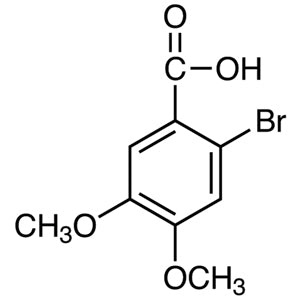
- TCI B3891 6286-46-0 2-Bromo-4,5-dimethoxybenzoic Acid
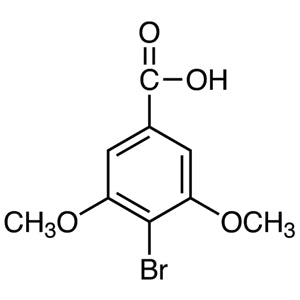
- TCI B2838 56518-42-4 4-Bromo-3,5-dimethoxybenzoic Acid
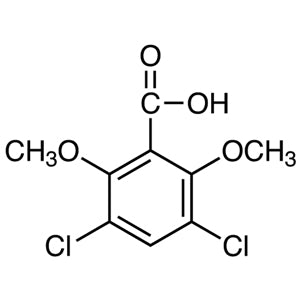
- TCI D4133 73219-91-7 3,5-Dichloro-2,6-dimethoxybenzoic Acid
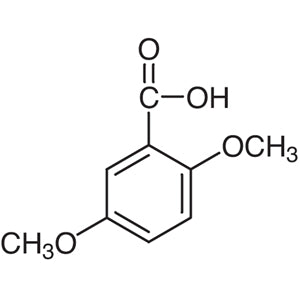
- TCI D1894 2785-98-0 2,5-Dimethoxybenzoic Acid
- TCI D1675 91-52-1 2,4-Dimethoxybenzoic Acid
- Synthesis of complex aromatic compounds due to its structural versatility and reactivity in organic reactions.
- Pharmaceutical research for the development of new drugs, as it can be used as a precursor in the synthesis of bioactive molecules.
- Organic chemistry experiments in academic settings where students and researchers need a reliable building block for molecular construction.
- Development of chemical intermediates for industrial applications, as it provides a stable and controllable starting material.
- Analytical chemistry processes requiring precise chemical reactions, where its predictable behavior ensures accurate results.
| Brand | TCI |
|---|---|
| CAS number | 1466-76-8 |
| Molecular formula | — |
| Purity | — |
| Category | Chemistry > Building Blocks > Non-Heterocyclic Building Blocks |
| Pack sizes | Available in various quantities as per standard laboratory supply options |
| Physical form | Solid, typically in crystalline or powder form |
| Storage | Store in a cool, dry place away from direct sunlight and moisture |
This compound should be stored in a cool, dry environment to maintain its stability and prevent degradation. It is recommended to keep it in a sealed container to avoid exposure to moisture and air, which could affect its chemical integrity. Suitable storage containers include glass or high-density polyethylene vessels that are resistant to chemical reactions. In laboratory settings, it is important to handle the compound with appropriate personal protective equipment, such as gloves and safety goggles, to ensure safety. Due to its non-reactive nature, it does not require special handling beyond standard chemical safety protocols. Regular monitoring of storage conditions will help maintain its quality and usability for research purposes.
—
Produk Terkait
-
3-Bromo-4,5-dimethoxybenzoicAcid TCI B5252
Regular price From Rp 1.829.100,00Regular price -
2-Bromo-4,5-dimethoxybenzoicAcid TCI B3891
Regular price From Rp 1.087.800,00Regular price -
4-Bromo-3,5-dimethoxybenzoicAcid TCI B2838
Regular price From Rp 689.850,00Regular price -
3,5-Dichloro-2,6-dimethoxybenzoicAcid TCI D4133
Regular price Rp 1.565.550,00Regular price -
2,5-DimethoxybenzoicAcid TCI D1894
Regular price From Rp 2.016.000,00Regular price -
2,4-DimethoxybenzoicAcid TCI D1675
Regular price From Rp 610.050,00Regular price -
3,5-DimethoxybenzoicAcid TCI D1534
Regular price From Rp 1.458.450,00Regular price -
3,4-DimethoxybenzoicAcid TCI D0631
Regular price From Rp 875.700,00Regular price