6-Bromo-2-benzoxazolinone is a chemical compound widely used in organic laboratory reactions. It is a versatile reagent that plays a crucial role in the synthesis of heterocyclic compounds, which are fundamental in pharmaceutical and material sciences. Its unique molecular structure makes it an essential component for researchers aiming to develop new drugs or functional materials. Due to its chemical reactivity, it is frequently employed in synthetic pathways that require precise control over reaction conditions.
This compound is valued for its stability under controlled laboratory conditions, making it a reliable choice for synthetic processes. It exhibits solubility in various solvents, which enhances its applicability across different experimental setups. Its sensitivity to temperature and humidity necessitates careful handling, but when properly managed, it remains a preferred reagent for complex chemical transformations. Its chemical properties allow it to participate in a wide range of reactions, contributing to the advancement of organic chemistry and medicinal research.
In Indonesian laboratories, 6-Bromo-2-benzoxazolinone is commonly used in organic chemistry and pharmacology research. It is a key material for academic and industrial experiments that require the synthesis of complex molecules. Many research institutions and universities rely on this compound for its role in drug development and material innovation. Its presence in laboratory workflows highlights its importance in both educational and applied scientific contexts.
- Organic synthesis is a primary application where this compound is used to create heterocyclic structures essential for pharmaceutical development.
- Medicinal chemistry research benefits from its reactivity, enabling the design of novel drug molecules with specific biological activities.
- Material science experiments utilize its chemical properties to develop advanced polymers and functional materials.
- Educational institutions incorporate it into advanced chemistry courses to teach synthetic methodologies and molecular design.
- Pharmaceutical research labs use it in the development of new therapeutic agents, leveraging its structural versatility in drug synthesis.
| Brand | TCI |
|---|---|
| CAS number | 19932-85-5 |
| Molecular formula | — |
| Purity | — |
| Category | TCI |
| Pack sizes | — |
| Physical form | — |
| Storage | Requires controlled temperature and humidity conditions |
This compound should be stored in a cool, dry place away from direct sunlight and sources of heat. It is recommended to use airtight containers to prevent exposure to moisture and air, which can affect its stability. Due to its sensitivity to environmental conditions, it should be kept in a controlled laboratory environment with appropriate humidity and temperature monitoring. Proper labeling and secure storage are essential to ensure safety and maintain its chemical integrity. Always handle with care, using appropriate personal protective equipment to minimize risk during experimentation.
—
Produk Terkait
-
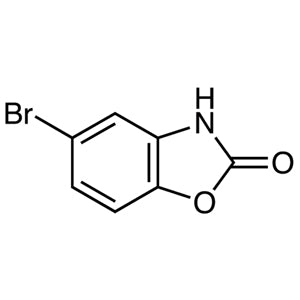
5-Bromo-2-benzoxazolinone TCI B4438
Regular price From Rp 1.220.100,00Regular priceRp 868.350,00Sale price From Rp 1.220.100,00 -
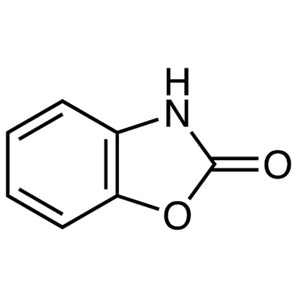
2-Benzoxazolinone TCI B0506
Regular price Rp 1.378.650,00Regular priceRp 979.650,00Sale price Rp 1.378.650,00 -
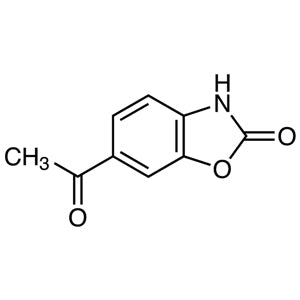
6-Acetyl-2-benzoxazolinone TCI A2907
Regular price From Rp 1.272.600,00Regular priceRp 905.100,00Sale price From Rp 1.272.600,00 -
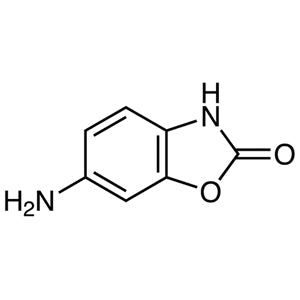
6-Amino-2-benzoxazolinone TCI A2874
Regular price Rp 2.757.300,00Regular priceRp 1.943.550,00Sale price Rp 2.757.300,00 -
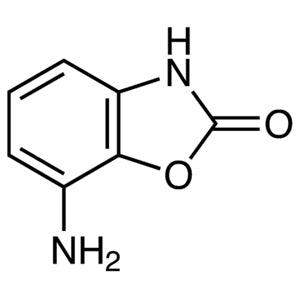
7-Amino-2-benzoxazolinone TCI A2806
Regular price From Rp 1.246.350,00Regular priceRp 887.250,00Sale price From Rp 1.246.350,00 -
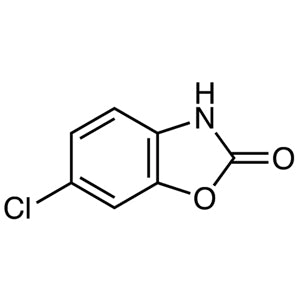
6-Chloro-2-benzoxazolinone TCI C2378
Regular price Rp 1.351.350,00Regular priceRp 960.750,00Sale price Rp 1.351.350,00 -
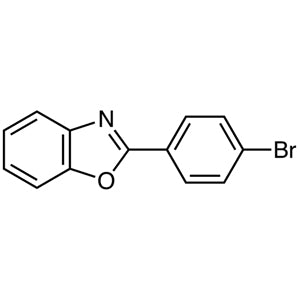
2-(4-Bromophenyl)benzoxazole TCI B5017
Regular price From Rp 717.150,00Regular priceRp 516.600,00Sale price From Rp 717.150,00 -
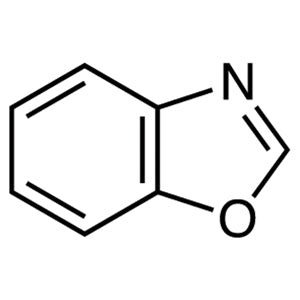
Benzoxazole TCI B0095
Regular price Rp 1.881.600,00Regular priceRp 1.331.400,00Sale price Rp 1.881.600,00