1-Butyl-1-methylpyrrolidinium Tetrafluoroborate is an organic salt belonging to the family of ionic liquids, built from a pyrrolidinium cation bearing both a butyl and a methyl substituent, paired with a tetrafluoroborate anion. Unlike conventional inorganic salts, materials in this class have their ionic interactions disrupted by the bulky, asymmetric shape of the organic cation, which produces distinctive dissolution behaviour and ion-transport characteristics. In the laboratory, this compound is used as a reaction medium, as an electrolyte, and as a subject of study in its own right within green chemistry and electrochemistry research that seeks alternatives to volatile organic solvents.
The property that makes this material attractive is its saturated, non-aromatic pyrrolidinium cation, which generally offers a wide electrochemical stability window together with good resistance to reduction. This characteristic is precisely why the pyrrolidinium family has been so extensively studied for energy storage systems, where an electrolyte must survive across a broad potential range without decomposing. As an organic salt, the material is practically non-volatile under ordinary laboratory conditions, which reduces the release of solvent vapour into the working atmosphere. The tetrafluoroborate anion, however, requires its own careful consideration during handling and use.
In Indonesian laboratories, this ionic liquid is typically encountered in university research groups, institutional electrochemistry facilities, and materials science programmes working on energy storage and green solvent chemistry. It is normally used at small scale on the bench, in glove boxes, or in electrochemical cells rather than in bulk process work. Researchers commonly select it when a reaction or measurement needs a non-volatile medium, or when the study itself concerns the behaviour of the ionic liquid.
TCI brochures (PDF)
- Ionic Liquids 2026-06-08 · p. 11
- Boron Compounds 2025-10-07 · p. 26
Related TCI products
- TCI E0977 117947-85-0 1-Ethyl-1-methylpyrrolidinium Tetrafluoroborate
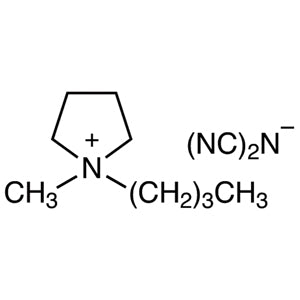
- TCI B5453 370865-80-8 1-Butyl-1-methylpyrrolidinium Dicyanamide
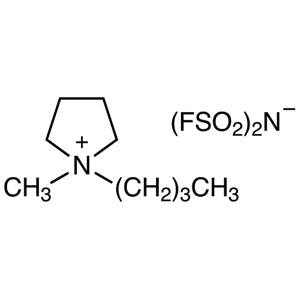
- TCI B5398 1057745-51-3 1-Butyl-1-methylpyrrolidinium Bis(fluorosulfonyl)imide
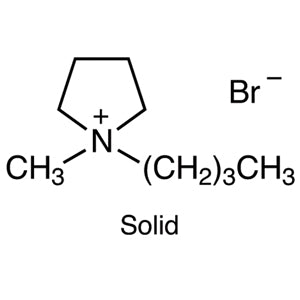
- TCI B3427 93457-69-3 1-Butyl-1-methylpyrrolidinium Bromide
- TCI B3358 479500-35-1 1-Butyl-1-methylpyrrolidinium Chloride
- TCI B2851 223437-11-4 1-Butyl-1-methylpyrrolidinium Bis(trifluoromethanesulfonyl)imide
- Electrolyte formulation for energy storage research, where the wide electrochemical stability window of the pyrrolidinium cation allows charging and discharging studies across a broad potential range without electrolyte breakdown.
- Non-volatile reaction medium in green chemistry investigations, replacing volatile organic solvents so that vapour release into the working atmosphere is substantially reduced during extended reaction runs.
- Electrochemical measurement studies such as voltammetry and impedance work, where the distinctive ion-transport behaviour of the disrupted ionic lattice makes the medium itself an informative variable.
- Fundamental physicochemical characterisation of ionic liquids, in which the compound serves as a well-defined reference member of the pyrrolidinium tetrafluoroborate family for comparative property studies.
- Synthetic chemistry applications requiring a solvating environment different from conventional molecular solvents, exploiting the unusual dissolution behaviour that arises from the bulky, asymmetric organic cation.
| Brand | TCI (Tokyo Chemical Industry) |
|---|---|
| CAS number | 345984-11-4 |
| Molecular formula | — |
| Purity | — |
| Category | Chemistry > Specialty Synthesis > Ionic Liquids [Specialty Synthesis] |
| Pack sizes | available in standard TCI research-scale packaging; please confirm the current pack options when ordering |
| Physical form | — |
| Storage | keep in a tightly closed original container in a cool, dry place away from moisture |
- Product code: B6277
Store the container tightly closed in a cool, dry area, protected from moisture, since the tetrafluoroborate anion warrants careful handling and the material should be kept away from humid air. Keep the product in its original supplier container or in a chemically compatible, well-sealed vessel; transfer and weighing are best carried out in a fume hood or, for moisture-sensitive work, inside a glove box. Wear a laboratory coat, safety glasses, and suitable chemical-resistant gloves during handling. Label all secondary containers clearly, avoid contact with skin and eyes, and consult the manufacturer's safety data sheet before first use and before disposal of any residues or contaminated materials.
—
Produk Terkait
-
1-Ethyl-1-methylpyrrolidiniumTetrafluoroborate TCI E0977
Regular price From Rp 2.100.000,00Regular priceRp 1.445.000,00Sale price From Rp 2.100.000,00 -
1-Butyl-1-methylpyrrolidiniumDicyanamide TCI B5453
Regular price From Rp 2.256.000,00Regular priceRp 1.551.000,00Sale price From Rp 2.256.000,00 -
1-Butyl-1-methylpyrrolidiniumBis(fluorosulfonyl)imide TCI B5398
Regular price Rp 3.475.000,00Regular priceRp 2.380.000,00Sale price Rp 3.475.000,00 -
1-Butyl-1-methylpyrrolidiniumBromide TCI B3427
Regular price From Rp 1.063.000,00Regular priceRp 739.000,00Sale price From Rp 1.063.000,00 -
1-Butyl-1-methylpyrrolidiniumChloride TCI B3358
Regular price From Rp 1.296.000,00Regular priceRp 898.000,00Sale price From Rp 1.296.000,00 -
1-Butyl-1-methylpyrrolidiniumBis(trifluoromethanesulfonyl)imide TCI B2851
Regular price From Rp 1.841.000,00Regular priceRp 1.268.000,00Sale price From Rp 1.841.000,00 -
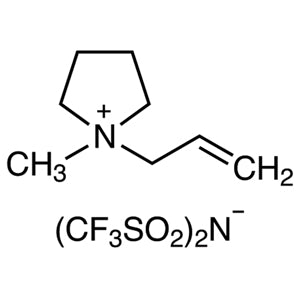
1-Allyl-1-methylpyrrolidiniumBis(trifluoromethanesulfonyl)imide TCI A3089
Regular price Rp 2.749.000,00Regular priceRp 1.886.000,00Sale price Rp 2.749.000,00 -
1-(2-Methoxyethyl)-1-methylpyrrolidiniumBis(fluorosulfonyl)imide TCI M2998
Regular price From Rp 2.204.000,00Regular priceRp 1.515.000,00Sale price From Rp 2.204.000,00