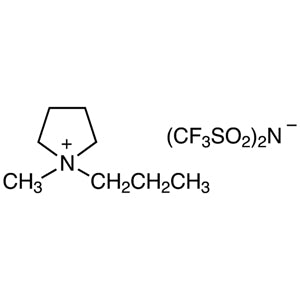
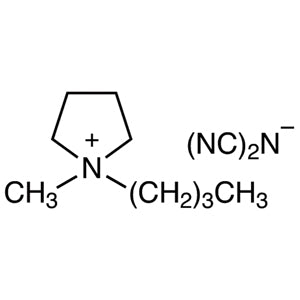
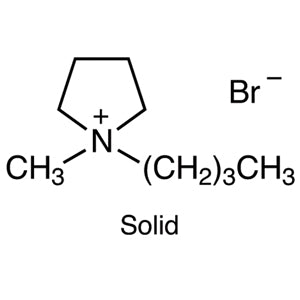
1-Butyl-1-methylpyrrolidinium Bis(trifluoromethanesulfonyl)imide is an ionic liquid widely used in specialized chemical reactions within laboratory settings. As a unique type of ionic liquid, it consists of a stable cation and anion, making it a versatile compound for various synthetic processes. This material is particularly valued for its non-volatile nature, which allows it to function as a safe and efficient alternative to traditional organic solvents. Its chemical stability and low reactivity make it a reliable choice for experiments requiring controlled environments.
The properties of this ionic liquid, including its thermal stability and non-flammable characteristics, make it a preferred choice for many laboratory applications. Unlike conventional solvents, it does not evaporate, reducing the risk of exposure and environmental contamination. Its inert nature also means it does not react with most substances, ensuring the integrity of chemical reactions. Additionally, its ability to remain stable under high temperatures and vacuum conditions makes it suitable for a wide range of experimental setups.
In Indonesian laboratories, this ionic liquid is commonly used in organic chemistry research and specialized synthesis. It is favored by research institutions and universities for its non-toxic and non-hazardous properties, which align with modern safety standards. Its use in these settings supports the development of new chemical compounds and processes while maintaining a safe and controlled laboratory environment.
TCI brochures (PDF)
- Ionic Liquids for Battery Research 2026-04-13 · p. 2
- Ionic Liquids 2026-06-08 · p. 11
- Quaternary Ammonium Salts 2025-11-10 · p. 10
Related TCI products
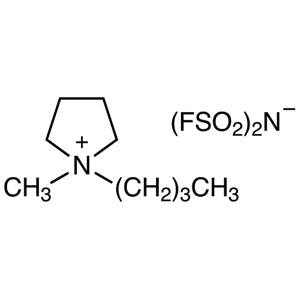
- TCI B5398 1057745-51-3 1-Butyl-1-methylpyrrolidinium Bis(fluorosulfonyl)imide
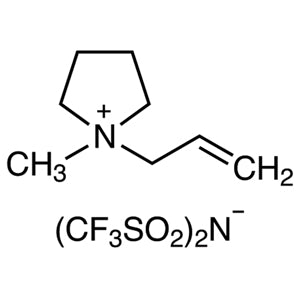
- TCI A3089 1059624-23-5 1-Allyl-1-methylpyrrolidinium Bis(trifluoromethanesulfonyl)imide
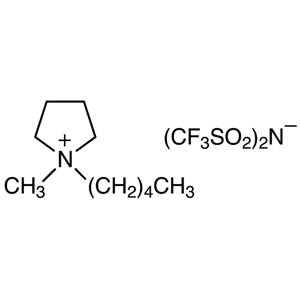
- TCI M3118 380497-17-6 1-Methyl-1-pentylpyrrolidinium Bis(trifluoromethanesulfonyl)imide
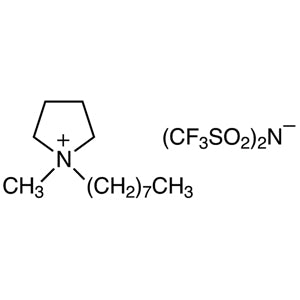
- TCI M3117 927021-43-0 1-Methyl-1-n-octylpyrrolidinium Bis(trifluoromethanesulfonyl)imide
- TCI M2998 1235234-47-5 1-(2-Methoxyethyl)-1-methylpyrrolidinium Bis(fluorosulfonyl)imide
- TCI M2098 223437-05-6 1-Methyl-1-propylpyrrolidinium Bis(trifluoromethanesulfonyl)imide
- Organic synthesis experiments benefit from this ionic liquid due to its non-volatile and non-reactive nature, making it ideal for high-temperature and vacuum conditions.
- It is widely used in catalytic reactions where a stable and inert solvent is required to maintain reaction efficiency and product purity.
- The material supports green chemistry initiatives by replacing traditional solvents that may be harmful or environmentally damaging.
- In electrochemical studies, its thermal stability and low volatility make it a suitable medium for conducting experiments under controlled conditions.
- It is employed in polymer science for dissolving and processing materials that are not soluble in conventional solvents.
| Brand | TCI |
|---|---|
| CAS number | 223437-11-4 |
| Molecular formula | — |
| Purity | — |
| Category | Chemistry > Specialty Synthesis > Ionic Liquids |
| Pack sizes | Available in various sizes as per supplier specifications |
| Physical form | Liquid |
| Storage | Store in a cool, dry place away from direct sunlight |
This ionic liquid should be stored in a cool, dry place, away from direct sunlight and sources of heat. It is recommended to use sealed containers made of materials compatible with its chemical properties to prevent contamination and evaporation. Since it is non-volatile, it does not require special containment, but proper labeling is essential for safety. In laboratory settings, it should be handled with standard chemical safety procedures, including the use of personal protective equipment. Its inert nature reduces the risk of chemical reactions, but care should still be taken to avoid spills and ensure proper disposal in accordance with environmental regulations.
—
Produk Terkait
-
1-Butyl-1-methylpyrrolidiniumBis(fluorosulfonyl)imide TCI B5398
Regular price Rp 3.551.100,00Regular priceRp 2.499.000,00Sale price Rp 3.551.100,00 -
1-Allyl-1-methylpyrrolidiniumBis(trifluoromethanesulfonyl)imide TCI A3089
Regular price Rp 2.809.800,00Regular priceRp 1.980.300,00Sale price Rp 2.809.800,00 -
1-Methyl-1-pentylpyrrolidiniumBis(trifluoromethanesulfonyl)imide TCI M3118
Regular price From Rp 955.500,00Regular priceRp 683.550,00Sale price From Rp 955.500,00 -
1-Methyl-1-n-octylpyrrolidiniumBis(trifluoromethanesulfonyl)imide TCI M3117
Regular price From Rp 3.021.900,00Regular priceRp 2.128.350,00Sale price From Rp 3.021.900,00 -
1-(2-Methoxyethyl)-1-methylpyrrolidiniumBis(fluorosulfonyl)imide TCI M2998
Regular price From Rp 2.252.250,00Regular priceRp 1.590.750,00Sale price From Rp 2.252.250,00 -
1-Methyl-1-propylpyrrolidiniumBis(trifluoromethanesulfonyl)imide TCI M2098
Regular price From Rp 2.093.700,00Regular priceRp 1.479.450,00Sale price From Rp 2.093.700,00 -
1-Butyl-1-methylpyrrolidiniumDicyanamide TCI B5453
Regular price From Rp 2.306.850,00Regular priceRp 1.628.550,00Sale price From Rp 2.306.850,00 -
1-Butyl-1-methylpyrrolidiniumBromide TCI B3427
Regular price From Rp 1.087.800,00Regular priceRp 775.950,00Sale price From Rp 1.087.800,00