![1-(1H-Benzo[d]imidazol-2-yl)ethan-1-one (CAS 939-70-8) - TCI B6769 - AMI Scientific](http://amiscientific.com/cdn/shop/files/TCI2510B6769.jpg?v=1769144611&width=1946)
![1-(1H-Benzo[d]imidazol-2-yl)ethan-1-one (CAS 939-70-8) - TCI B6769 - AMI Scientific](http://amiscientific.com/cdn/shop/files/TCI2510B6769.jpg?v=1769144611&width=1445)
1-(1H-Benzo[d]imidazol-2-yl)ethan-1-one, also known as 2-acetylbenzimidazole, is a heterocyclic compound that places a methyl ketone group directly at the 2-position of the benzimidazole ring. In organic chemistry and coordination chemistry laboratories, this compound serves as a versatile building block because it presents two reactive regions at once: a carbonyl group ready to react with nucleophiles, and a benzimidazole core that supplies a donor nitrogen atom along with an NH group capable of forming hydrogen bonds. This combination makes it a practical starting material for a wide range of synthetic routes.
The property that makes it a frequent choice is the reactivity of its carbonyl group, which is enhanced by the electron-withdrawing character of the benzimidazole ring, so that condensation reactions with amines, hydrazines, and hydroxylamines proceed readily to form imines, hydrazones, and oximes. These condensation products are generally excellent chelating ligands because they combine the benzimidazole nitrogen with the newly formed imine nitrogen. The benzimidazole core itself is a well-established pharmacophore motif found in many bioactive compounds, which makes the resulting derivatives attractive candidates for activity screening.
In Indonesian laboratories, this building block is typically used in university research groups and institutional research units working on organic synthesis, coordination chemistry, and early-stage medicinal chemistry. It suits bench-scale condensation work, ligand preparation, and the assembly of small compound libraries for subsequent characterisation and screening. Because it is supplied as a defined single compound from an established catalogue source, it fits well into teaching laboratories and research programmes that require reproducible starting materials for method development and student project work.
Related TCI products
- TCI M3886 31349-48-1 4-(1-Methyl-5-nitro-1H-benzo[d]imidazol-2-yl)butanoic Acid
- TCI I1252 10041-06-2 1-[4-(1H-Imidazol-1-yl)phenyl]ethan-1-one
- TCI H1875 6504-13-8 4-(1H-Benzo[d]imidazol-2-yl)phenol
- TCI D6250 13676-49-8 2-(3-Aminophenyl)-1H-benzo[d]imidazol-5-amine
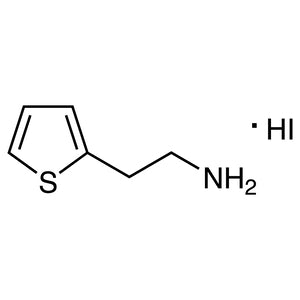
- TCI A3720 2414055-94-8 2-(Thiophen-2-yl)ethan-1-amine Hydroiodide
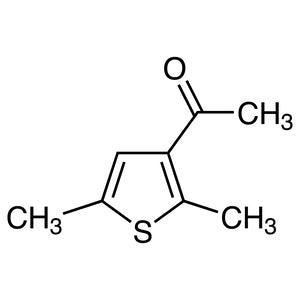
- TCI A3587 2530-10-1 1-(2,5-Dimethylthiophen-3-yl)ethan-1-one
- Schiff base ligand synthesis: the activated carbonyl condenses readily with primary amines, giving imine ligands that chelate through both benzimidazole and imine nitrogen atoms.
- Hydrazone preparation: reaction with hydrazines proceeds easily at the ketone position, producing hydrazone derivatives widely used as multidentate ligands and screening candidates.
- Oxime formation: treatment with hydroxylamine converts the methyl ketone into an oxime, giving an additional donor site for coordination chemistry studies.
- Metal complex assembly: condensation products derived from this compound act as excellent chelators, making it a practical precursor for preparing transition metal complexes.
- Medicinal chemistry exploration: because benzimidazole is an established pharmacophore, derivatives built from this ketone are attractive targets for bioactivity testing programmes.
| Brand | TCI |
|---|---|
| CAS number | 939-70-8 |
| Molecular formula | — |
| Purity | — |
| Category | Chemistry > Building Blocks > Heterocyclic Building Blocks |
| Pack sizes | available in standard TCI catalogue pack sizes; please confirm the current option when ordering |
| Physical form | — |
| Storage | store in a cool, dry place in the tightly closed original container |
- Catalogue number: B6769
Store the material in its tightly closed original container in a cool, dry, well-ventilated area, away from direct sunlight, moisture, and sources of ignition. Keep it separated from strong oxidising agents and from reactive nucleophiles such as amines and hydrazines, since the carbonyl group readily undergoes condensation. Handle the compound in a fume hood using standard personal protective equipment, including safety goggles, a laboratory coat, and suitable chemical-resistant gloves. Avoid generating or inhaling dust during weighing and transfer, and reseal the container promptly after use. Always consult the manufacturer's safety data sheet before handling, and dispose of residues and contaminated materials according to applicable laboratory waste procedures.
—
Produk Terkait
-
4-(1-Methyl-5-nitro-1H-benzo[d]imidazol-2-yl)butanoicAcid TCI M3886
Regular price Rp 4.028.850,00Regular priceRp 2.832.900,00Sale price Rp 4.028.850,00 -
1-[4-(1H-Imidazol-1-yl)phenyl]ethan-1-one TCI I1252
Regular price Rp 2.359.350,00Regular priceRp 1.665.300,00Sale price Rp 2.359.350,00 -
4-(1H-Benzo[d]imidazol-2-yl)phenol TCI H1875
Regular price Rp 2.173.500,00Regular priceRp 1.535.100,00Sale price Rp 2.173.500,00 -
2-(3-Aminophenyl)-1H-benzo[d]imidazol-5-amine TCI D6250
Regular price Rp 2.279.550,00Regular priceRp 1.609.650,00Sale price Rp 2.279.550,00 -
2-(Thiophen-2-yl)ethan-1-amineHydroiodide TCI A3720
Regular price Rp 1.431.150,00Regular priceRp 1.016.400,00Sale price Rp 1.431.150,00 -
1-(2,5-Dimethylthiophen-3-yl)ethan-1-one TCI A3587
Regular price Rp 2.411.850,00Regular priceRp 1.702.050,00Sale price Rp 2.411.850,00 -
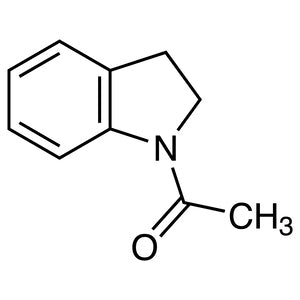
1-(Indolin-1-yl)ethan-1-one TCI A3508
Regular price Rp 1.405.950,00Regular priceRp 998.550,00Sale price Rp 1.405.950,00 -
2-(4-Methylpiperazin-1-yl)ethan-1-amine TCI M3597
Regular price Rp 1.538.250,00Regular priceRp 1.090.950,00Sale price Rp 1.538.250,00
![31349-48-1 4-(1-Methyl-5-nitro-1H-benzo[d]imidazol-2-yl)butanoic Acid - AMI Scientific](http://amiscientific.com/cdn/shop/files/TCI2510M3886.jpg?v=1769181080&width=533)
![10041-06-2 1-[4-(1H-Imidazol-1-yl)phenyl]ethan-1-one - AMI Scientific](http://amiscientific.com/cdn/shop/files/TCI2510I1252.jpg?v=1767120996&width=533)
![6504-13-8 4-(1H-Benzo[d]imidazol-2-yl)phenol - AMI Scientific](http://amiscientific.com/cdn/shop/files/TCI2510H1875.jpg?v=1768360853&width=533)
![2-(3-Aminophenyl)-1H-benzo[d]imidazol-5-amine (CAS 13676-49-8) - TCI D6250 - AMI Scientific](http://amiscientific.com/cdn/shop/files/TCI2510D6250.jpg?v=1768818579&width=533)