2-Chloroanthraquinone from TCI is an anthraquinone derivative that carries a single chlorine atom at the 2-position of its aromatic ring system. In the laboratory, it serves as a non-heterocyclic building block for constructing more complex molecules based on the anthraquinone framework. The anthraquinone skeleton is widely known as the core of many dyes, pigments, and photoactive compounds. For this reason, the material is a common starting point for researchers in organic chemistry, materials chemistry, and dye chemistry who want to modify the anthraquinone structure in a controlled way.
The main appeal of 2-Chloroanthraquinone is that it combines two kinds of functionality in one molecule. The chlorine atom on the aromatic ring can be replaced through substitution reactions or transition-metal-catalysed coupling reactions, so amine, ether, or new carbon groups can be installed at that position. The two quinone carbonyl groups give the molecule distinctive redox behaviour and light absorption, which makes its derivatives attractive for photochemical and electrochemical studies. The flat, rigid framework also makes the compound well suited to designing molecules with specific optical properties.
In Indonesian laboratories, this material is relevant to university organic synthesis groups, materials science research centres, and industrial R&D teams working on colourants, functional dyes, and redox-active organic compounds. Researchers can use it to prepare substituted anthraquinone libraries, to explore structure–property relationships in light-absorbing molecules, or as a reference intermediate in teaching and thesis projects. Because it comes from TCI, a well-established reagent brand, it gives laboratories a dependable starting material for reproducible synthetic work.
- Synthesis of substituted anthraquinones: the chlorine at the 2-position can be replaced by amine, ether, or carbon groups, giving direct access to a range of functionalised anthraquinone derivatives.
- Transition-metal-catalysed coupling research: the aryl chloride works as a coupling partner, so researchers can build new carbon–carbon or carbon–heteroatom bonds onto the rigid anthraquinone core.
- Dye and pigment development: anthraquinone is a classic chromophore core, so this building block helps chemists design and test new colourants with tuned absorption properties.
- Photochemistry studies: the quinone carbonyl groups and conjugated aromatic system absorb light in a characteristic way, which makes derivatives useful for investigating photoactive and light-responsive molecules.
- Electrochemical and redox research: the quinone unit undergoes characteristic redox processes, so derivatives prepared from this compound suit studies of redox-active organic materials and electron-transfer behaviour.
| Brand | TCI (product code C0123) |
|---|---|
| CAS number | 131-09-9 |
| Molecular formula | — |
| Purity | — |
| Category | Chemistry > Building Blocks > Non-Heterocyclic Building Blocks |
| Pack sizes | available in TCI's standard pack sizes; check the product listing for the current options |
| Physical form | solid; refer to TCI's product documentation for full physical data |
| Storage | keep tightly closed in a cool, dry place as directed on the TCI label and Safety Data Sheet (SDS) |
Store 2-Chloroanthraquinone in its original, tightly sealed container in a cool, dry, well-ventilated area, away from direct sunlight, heat sources, and incompatible materials such as strong oxidising agents. Label any secondary containers clearly, using chemically resistant glass or suitable plastic. Handle the material with standard laboratory protective equipment, including gloves, safety glasses, and a lab coat, and weigh or transfer it in a fume hood or ventilated enclosure to avoid inhaling dust. Avoid contact with skin and eyes, and wash your hands after handling. Always read the TCI Safety Data Sheet before use, and dispose of residues and waste according to local regulations and your institution's procedures.
—
Produk Terkait
-
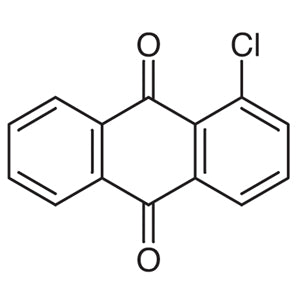
1-Chloroanthraquinone TCI C0653
Regular price Rp 742.350,00Regular priceRp 534.450,00Sale price Rp 742.350,00 -
Anthraquinone TCI A0502
Regular price From Rp 477.750,00Regular priceRp 333.900,00Sale price From Rp 477.750,00 -
Anthraquinone-2-carbonylChloride TCI A0503
Regular price From Rp 3.232.950,00Regular priceRp 2.276.400,00Sale price From Rp 3.232.950,00 -
Anthraquinone-2-carboxylicAcid TCI A0504
Regular price From Rp 2.942.100,00Regular priceRp 2.072.700,00Sale price From Rp 2.942.100,00 -
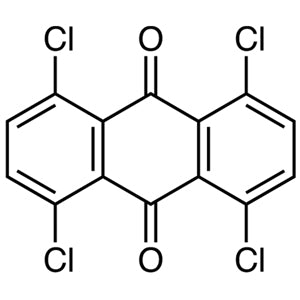
1,4,5,8-Tetrachloroanthraquinone TCI T3300
Regular price From Rp 4.081.350,00Regular priceRp 2.869.650,00Sale price From Rp 4.081.350,00 -
1,4-Anthraquinone TCI A2686
Regular price From Rp 2.518.950,00Regular priceRp 1.776.600,00Sale price From Rp 2.518.950,00 -
1-(Methylamino)anthraquinone TCI M0255
Regular price From Rp 1.723.050,00Regular priceRp 1.220.100,00Sale price From Rp 1.723.050,00 -
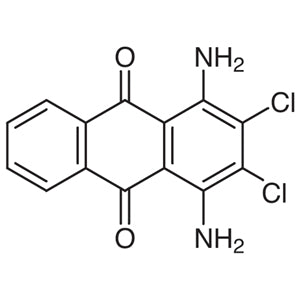
1,4-Diamino-2,3-dichloroanthraquinone TCI D2725
Regular price From Rp 637.350,00Regular priceRp 460.950,00Sale price From Rp 637.350,00