3-Chloropropionic Acid from TCI (product code C0276, CAS 107-94-8) is a short-chain carboxylic acid with a chlorine atom on its terminal carbon. Because one small molecule carries two reactive functional groups, it works as a versatile bifunctional building block in synthesis laboratories. Various nucleophiles can displace the chlorine atom, and the carboxylic acid group can be converted into esters, amides, or salts. Chemists often use it to attach carboxyethyl groups to amines, thiols, phenols, or material surfaces.
Researchers choose this compound because its structure is simple yet gives direct access to a wide range of propionic acid derivatives. Substitution at the chlorine-bearing carbon leads to products such as 3-aminopropionic acid, 3-thiopropionic acid derivatives, and carboxyethyl ethers. Under basic conditions the compound can also undergo elimination to give acrylate derivatives, which matters when choosing bases and reaction conditions. The free acid group also makes products easier to purify by acid-base extraction, a routine technique in organic chemistry laboratories.
In Indonesia, 3-Chloropropionic Acid is useful to organic chemistry, pharmaceutical, and materials laboratories that need a carboxyethyl linker. University research groups can use it to teach and explore nucleophilic substitution and to build functionalized intermediates. Pharmaceutical development teams can use it to add a propionic acid chain to amine- or thiol-containing scaffolds. Materials scientists can use it to introduce carboxylic acid groups onto surfaces or polymers for further modification, all with a TCI reagent suited to routine and exploratory synthesis.
- Carboxyethylation of amines: the reactive terminal chlorine is displaced by amine nucleophiles, giving 3-aminopropionic acid derivatives that serve as useful intermediates in synthesis.
- Thiol functionalization: thiols readily substitute the chlorine atom, so the compound gives a direct route to 3-thiopropionic acid derivatives for further synthetic work.
- Preparation of carboxyethyl ethers: phenols and other oxygen nucleophiles can react at the chlorinated carbon, adding a propionic acid chain while keeping the carboxyl group available.
- Surface and material modification: the bifunctional structure lets researchers attach carboxylic acid groups to material surfaces, which can then be converted into esters, amides, or salts.
- Teaching and studying reaction pathways: the competition between substitution and base-promoted elimination to acrylate derivatives makes it a clear example for planning reactions in organic chemistry.
| Brand | TCI (product code C0276) |
|---|---|
| CAS number | 107-94-8 |
| Molecular formula | — |
| Purity | — |
| Category | Chemistry > Building Blocks > Non-Heterocyclic Building Blocks |
| Pack sizes | available in the pack sizes listed on the product page |
| Physical form | — |
| Storage | follow the conditions on the TCI label and Safety Data Sheet |
- Functional groups: carboxylic acid and terminal alkyl chloride (bifunctional building block)
Store 3-Chloropropionic Acid in its original, tightly closed TCI container in a cool, dry, well-ventilated area, away from moisture, strong bases, and oxidizing agents. Keep it separate from incompatible chemicals and follow the storage conditions on the product label and the Safety Data Sheet. Because it is a chlorinated carboxylic acid, handle it in a fume hood and wear chemical-resistant gloves, safety goggles, and a laboratory coat. Avoid skin and eye contact and do not inhale any dust or vapour. Remember that basic conditions can cause elimination to acrylate derivatives. Clean up spills promptly and dispose of waste according to local laboratory and environmental regulations.
—
Produk Terkait
-
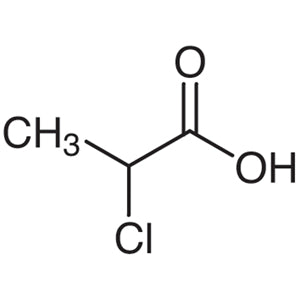
2-ChloropropionicAcid TCI C0275
Regular price From Rp 1.033.200,00Regular priceRp 738.150,00Sale price From Rp 1.033.200,00 -
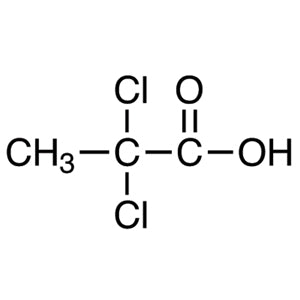
2,2-DichloropropionicAcid TCI D1334
Regular price Rp 1.458.450,00Regular priceRp 1.035.300,00Sale price Rp 1.458.450,00 -
Sodium2,2-Dichloropropionate TCI D0409
Regular price Rp 610.050,00Regular priceRp 442.050,00Sale price Rp 610.050,00 -
Methyl2,3-Dichloropropionate TCI D0408
Regular price Rp 955.500,00Regular priceRp 683.550,00Sale price Rp 955.500,00 -
2,3-DichloropropionicAcid TCI D0407
Regular price From Rp 1.033.200,00Regular priceRp 738.150,00Sale price From Rp 1.033.200,00 -
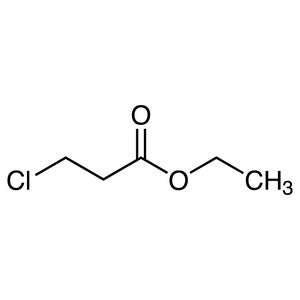
Ethyl3-Chloropropionate TCI C1274
Regular price From Rp 2.942.100,00Regular priceRp 2.072.700,00Sale price From Rp 2.942.100,00 -
Methyl2-Chloropropionate TCI C0970
Regular price From Rp 1.033.200,00Regular priceRp 738.150,00Sale price From Rp 1.033.200,00 -
Phenyl3-Chloropropionate TCI C0850
Regular price From Rp 717.150,00Regular priceRp 516.600,00Sale price From Rp 717.150,00