2,3-Dichloropropionic Acid is a chemical compound widely used in laboratory settings for the synthesis of complex organic compounds. As a key building block in chemical reactions, it plays a crucial role in the development of new substances with applications in pharmaceutical and chemical industries. Its versatility makes it an essential component in various synthetic pathways, enabling researchers to create a wide range of derivatives with tailored properties. This compound is particularly valued for its stability and reactivity, which allow it to participate effectively in substitution and replacement reactions.
The chemical properties of 2,3-Dichloropropionic Acid make it a preferred choice for laboratory use. It exhibits good solubility in organic solvents, facilitating efficient processing and isolation during synthesis. Its molecular structure is simple yet adaptable, allowing for easy modification in synthetic processes. These characteristics make it an ideal reagent for organic chemists seeking to design and develop new compounds with specific functional groups or biological activities. The compound’s predictable behavior under various reaction conditions further enhances its reliability in laboratory applications.
In Indonesian laboratories, 2,3-Dichloropropionic Acid is extensively used by researchers and educational institutions for chemical research and development. It is commonly found in organic chemistry projects, especially in pharmacology and biochemistry studies. Its availability and consistent quality make it a go-to material for scientists aiming to conduct reliable and reproducible experiments. The compound supports a wide range of research activities, contributing to advancements in both academic and industrial chemical fields.
- Organic Synthesis: This compound is ideal for creating complex organic molecules due to its reactivity and solubility in organic solvents.
- Pharmaceutical Development: It is used in the synthesis of pharmaceutical intermediates, supporting drug discovery and formulation.
- Fungicide Compound Research: Its chemical structure makes it suitable for the development of fungicide compounds with targeted biological activity.
- Educational Research: It is frequently used in academic settings to teach and practice synthetic chemistry techniques.
- Biochemical Studies: Its role in organic reactions supports research in biochemistry, particularly in enzyme-substrate interactions and metabolic pathways.
| Brand | TCI |
|---|---|
| CAS number | 565-64-0 |
| Molecular formula | — |
| Purity | — |
| Category | Chemistry > Building Blocks > Non-Heterocyclic Building Blocks |
| Pack sizes | Available in various quantities as per supplier specifications |
| Physical form | Solid, crystalline or powder |
| Storage | Store in a cool, dry place away from direct sunlight |
This compound should be stored in a cool, dry environment to maintain its chemical stability. It is recommended to keep it in airtight containers to prevent moisture absorption and contamination. Due to its reactivity, it should be handled in a well-ventilated area, preferably under a fume hood, to minimize exposure. Avoid contact with incompatible materials such as strong bases or oxidizing agents. Proper personal protective equipment, including gloves and safety goggles, should be worn when handling this substance. Regular monitoring of storage conditions ensures the compound remains in optimal condition for laboratory use.
—
Produk Terkait
-
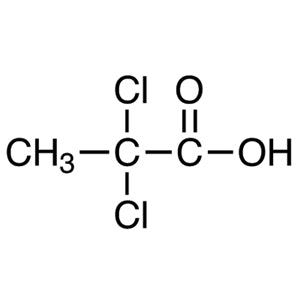
2,2-DichloropropionicAcid TCI D1334
Regular price Rp 1.405.950,00Regular price -
Sodium2,2-Dichloropropionate TCI D0409
Regular price Rp 557.550,00Regular price -
Methyl2,3-Dichloropropionate TCI D0408
Regular price Rp 903.000,00Regular price -
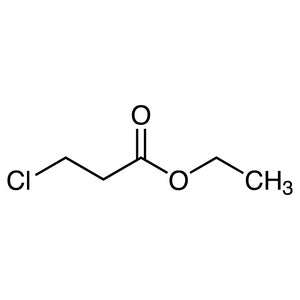
Ethyl3-Chloropropionate TCI C1274
Regular price From Rp 2.889.600,00Regular price -
Methyl2-Chloropropionate TCI C0970
Regular price From Rp 980.700,00Regular price -
Phenyl3-Chloropropionate TCI C0850
Regular price From Rp 664.650,00Regular price -
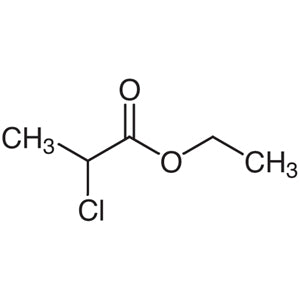
Ethyl2-Chloropropionate TCI C0790
Regular price From Rp 1.353.450,00Regular price -
3-ChloropropionicAcid TCI C0276
Regular price From Rp 610.050,00Regular price