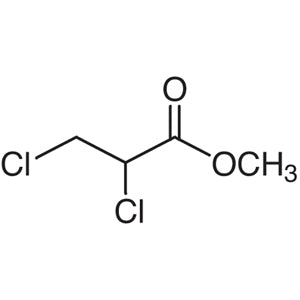
Methyl 2,3-Dichloropropionate is a chemical compound widely used in organic laboratory reactions. As a building block in synthetic chemistry, it plays a crucial role in the development of complex molecules. Its simple molecular structure provides a versatile foundation for various chemical transformations, making it an essential reagent in both academic and industrial research settings. This compound is particularly valuable for its reactivity and functional group versatility, which enable it to participate in a wide range of chemical processes.
The compound’s reactivity is largely attributed to the presence of two chlorine atoms at positions 2 and 3 on the propionate chain. These chlorine groups significantly enhance the molecule’s ability to undergo substitution and electrophilic reactions, making it a preferred choice for chemists. Its chemical characteristics allow it to be utilized in multiple synthetic pathways, contributing to the creation of heterocyclic and non-heterocyclic compounds. The compound’s stability and purity further support its reliability in laboratory applications.
In Indonesian laboratories, Methyl 2,3-Dichloropropionate is a commonly used reagent, especially in organic chemistry research. It is frequently employed in pharmaceutical and industrial chemical development projects. Its availability and chemical properties make it a go-to material for researchers aiming to synthesize new compounds. Its relevance in both academic and applied research underscores its importance in the chemical sciences within Indonesia.
- Organic synthesis applications benefit from this compound’s reactivity and ability to undergo substitution reactions, making it ideal for creating complex molecular structures.
- Pharmaceutical research utilizes this reagent for the development of new drug compounds, as its functional groups can be modified to target specific biological activities.
- Industrial chemical production relies on its versatility in synthetic pathways, allowing for the creation of a wide range of chemical products.
- Academic research in chemistry uses it as a fundamental building block for teaching and experimental purposes, supporting both undergraduate and graduate studies.
- Analytical chemistry laboratories use it as a reference standard for testing and validating chemical processes and reaction mechanisms.
| Brand | TCI |
|---|---|
| CAS number | 3674-09-7 |
| Molecular formula | — |
| Purity | — |
| Category | Chemistry > Building Blocks > Non-Heterocyclic Building Blocks |
| Pack sizes | Available in various quantities as per supplier specifications |
| Physical form | Liquid or solid, depending on the specific formulation |
| Storage | Store in a cool, dry place away from direct sunlight and incompatible materials |
Methyl 2,3-Dichloropropionate should be stored in a cool, dry environment to maintain its chemical stability. It is recommended to keep it in a tightly sealed container to prevent exposure to moisture and air. The compound should be stored away from incompatible substances such as strong bases or oxidizing agents to avoid unwanted reactions. In a laboratory setting, proper ventilation is essential when handling this material to minimize inhalation risks. Personal protective equipment, including gloves and safety goggles, should be worn during handling to ensure safety. Regular monitoring of storage conditions is advised to maintain the compound’s integrity and ensure safe usage in laboratory applications.
—
Produk Terkait
-
Sodium2,2-Dichloropropionate TCI D0409
Regular price Rp 557.550,00Regular price -
2',4'-Dichloropropiophenone TCI D3937
Regular price Rp 1.538.250,00Regular price -
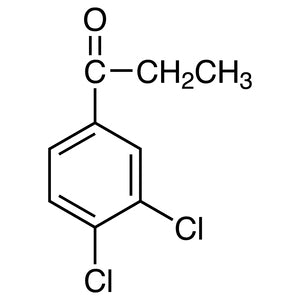
3',4'-Dichloropropiophenone TCI D3365
Regular price From Rp 2.016.000,00Regular price -
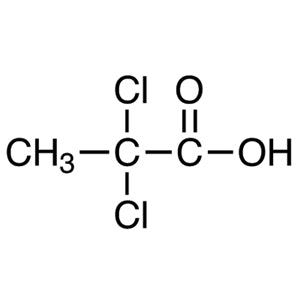
2,2-DichloropropionicAcid TCI D1334
Regular price Rp 1.405.950,00Regular price -
2,3-DichloropropionicAcid TCI D0407
Regular price From Rp 980.700,00Regular price -
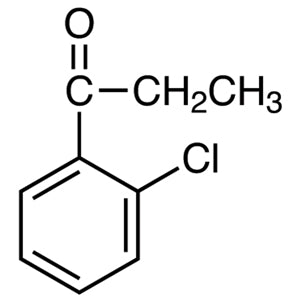
2'-Chloropropiophenone TCI C3323
Regular price Rp 2.147.250,00Regular price -
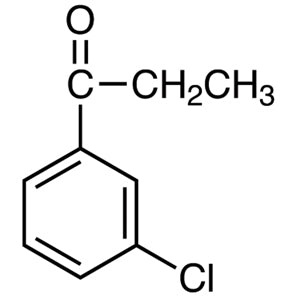
3'-Chloropropiophenone TCI C2033
Regular price From Rp 955.500,00Regular price -
2-Chloropropiophenone TCI C1647
Regular price From Rp 1.670.550,00Regular price