Cycloheptanol is a cyclic secondary alcohol built on a seven-carbon ring. It holds an important place among non-heterocyclic building blocks because it provides a cycloheptane framework, which is less simple than cyclohexane and not easily obtained from other starting materials. In organic synthesis laboratories, Cycloheptanol is used as a starting material for ketones, esters, ethers, alkyl halides, and other derivatives that keep the seven-membered ring intact. This lets researchers build more complex target molecules in a stepwise, controlled way, with each transformation starting from a well-defined cyclic alcohol.
The main appeal of Cycloheptanol is its secondary hydroxyl group, which is reactive but still easy to control. This group can be oxidized to cycloheptanone, esterified with carboxylic acids or acid chlorides, converted into a leaving group such as a tosylate or mesylate, or dehydrated to cycloheptene. The seven-membered ring is more conformationally flexible than a six-membered ring, so it is often studied in stereochemistry and conformational analysis. Because the material is a liquid at room temperature, it can be measured easily with a pipette or graduated cylinder when setting up small-scale reactions.
In Indonesian laboratories, Cycloheptanol is used mainly in university organic chemistry research groups, in synthesis laboratories at research institutions, and in industrial R&D teams that develop new intermediates. Graduate students and researchers use it to prepare seven-membered ring derivatives, to practise standard alcohol transformations, and to compare how cyclic systems of different sizes react. Supplied under the TCI brand, it gives Indonesian laboratories a dependable source of this building block for routine and exploratory synthetic work.
Related TCI products
- TCI C3181 31251-41-9 8-Chloro-5,6-dihydro-11H-benzo[5,6]cyclohepta[1,2-b]pyridin-11-one
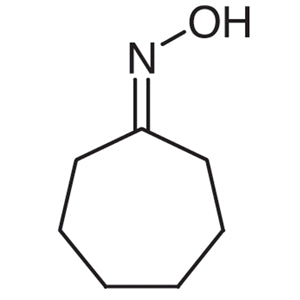
- TCI C1543 2158-31-8 Cycloheptanone Oxime
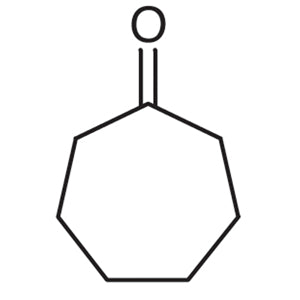
- TCI C0466 502-42-1 Cycloheptanone
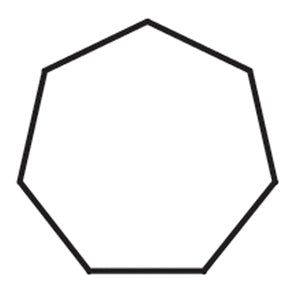
- TCI C0465 291-64-5 Cycloheptane
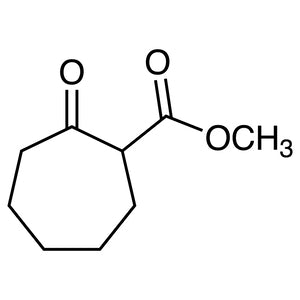
- TCI M3625 52784-32-4 Methyl 2-Oxocycloheptane-1-carboxylate
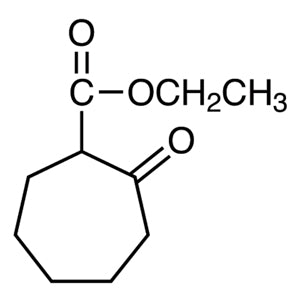
- TCI E1056 774-05-0 Ethyl 2-Oxocycloheptanecarboxylate
- Oxidation to cycloheptanone: the secondary hydroxyl group oxidizes cleanly to the corresponding ketone, which gives a direct route to seven-membered cyclic ketone intermediates for further synthesis.
- Ester synthesis: Cycloheptanol reacts with carboxylic acids or acid chlorides to form cycloheptyl esters, which makes it useful for preparing derivatives and studying esterification on a cyclic secondary alcohol.
- Leaving-group chemistry: converting the hydroxyl group into a tosylate or mesylate gives an activated substrate for substitution and elimination studies that keep the seven-membered ring.
- Dehydration to cycloheptene: acid-promoted dehydration of the alcohol gives the cyclic alkene, which can serve as an intermediate for addition reactions and further functionalization of the ring.
- Stereochemistry and conformational studies: the seven-membered ring is more flexible than cyclohexane, so this compound works well as a model for studying how ring conformation affects reactivity and stereochemical outcomes.
| Brand | TCI (product code C0678) |
|---|---|
| CAS number | 502-41-0 |
| Molecular formula | — |
| Purity | — |
| Category | Chemistry > Building Blocks > Non-Heterocyclic Building Blocks |
| Pack sizes | please refer to the available options on the product listing |
| Physical form | liquid at room temperature |
| Storage | keep in a tightly closed container in a cool, dry, well-ventilated place |
Store Cycloheptanol in its original tightly sealed container, or in a compatible glass container, in a cool, dry, and well-ventilated area away from heat, sparks, open flames, and strong oxidizing agents. Keep the container closed when not in use so the material does not absorb moisture or pick up contamination. Handle it in a fume hood or a well-ventilated area, and wear appropriate personal protective equipment such as safety glasses, chemical-resistant gloves, and a laboratory coat. Avoid contact with skin and eyes and avoid breathing vapours. Label all containers clearly, and read the supplier's Safety Data Sheet before use for detailed hazard, first-aid, and disposal information.
—
Produk Terkait
-
8-Chloro-5,6-dihydro-11H-benzo[5,6]cyclohepta[1,2-b]pyridin-11-one TCI C3181
Regular price From Rp 1.881.600,00Regular priceRp 1.331.400,00Sale price From Rp 1.881.600,00 -
CycloheptanoneOxime TCI C1543
Regular price From Rp 1.220.100,00Regular priceRp 868.350,00Sale price From Rp 1.220.100,00 -
Cycloheptanone TCI C0466
Regular price From Rp 1.749.300,00Regular priceRp 1.239.000,00Sale price From Rp 1.749.300,00 -
Cycloheptane TCI C0465
Regular price From Rp 1.115.100,00Regular priceRp 779.100,00Sale price From Rp 1.115.100,00 -
Methyl2-Oxocycloheptane-1-carboxylate TCI M3625
Regular price Rp 2.411.850,00Regular priceRp 1.702.050,00Sale price Rp 2.411.850,00 -
Ethyl2-Oxocycloheptanecarboxylate TCI E1056
Regular price From Rp 2.147.250,00Regular priceRp 1.517.250,00Sale price From Rp 2.147.250,00 -
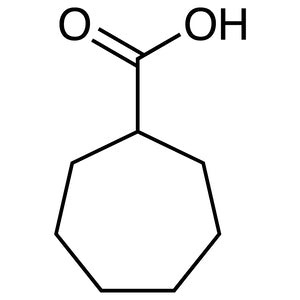
CycloheptanecarboxylicAcid TCI C3782
Regular price From Rp 1.881.600,00Regular priceRp 1.331.400,00Sale price From Rp 1.881.600,00