TCI C1993 3'-Cyanoacetophenone, also known as 3-acetylbenzonitrile, is an aromatic compound with an acetyl group and a nitrile group positioned meta to each other on a benzene ring. In the laboratory it serves as a non-heterocyclic building block that offers two distinct functional groups, each of which can be modified independently. Chemists widely use it to synthesise pharmaceutical intermediates, to develop reaction methods, and to prepare meta-substituted aromatic derivatives that can be difficult to obtain by other routes.
Chemists choose this compound because its ketone and nitrile groups have complementary reactivity. The acetyl group can be reduced to a secondary alcohol, including by asymmetric reduction to give chiral alcohols. It can also be converted to an amine, used in condensation reactions, or functionalised at the alpha position. The nitrile group can be hydrolysed to an amide or a carboxylic acid, reduced to a benzylic amine, or converted to a tetrazole or other heterocycles. The meta substitution pattern gives a different geometry from the para isomer, which makes the compound useful for varying molecular shape in drug design.
In Indonesian laboratories, this material suits university organic and medicinal chemistry groups, pharmaceutical research and development teams, and synthetic method development projects. Research groups building compound libraries can use it as a starting point for several derivatives, because each functional group can be addressed separately. It is also useful in teaching and research settings that study chemoselective transformations, where students and researchers need a well-defined substrate that carries two distinct reactive sites on one aromatic ring.
- Pharmaceutical intermediate synthesis: the separate ketone and nitrile handles let chemists build complex drug-like scaffolds step by step from one meta-substituted aromatic core.
- Asymmetric reduction studies: the acetyl group can be reduced enantioselectively to a chiral secondary alcohol, so the compound is a practical substrate for testing catalysts and methods.
- Tetrazole and heterocycle formation: the aromatic nitrile can be converted into tetrazoles and other heterocyclic rings, which are common motifs in medicinal chemistry research.
- Benzylic amine and amide preparation: reducing or hydrolysing the nitrile gives benzylic amines, amides, or acids for further coupling and derivatisation work.
- Molecular shape exploration in drug design: its meta substitution pattern gives a geometry different from the para isomer, which helps researchers compare how structure affects activity.
| Brand | TCI (product code C1993) |
|---|---|
| CAS number | 6136-68-1 |
| Molecular formula | — |
| Purity | — |
| Category | Chemistry > Building Blocks > Non-Heterocyclic Building Blocks |
| Pack sizes | according to the options listed on the product page |
| Physical form | — |
| Storage | follow the conditions on the TCI label and Safety Data Sheet |
- Synonym: 3-Acetylbenzonitrile
Keep 3'-Cyanoacetophenone in its original, tightly closed container in a cool, dry, well-ventilated area, away from heat sources, direct sunlight, and incompatible substances such as strong oxidising agents, strong acids, and strong bases. If you transfer portions, use clean, dry, chemically compatible glass or suitable plastic containers with clear labels. Handle the material in a fume hood or a well-ventilated area, and wear standard laboratory protective equipment, including safety glasses, gloves, and a lab coat. Avoid creating dust or aerosols, and avoid contact with skin, eyes, and clothing. Always read the TCI Safety Data Sheet before use, and dispose of waste according to local regulations and your institution's procedures.
—
Produk Terkait
-
4'-Cyanoacetophenone TCI C1141
Regular price From Rp 1.961.400,00Regular priceRp 1.387.050,00Sale price From Rp 1.961.400,00 -
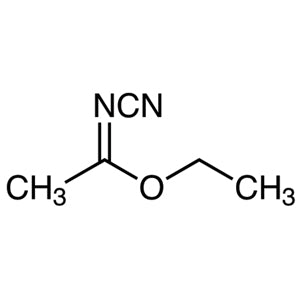
EthylN-Cyanoacetimidate TCI E1331
Regular price From Rp 822.150,00Regular priceRp 590.100,00Sale price From Rp 822.150,00 -
2-Cyanoacetanilide TCI C2894
Regular price From Rp 1.298.850,00Regular priceRp 924.000,00Sale price From Rp 1.298.850,00 -
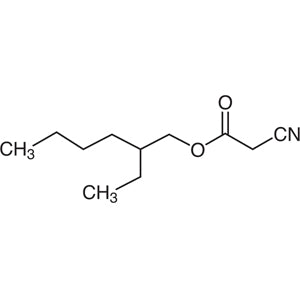
2-EthylhexylCyanoacetate TCI C1384
Regular price From Rp 1.298.850,00Regular priceRp 924.000,00Sale price From Rp 1.298.850,00 -
Cyanoacetylurea TCI C1101
Regular price From Rp 769.650,00Regular priceRp 553.350,00Sale price From Rp 769.650,00 -
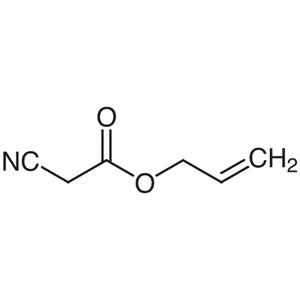
AllylCyanoacetate TCI C1039
Regular price From Rp 1.378.650,00Regular priceRp 979.650,00Sale price From Rp 1.378.650,00 -
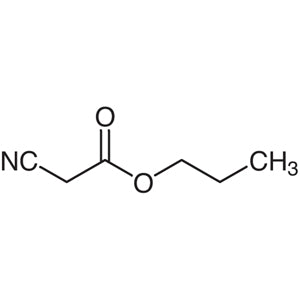
PropylCyanoacetate TCI C1016
Regular price From Rp 955.500,00Regular priceRp 683.550,00Sale price From Rp 955.500,00 -
IsobutylCyanoacetate TCI C1000
Regular price From Rp 557.550,00Regular priceRp 405.300,00Sale price From Rp 557.550,00