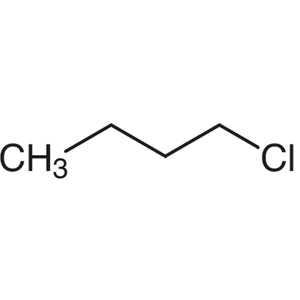
1-Chlorotridecane (TCI C2213) is a straight-chain alkyl chloride carrying thirteen carbon atoms with a chlorine atom placed at the terminal position of the chain. The compound belongs to the family of primary haloalkanes that form the backbone of many alkylation reactions in the laboratory. Its role is to deliver a long hydrocarbon chain directly onto a target molecule, allowing researchers to adjust the lipophilicity, the length of a hydrophobic tail, or the interfacial behaviour of a compound. For that reason it is widely used in surfactant research, colloid chemistry, and the synthesis of long-chain materials.
The property that makes this reagent a preferred choice is the characteristic reactivity of a primary halide. Because the chlorine sits at the end of the chain, the molecule undergoes bimolecular nucleophilic substitution with minimal steric hindrance, so reactions with amines, thiols, alkoxides, phenoxides, or carbanions proceed cleanly with a limited range of side products. The long C13 chain confers strong lipophilic character and a high boiling point, which makes the compound straightforward to separate from lighter solvents during purification. As a material that is liquid at room temperature, it is also convenient to measure with a pipette whenever gradual addition is required.
In Indonesian laboratories, this reagent is used in university research groups, government research institutes, and industrial development laboratories that work on synthetic organic chemistry. It commonly appears in projects on surfactant development, colloid and interface studies, and the preparation of long-chain intermediates for further functionalisation. Because it is supplied as a liquid, it fits routine bench-scale work where reagents are dispensed by pipette and reactions are run in standard glassware under normal laboratory conditions.
- Surfactant research: the terminal chlorine allows a thirteen-carbon hydrophobic tail to be attached to a polar head group, producing amphiphilic molecules for detergency and micelle studies.
- N-alkylation of amines: as a primary halide with minimal steric hindrance, it reacts cleanly with primary and secondary amines to build long-chain alkylammonium and amine derivatives.
- Thioether synthesis: thiols and thiolate anions displace the terminal chloride efficiently, giving long-chain sulfides used in colloid chemistry and surface-modification research.
- Ether preparation via Williamson synthesis: alkoxides and phenoxides substitute the chloride readily, delivering long-chain alkyl ethers with a limited number of competing side products.
- Carbon-chain extension: carbanion nucleophiles attack the terminal carbon to introduce a C13 unit, letting chemists tune lipophilicity and interfacial behaviour of a target molecule.
| Brand | TCI |
|---|---|
| CAS number | 822-13-9 |
| Molecular formula | — |
| Purity | — |
| Category | Chemistry > Building Blocks > Non-Heterocyclic Building Blocks |
| Pack sizes | available in standard TCI catalogue pack sizes; please confirm the pack size when ordering |
| Physical form | liquid at room temperature |
| Storage | keep tightly closed in a cool, dry, well-ventilated place |
- Product code: C2213
Store the container tightly closed in a cool, dry, and well-ventilated area, away from heat sources, open flames, and direct sunlight. Keep it separated from strong oxidising agents and strong bases. Original manufacturer bottles or chemically compatible glass containers with tight-sealing caps are suitable; label every transfer container clearly. Handle the liquid inside a fume hood and wear safety glasses, chemical-resistant gloves, and a laboratory coat. Use clean, dry pipettes for dispensing, close the bottle immediately after use, and consult the manufacturer's safety data sheet before starting work.
—
Produk Terkait
-
1-Chlorobutane TCI C0142
Regular price From Rp 452.550,00Regular price -
2-Chlorobutane TCI C0143
Regular price From Rp 1.035.300,00Regular price -
1-Chlorododecane TCI C0163
Regular price From Rp 477.750,00Regular price -
1-Chloroheptane TCI C0182
Regular price From Rp 530.250,00Regular price -
1-Chlorohexadecane TCI C0183
Regular price From Rp 769.650,00Regular price -
1-Chlorohexane TCI C0184
Regular price From Rp 584.850,00Regular price -
1-Chloro-3-methylbutane TCI C0199
Regular price From Rp 1.485.750,00Regular price -
2-Chloro-2-methylbutane TCI C0200
Regular price From Rp 1.538.250,00Regular price