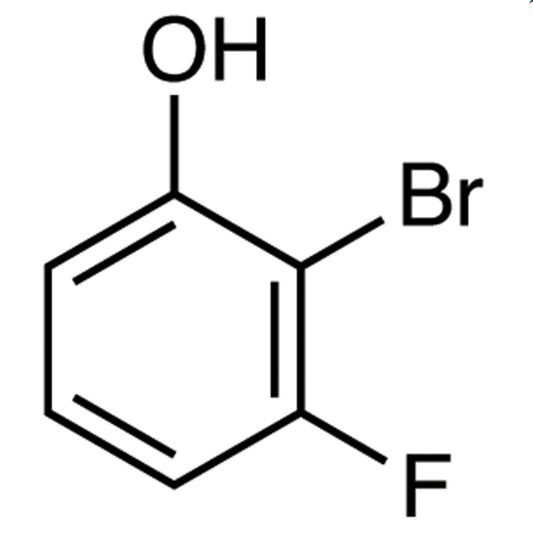
4-Chloro-2-fluorophenol is a chemical compound widely used as a building block in the synthesis of complex organic compounds. It plays a crucial role in laboratory settings where researchers aim to develop new substances, including pharmaceuticals, industrial chemicals, and functional materials. This compound is particularly valuable in reactions involving halogen and fluorine substitution on a phenolic structure, making it an essential tool for organic chemists. Its versatility and reactivity make it a preferred choice for a variety of chemical transformations.
The compound exhibits high reactivity and a complex molecular structure, which allows it to participate in multiple types of chemical reactions. It is soluble in various organic solvents such as ethyl acetate and ethanol, facilitating efficient processing and separation techniques. These solubility properties enhance its utility in substitution reactions, oxidation processes, and the synthesis of heterocyclic compounds. Its chemical behavior and physical characteristics make it a reliable material for advanced chemical research.
In Indonesian laboratories, 4-Chloro-2-fluorophenol is commonly used in organic chemistry research, especially in the fields of pharmacy and material science. Local researchers and scientists frequently utilize this compound to develop new substances with applications in healthcare and industry. Its availability in the market supports ongoing scientific investigations and innovation in chemical synthesis.
TCI brochures (PDF)
- Fluorination Reagents, Fluorinated Building Blocks 2026-03-18 · p. 21
- Organic synthesis applications benefit from 4-Chloro-2-fluorophenol due to its reactivity and ability to participate in substitution and oxidation reactions.
- Pharmaceutical research utilizes this compound as a key intermediate in the development of new drug molecules with targeted therapeutic effects.
- Material science applications leverage its chemical properties for the synthesis of functional materials with unique physical and chemical characteristics.
- Industrial chemical synthesis relies on its solubility and reactivity to produce a wide range of chemical products efficiently.
- Heterocyclic compound synthesis is enhanced by the compound's ability to undergo various chemical transformations under controlled conditions.
| Brand | TCI |
|---|---|
| CAS number | 348-62-9 |
| Molecular formula | — |
| Purity | — |
| Category | Chemistry > Building Blocks > Fluorinated Building Blocks |
| Pack sizes | Available in standard laboratory quantities |
| Physical form | Solid |
| Storage | Store in a cool, dry place away from light and moisture |
4-Chloro-2-fluorophenol should be stored in a cool, dry environment, away from direct sunlight and moisture. It is recommended to use airtight containers made of glass or polyethylene to prevent contamination and maintain chemical integrity. Due to its reactivity, it should be handled in a well-ventilated area, preferably under a fume hood, to minimize exposure. Avoid contact with incompatible materials such as strong oxidizing agents. Always wear appropriate personal protective equipment, including gloves, goggles, and a lab coat, when handling this compound. Proper storage and handling practices ensure safety and maintain the compound’s effectiveness in laboratory applications.
—
Produk Terkait
-
4-Chloro-3-fluorophenol TCI C2476
Regular price From Rp 1.353.450,00Regular price -
2-Chloro-4-fluorophenol TCI C1598
Regular price Rp 4.240.950,00Regular price -
3-Chloro-4-fluorophenol TCI C1121
Regular price Rp 1.405.950,00Regular price -
2-Bromo-3-fluorophenol TCI B5224
Regular price From Rp 1.167.600,00Regular price -
3-Bromo-4-fluorophenol TCI B4491
Regular price From Rp 1.670.550,00Regular price -
4-Bromo-3-fluorophenol TCI B3688
Regular price From Rp 2.597.700,00Regular price -
5-Bromo-2-fluorophenol TCI B3064
Regular price From Rp 1.458.450,00Regular price -
3-Bromo-5-fluorophenol TCI B3063
Regular price Rp 1.908.900,00Regular price