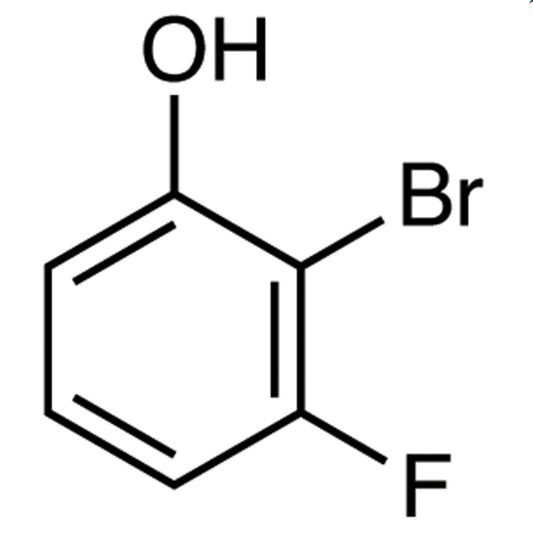
4-Chloro-3-fluorophenol is a chemical compound widely used in organic reactions for the synthesis of complex molecules. It serves as a key building block in the field of fluorinated chemistry, offering versatility in various synthetic pathways. This compound is commonly employed in the development of pharmaceuticals, industrial chemicals, and fluorinated compounds due to its unique reactivity and structural stability. In laboratory settings, it plays a crucial role in substitution reactions involving halogen and fluorine atoms. Its presence in specific positions enhances its functionality, making it an essential reagent for researchers aiming to create compounds with tailored properties.
The compound’s aromatic structure provides a stable foundation for chemical reactions, while its halogen and fluorine substituents contribute to its reactivity. These features make it a preferred choice for chemists working on fluorinated and halogenated compounds. Its solubility in organic solvents further enhances its usability in diverse experimental conditions. The combination of stability and reactivity allows it to be a reliable component in both academic and industrial research environments. Its chemical properties make it suitable for a wide range of synthetic applications, especially in the development of new materials and pharmaceuticals.
In Indonesian laboratories, 4-Chloro-3-fluorophenol is frequently used in organic chemistry research, particularly in the fields of pharmacy and material science. It is a key component in studies involving halogen and fluorine substitution reactions. Its availability in the local market ensures that researchers and educational institutions can easily access this compound for their experiments. Its role in advancing chemical research makes it a valuable resource for both academic and industrial applications.
- Organic synthesis applications benefit from 4-Chloro-3-fluorophenol due to its reactivity and structural versatility, enabling the creation of complex fluorinated compounds.
- Pharmaceutical research utilizes this compound for the development of new drugs, as its halogen and fluorine substituents can influence the biological activity of target molecules.
- Fluorinated material development relies on this compound to create compounds with specific physical and chemical properties, enhancing their performance in various applications.
- Halogen substitution studies use 4-Chloro-3-fluorophenol to investigate reaction mechanisms and the effects of halogen and fluorine on molecular behavior.
- Educational institutions incorporate this compound into teaching and research programs to provide hands-on experience with fluorinated building blocks in organic chemistry.
| Brand | TCI |
|---|---|
| CAS number | 348-60-7 |
| Molecular formula | — |
| Purity | — |
| Category | Chemistry > Building Blocks > Fluorinated Building Blocks |
| Pack sizes | Available in various quantities as per supplier specifications |
| Physical form | Solid or crystalline, depending on the specific product |
| Storage | Store in a cool, dry place away from light and moisture |
4-Chloro-3-fluorophenol should be stored in a cool, dry place away from direct light and moisture to maintain its chemical integrity. It is recommended to use airtight containers made of materials such as glass or polyethylene to prevent contamination and degradation. Due to its chemical nature, it should be handled with appropriate personal protective equipment, including gloves and safety goggles, to ensure laboratory safety. Proper ventilation is essential when working with this compound to minimize exposure. It is important to store it separately from incompatible substances to prevent any potential chemical reactions. Regular monitoring of storage conditions will help maintain the compound’s quality and usability in laboratory settings.
—
Produk Terkait
-
4-Chloro-2-fluorophenol TCI C2264
Regular price From Rp 1.803.900,00Regular price -
2-Chloro-4-fluorophenol TCI C1598
Regular price Rp 4.240.950,00Regular price -
3-Chloro-4-fluorophenol TCI C1121
Regular price Rp 1.405.950,00Regular price -
2-Bromo-3-fluorophenol TCI B5224
Regular price From Rp 1.167.600,00Regular price -
3-Bromo-4-fluorophenol TCI B4491
Regular price From Rp 1.670.550,00Regular price -
4-Bromo-3-fluorophenol TCI B3688
Regular price From Rp 2.597.700,00Regular price -
5-Bromo-2-fluorophenol TCI B3064
Regular price From Rp 1.458.450,00Regular price -
3-Bromo-5-fluorophenol TCI B3063
Regular price Rp 1.908.900,00Regular price