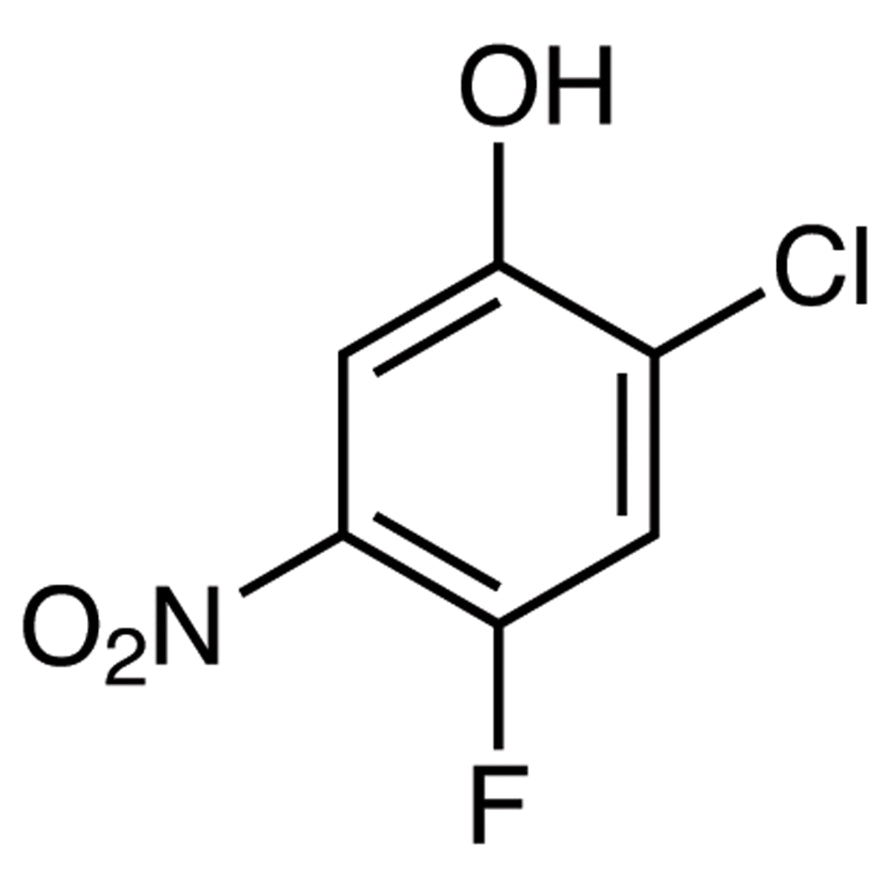
2-Chloro-4-fluoro-5-nitrophenol is a versatile organic compound widely used in chemical synthesis within laboratory settings. As a fluorinated building block, it serves as a key intermediate in the development of complex aromatic compounds. Its unique combination of chlorine, fluorine, and nitro groups makes it a valuable reagent for researchers aiming to create new materials or pharmaceutical compounds. This compound is commonly found in chemical laboratories where synthetic pathways require precise functional group manipulation. Its role extends beyond basic synthesis, playing a crucial part in advanced research projects that demand high reactivity and structural specificity.
The compound's high polarity and solubility in organic solvents such as ethyl acetate and dimethyl sulfoxide make it a preferred choice for various synthetic reactions. Its reactivity is enhanced by the presence of both fluorine and nitro substituents, which influence its chemical behavior and reactivity profiles. These properties allow it to be effectively used in substitution, nitration, and fluorination reactions. Additionally, its aromatic structure provides a degree of stability, reducing the risk of unwanted side reactions during synthesis. This stability ensures that the compound remains effective throughout the reaction process, contributing to the success of laboratory experiments.
In Indonesian laboratories, 2-Chloro-4-fluoro-5-nitrophenol is frequently employed in organic chemistry research, particularly in projects focused on the synthesis of bioactive compounds or novel materials. It is a staple in academic and industrial research settings where the development of new chemical entities is a priority. Its availability and chemical properties make it an essential tool for chemists working on a wide range of synthetic challenges, from drug discovery to advanced material development.
TCI brochures (PDF)
- Fluorination Reagents, Fluorinated Building Blocks 2026-03-18 · p. 27
- Organic synthesis of bioactive compounds where fluorinated and nitro groups are essential for molecular activity.
- Development of new materials with specific functional properties requiring aromatic substitution and reactivity.
- Research in pharmaceutical chemistry for the creation of novel drug candidates with tailored molecular structures.
- Advanced chemical reactions involving nitration and fluorination processes requiring high reactivity and stability.
- Academic and industrial projects focused on the design and synthesis of complex aromatic compounds for various applications.
| Brand | TCI |
|---|---|
| CAS number | 84478-75-1 |
| Molecular formula | — |
| Purity | — |
| Category | Chemistry > Building Blocks > Fluorinated Building Blocks |
| Pack sizes | Available in standard laboratory quantities as per supplier specifications |
| Physical form | Solid, typically in crystalline or powder form |
| Storage | Store in a cool, dry place away from direct light and incompatible materials |
This compound should be stored in a cool, dry environment, away from direct sunlight and sources of heat. It is recommended to use airtight containers made of materials that are chemically inert to prevent any reaction with the compound. Due to its reactivity, it should be kept separate from strong bases, reducing agents, and other reactive substances. Proper labeling and storage conditions are essential to maintain its chemical integrity. In laboratory settings, it is important to handle the compound with appropriate personal protective equipment to ensure safety during use and storage. Regular monitoring of storage conditions will help maintain the compound's stability and effectiveness for research purposes.
—
Produk Terkait
-
3-Fluoro-2-nitrophenol TCI F0947
Regular price From Rp 664.650,00Regular price -
2-Fluoro-6-nitrophenol TCI F0623
Regular price From Rp 584.850,00Regular price -
2-Fluoro-4-nitrophenol TCI F0381
Regular price From Rp 1.458.450,00Regular price -
4-Fluoro-2-nitrophenol TCI F0367
Regular price From Rp 823.200,00Regular price -
3-Fluoro-4-nitrophenol TCI F0348
Regular price Rp 3.843.000,00Regular price -
5-Fluoro-2-nitrophenol TCI F0224
Regular price Rp 1.485.750,00Regular price -
2,3-Difluoro-6-nitrophenol TCI D2705
Regular price From Rp 1.670.550,00Regular price -
Chloro(fluoro)aceticAcid TCI C3654
Regular price Rp 4.108.650,00Regular price