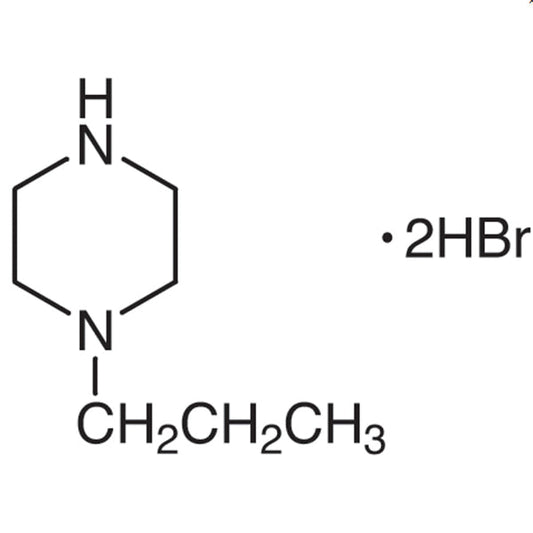
1-Cyclopropylpiperazine is a chemical compound classified under the heterocyclic category, serving as a fundamental building block in the synthesis of complex molecules. Its unique structure combines a piperazine ring with a cyclopropyl group, offering versatility in chemical reactivity and functional group compatibility. This compound is widely utilized in laboratory settings for its ability to participate in various synthetic pathways, making it an essential tool for chemists working on advanced molecular designs. Due to its structural complexity and reactivity, it plays a crucial role in the development of pharmaceuticals, organic chemicals, and industrial products.
The compound’s high reactivity and structural adaptability make it a preferred choice for synthetic chemists. It is particularly useful in substitution reactions, cyclic reactions, and molecular modifications due to its ability to interact with a wide range of functional groups. Its stability under controlled conditions further enhances its usability in laboratory experiments. This stability ensures that it remains effective throughout the synthesis process, reducing the risk of unwanted side reactions. Its predictable behavior in controlled environments also contributes to its reliability in research applications.
In Indonesian laboratories, 1-Cyclopropylpiperazine is commonly used in organic chemistry, pharmacology, and the synthesis of new compounds. It is frequently found in research projects related to drug development and chemical innovation. Its availability and chemical properties make it a valuable resource for scientists and researchers in the field, supporting both academic and industrial applications.
Related TCI products
- Organic synthesis projects benefit from 1-Cyclopropylpiperazine due to its ability to participate in substitution and cyclic reactions, enabling the creation of complex molecular structures.
- Pharmaceutical research utilizes this compound as a building block for the development of new drugs, leveraging its reactivity and compatibility with various functional groups.
- Industrial chemical production relies on this compound for the synthesis of organic materials, where its structural versatility enhances the efficiency of chemical processes.
- Academic research in chemistry often incorporates 1-Cyclopropylpiperazine to explore new synthetic pathways and molecular modifications.
- Drug discovery initiatives use this compound to design and test novel compounds with potential therapeutic applications, benefiting from its chemical adaptability.
| Brand | TCI |
|---|---|
| CAS number | 20327-23-5 |
| Molecular formula | — |
| Purity | — |
| Category | Chemistry > Building Blocks > Heterocyclic Building Blocks |
| Pack sizes | — |
| Physical form | — |
| Storage | Store in a cool, dry place away from light and moisture |
1-Cyclopropylpiperazine should be stored in a cool, dry environment, away from direct light and moisture to maintain its stability. It is recommended to use airtight containers to prevent exposure to air and potential degradation. Laboratory personnel should handle the compound with care, using appropriate personal protective equipment such as gloves and safety goggles to ensure safety. The compound is relatively stable under controlled conditions, making it suitable for routine laboratory use. It is important to keep the compound in a secure location, away from incompatible materials to prevent any unwanted chemical interactions. Proper storage ensures the compound remains effective and safe for use in various research applications.
—
Produk Terkait
-
1-Isopropylpiperazine TCI I0745
Regular price From Rp 1.724.100,00Regular price -
5-Cyclopropyl-1H-pyrazol-3-amine TCI C3878
Regular price From Rp 1.087.800,00Regular price -
Cyclopropyl(piperazin-1-yl)methanone TCI C3850
Regular price From Rp 903.000,00Regular price -
1-PropylpiperazineDihydrobromide TCI P1645
Regular price Rp 8.453.550,00Regular price -
1-Butylpiperazine TCI B4078
Regular price From Rp 1.565.550,00Regular price -
1-Allylpiperazine TCI A3172
Regular price From Rp 2.518.950,00Regular price -
1-Ethylpiperazine TCI E0355
Regular price From Rp 637.350,00Regular price -
tert-Butyl3-Ethylpiperazine-1-carboxylate TCI D6422
Regular price From Rp 1.485.750,00Regular price