

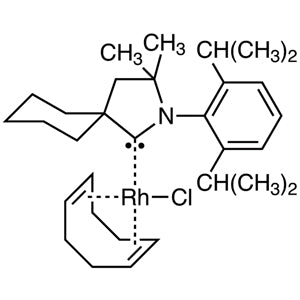
TCI C3592 1801869-83-9 (Cyclohexyl-CAAC)Rh(COD)Cl is a metal-based complex compound containing rhodium, specifically designed for catalytic hydrogenation reactions. This material plays a crucial role in laboratory settings where efficient and selective catalysis is required. It is widely used in both organic and inorganic chemistry to facilitate reduction processes and molecular activation. Its unique structure allows it to act as a highly active catalyst, making it an essential tool for researchers working in catalysis and chemical synthesis.
The compound’s properties, such as its high catalytic activity and stability under reaction conditions, make it a preferred choice in modern chemical laboratories. Its ability to maintain performance without significant degradation ensures consistent results over time. The molecular design of the compound, featuring a rhodium center with specialized ligands, contributes to its effectiveness in promoting hydrogenation reactions. These characteristics allow it to operate under milder conditions, reducing energy consumption and improving reaction efficiency.
In Indonesian laboratories, this compound is commonly used in research focused on catalysis and organic reactions. Its availability through trusted suppliers like AMI Scientific ensures that researchers have access to high-quality materials for their experiments. The compound is particularly valuable in academic and industrial settings where precise and reliable catalytic performance is essential for advancing chemical research and development.
Advantages (TCI brochure)
- Utilized in selective hydrogenation of aromatic rings in aromatic ketones
- Suitable for the conversion of phenols to cyclohexanones
- Effective in cis-selective hydrogenation of multisubstituted aromatic compounds
TCI brochures (PDF)
- Rhodium Catalyst for cis-Selective Hydrogenation of Aromatic Rings 2026-01-05 · p. 1
- Hydrogenation Catalysts 2025-11-10 · p. 3
- Transition Metal Catalysts 2026-04-10 · p. 11
Related TCI products
- TCI T0931 14694-95-2 Tris(triphenylphosphine)rhodium(I) Chloride
- TCI R0075 7440-16-6 Rhodium 5% on Carbon (wetted with ca 55% Water)
- TCI A0028 622-45-7 Cyclohexyl Acetate
- TCI U0144 125559-00-4 N-Succinimidyl 6-[[4-(N-Maleimidomethyl)cyclohexyl]carboxamido]hexanoate (2mg*5)
- TCI T2896 361393-85-3 [[4-(Trifluoromethyl)cyclohexyl]methyl]amine (cis- and trans- mixture)
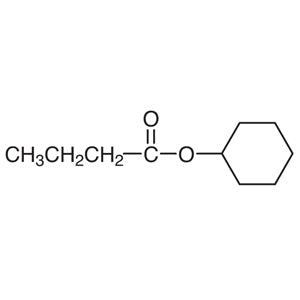
- TCI B0758 1551-44-6 Cyclohexyl Butyrate
- Catalytic Hydrogenation: This compound is ideal for hydrogenation reactions due to its high catalytic efficiency and selectivity, making it suitable for reducing complex organic molecules.
- Organic Synthesis: Its ability to activate and reduce molecular structures makes it a valuable tool in the synthesis of various organic compounds, especially in multi-step reactions.
- Inorganic Chemistry Research: The compound's unique metal complex structure supports studies in inorganic chemistry, particularly in the development of new catalytic systems.
- Green Chemistry Initiatives: The compound's ability to operate under milder conditions aligns with sustainable chemistry practices, reducing energy and resource consumption.
- Industrial Process Optimization: Its stability and performance make it suitable for scaling up catalytic processes in industrial settings, improving production efficiency.
From the TCI brochure
- Hydrogenation of aromatic ketones
- Hydrogenation of Phenols
- Hydrogenation of silylated arenes
| Brand | TCI |
|---|---|
| CAS number | 1801869-83-9 |
| Molecular formula | — |
| Purity | — |
| Category | Chemistry > Catalysis and Inorganic Chemistry > Hydrogenation [Catalysis] |
| Pack sizes | Available in various quantities as per supplier specifications |
| Physical form | Solid or powder, depending on packaging |
| Storage | Store in a cool, dry place away from moisture and direct sunlight |
Data from the TCI brochure
| Yield (aromatic ketone hydrogenation) | Y. 96% (H2 (1.0 MPa), C3592 (3 mol%), CF3CH2OH, 4 A MS, rt) |
|---|---|
| Yield (phenol hydrogenation) | Y. ~ 99% (H2 (1.0 ~ 8.0 MPa), C3592 (3 mol%), CF3CH2OH/H2O (19:1), 70 °C) |
| Yield dan d.r. (silylated arene hydrogenation) | Y. 90%, 99:1 d.r. (H2 (50 bar), C3592 (2 mol%), SiO2, CH2Cl2, 40°C) |
Source: TCI brochure RR137 (2026-01-05)
This compound should be stored in a cool, dry environment to maintain its stability and catalytic activity. It is recommended to use airtight containers to prevent exposure to moisture and air, which may affect its performance. Laboratory personnel should handle the material with care, using appropriate personal protective equipment such as gloves and safety goggles. Due to its chemical nature, it should be kept away from incompatible substances to avoid any potential reactions. Regular inspection of storage conditions is advised to ensure the material remains in optimal condition for use in catalytic applications. Proper labeling and storage practices help ensure the safety of laboratory staff and the integrity of the compound.
References cited in the TCI brochure
- Yu Wei. Highly Selective Hydrogenation of Aromatic Ketones and Phenols Enabled by Cyclic (Amino)(alkyl)carbene Rhodium Complexes Journal of the American Chemical Society, 2015. doi:10.1021/jacs.5b05868
- Mario P. Wiesenfeldt. Silylarene Hydrogenation: A Strategic Approach that Enables Direct Access to Versatile Silylated Saturated Carbo‐ and Heterocycles Angewandte Chemie International Edition, 2018. doi:10.1002/anie.201804124
Produk Terkait
-
Tris(triphenylphosphine)rhodium(I)Chloride TCI T0931
Regular price Rp 5.432.700,00Regular price -
Rhodium5%onCarbon(wettedwithca55%Water) TCI R0075
Regular price From Rp 1.988.700,00Regular price -
CyclohexylAcetate TCI A0028
Regular price From Rp 530.250,00Regular price -
N-Succinimidyl6-[[4-(N-Maleimidomethyl)cyclohexyl]carboxamido]hexanoate(2mg*5) TCI U0144
Regular price Rp 4.108.650,00Regular price -
[[4-(Trifluoromethyl)cyclohexyl]methyl]amine(cis-andtrans-mixture) TCI T2896
Regular price Rp 1.431.150,00Regular price -
CyclohexylButyrate TCI B0758
Regular price Rp 477.750,00Regular price -
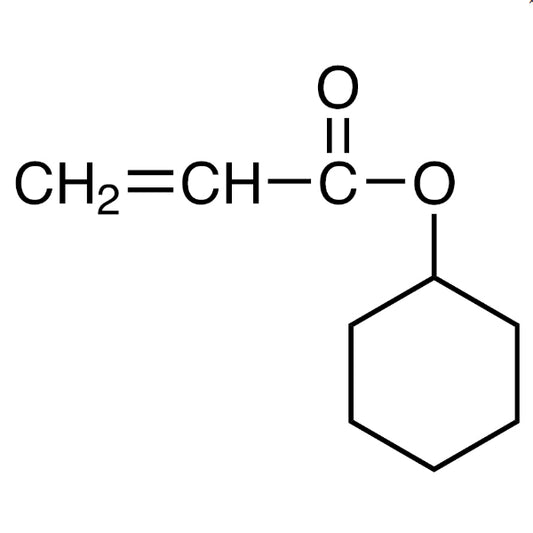
CyclohexylAcrylate(stabilizedwithMEHQ) TCI A1208
Regular price From Rp 769.650,00Regular price -
N-Succinimidyl6-[[4-(N-Maleimidomethyl)cyclohexyl]carboxamido]hexanoate TCI S0881
Regular price Rp 5.750.850,00Regular price


![125559-00-4 N-Succinimidyl 6-[[4-(N-Maleimidomethyl)cyclohexyl]carboxamido]hexanoate (2mg*5) - AMI Scientific](http://amiscientific.com/cdn/shop/files/TCI2510U0144.jpg?v=1767145426&width=533)
![361393-85-3 [[4-(Trifluoromethyl)cyclohexyl]methyl]amine (cis- and trans- mixture) - AMI Scientific](http://amiscientific.com/cdn/shop/files/TCI2510T2896.jpg?v=1768363497&width=533)

![125559-00-4 N-Succinimidyl 6-[[4-(N-Maleimidomethyl)cyclohexyl]carboxamido]hexanoate - AMI Scientific](http://amiscientific.com/cdn/shop/files/TCI2510S0881.jpg?v=1767139110&width=533)