Tris(triphenylphosphine)rhodium(I) Chloride is a chemical compound widely used in catalytic reactions, particularly in C-H activation processes. This material plays a crucial role in organic chemistry by enabling the efficient activation of carbon-hydrogen bonds under milder conditions. In laboratory settings, it is a key reagent for accelerating reactions that traditionally required extreme conditions or long reaction times. Its unique structure allows for strong interactions with substrates, enhancing the overall efficiency of the catalytic process.
The compound is highly regarded for its stability and reactivity. It functions as a homogeneous catalyst, which simplifies reaction setups and improves control over the reaction environment. Its ability to maintain effectiveness across a range of substrates makes it a versatile choice for various catalytic applications. Additionally, it exhibits good stability under specific reaction conditions, ensuring consistent performance without rapid degradation.
In Indonesian laboratories, Tris(triphenylphosphine)rhodium(I) Chloride is highly relevant for research in catalysis and inorganic chemistry. It supports advanced studies in C-H activation, contributing to the development of more efficient and sustainable chemical processes. Its use aligns with the growing demand for reliable and effective catalysts in both academic and industrial research settings.
Advantages (TCI brochure)
- Can hydrogenate alkenes and alkynes selectively.
TCI brochures (PDF)
- Hydrogenation Catalysts 2025-11-10 · p. 2
- C-H Bond Activation Reaction 2025-06-20 · p. 5
- Transition Metal Catalysts 2026-04-10 · p. 10
Related TCI products
- TCI B1692 13938-94-8 Carbonylbis(triphenylphosphine)rhodium(I) Chloride
- TCI N0453 12257-42-0 Norbornadiene Rhodium(I) Chloride Dimer
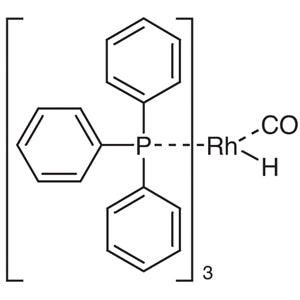
- TCI C1383 17185-29-4 Carbonylhydridotris(triphenylphosphine)rhodium(I)
- TCI B4549 819050-89-0 Bis[rhodium(alpha,alpha,alpha',alpha'-tetramethyl-1,3-benzenedipropionic Acid)]
- TCI B3961 35138-22-8 Bis(1,5-cyclooctadiene)rhodium(I) Tetrafluoroborate
- TCI B2091 36620-11-8 Bis[eta-(2,5-norbornadiene)]rhodium(I) Tetrafluoroborate
- C-H Activation Reactions: This compound is ideal for C-H activation due to its ability to efficiently activate carbon-hydrogen bonds under mild conditions, making it suitable for complex organic transformations.
- Homogeneous Catalysis Studies: Its homogeneous nature allows for easy integration into reaction systems, making it a preferred choice for studying catalytic mechanisms in controlled environments.
- Organic Synthesis Research: It is widely used in the synthesis of complex organic molecules, especially in reactions requiring precise control over reaction conditions and selectivity.
- Industrial Catalytic Processes: The compound's stability and efficiency make it suitable for use in industrial-scale catalytic processes that require high performance and reliability.
- Green Chemistry Applications: Its ability to operate under mild conditions aligns with the principles of green chemistry, promoting sustainable and environmentally friendly reaction conditions.
From the TCI brochure
- Hydrogenation of an indole nitroalkene C=C bond (benzene).
| Brand | TCI |
|---|---|
| CAS number | 14694-95-2 |
| Molecular formula | — |
| Purity | — |
| Category | Chemistry > Catalysis and Inorganic Chemistry > C-H Activation [Catalysis] |
| Pack sizes | Available in various quantities as per supplier specifications |
| Physical form | Solid powder |
| Storage | Store in a cool, dry place away from moisture and direct sunlight |
This compound should be stored in a cool, dry place, away from moisture and direct sunlight to maintain its stability and effectiveness. It is recommended to use airtight containers to prevent exposure to air and humidity, which could affect its performance. As a catalyst, it should be handled with care to avoid contamination, ensuring its purity remains intact. In laboratory settings, it is important to follow standard safety protocols, including the use of appropriate personal protective equipment. Proper storage conditions help preserve its reactivity and ensure consistent results in catalytic applications.
—
Product Categories
- Catalysis and Inorganic ChemistryC-H Activation [Catalysis]Rhodium Compounds [C-H Activation]
- Catalysis and Inorganic ChemistryHydrogenation [Catalysis]Hydrogenation Catalysts
- Catalysis and Inorganic ChemistryTransition Elements [Catalysis and Inorganic Chemistry]Rhodium [Catalysis and Inorganic Chemistry]
Produk Terkait
-
Carbonylbis(triphenylphosphine)rhodium(I)Chloride TCI B1692
Regular price Rp 10.362.450,00Regular price -
NorbornadieneRhodium(I)ChlorideDimer TCI N0453
Regular price Rp 6.520.500,00Regular price -
Carbonylhydridotris(triphenylphosphine)rhodium(I) TCI C1383
Regular price From Rp 5.300.400,00Regular price -
Bis[rhodium(alpha,alpha,alpha',alpha'-tetramethyl-1,3-benzenedipropionicAcid)] TCI B4549
Regular price Rp 2.411.850,00Regular price -
Bis(1,5-cyclooctadiene)rhodium(I)Tetrafluoroborate TCI B3961
Regular price From Rp 2.359.350,00Regular price -
Bis[eta-(2,5-norbornadiene)]rhodium(I)Tetrafluoroborate TCI B2091
Regular price Rp 2.650.200,00Regular price -
Chloro(1,5-cyclooctadiene)rhodium(I)Dimer TCI B1045
Regular price From Rp 2.889.600,00Regular price -
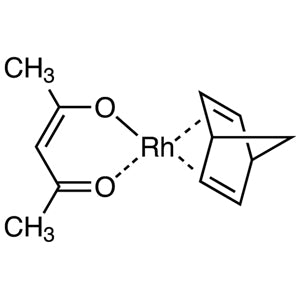
(Acetylacetonato)(norbornadiene)rhodium(I) TCI A2761
Regular price From Rp 3.419.850,00Regular price


![819050-89-0 Bis[rhodium(alpha,alpha,alpha',alpha'-tetramethyl-1,3-benzenedipropionic Acid)] - AMI Scientific](http://amiscientific.com/cdn/shop/files/TCI2510B4549.jpg?v=1767091344&width=533)

![36620-11-8 Bis[eta-(2,5-norbornadiene)]rhodium(I) Tetrafluoroborate - AMI Scientific](http://amiscientific.com/cdn/shop/files/TCI2510B2091.jpg?v=1767088189&width=533)