This compound, TCI B4549 819050-89-0 Bis[rhodium(alpha,alpha,alpha',alpha'-tetramethyl-1,3-benzenedipropionic Acid)], is a complex chemical containing rhodium and tetramethyl-1,3-benzenedipropionic acid. It functions as a catalyst in chemical reactions involving carbon-hydrogen (C-H) activation. Rhodium, a transition metal, plays a crucial role in mediating complex chemical reactions, particularly in C-H activation processes that are central to inorganic catalysis. This material is essential for both organic and inorganic chemical research, especially in the development of more efficient and environmentally friendly reactions. Its high catalytic activity allows it to accelerate chemical reactions without being consumed in the process.
The compound’s complex structure enables specific interactions with target molecules, enhancing the efficiency and selectivity of reactions. Its stability and reactivity make it a preferred choice for precise control over reaction conditions. This material is highly valued in laboratory settings due to its ability to facilitate intricate chemical transformations with minimal side reactions. Its unique properties make it a key component in advanced chemical synthesis and catalytic processes.
In Indonesian laboratories, this compound is widely used in organic and inorganic chemistry research, particularly in studies related to C-H activation and the synthesis of complex compounds. It is a vital tool for researchers aiming to develop new synthetic methods and improve reaction efficiency. Its application in both academic and industrial research settings underscores its importance in modern chemical science.
Advantages (TCI brochure)
- Effective for the formation of heterocycles including nitrogen and oxygen
TCI brochures (PDF)
- Binuclear Rhodium Complexes Effective for Small and Medium-ring Formation 2025-06-05 · p. 1
- C-H Bond Activation Reaction 2025-06-20 · p. 5
- Transition Metal Catalysts 2026-04-10 · p. 11
Related TCI products
- TCI B3961 35138-22-8 Bis(1,5-cyclooctadiene)rhodium(I) Tetrafluoroborate
- TCI B2091 36620-11-8 Bis[eta-(2,5-norbornadiene)]rhodium(I) Tetrafluoroborate
- TCI B1692 13938-94-8 Carbonylbis(triphenylphosphine)rhodium(I) Chloride
- TCI B1045 12092-47-6 Chloro(1,5-cyclooctadiene)rhodium(I) Dimer
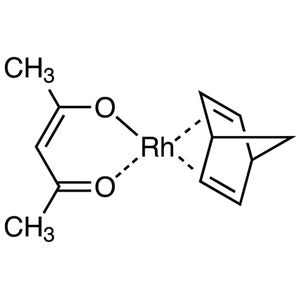
- TCI A2761 32354-50-0 (Acetylacetonato)(norbornadiene)rhodium(I)
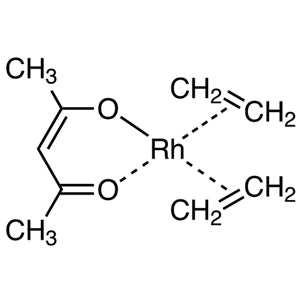
- TCI A2100 12082-47-2 Acetylacetonatobis(ethylene)rhodium(I)
- C-H Activation Studies – This compound is ideal for investigating the activation of carbon-hydrogen bonds, a key process in organic and inorganic chemistry.
- Catalytic Synthesis of Complex Molecules – Its high catalytic activity makes it suitable for the synthesis of complex organic compounds with high selectivity.
- Green Chemistry Research – The compound’s efficiency and reduced byproduct formation align with the goals of sustainable and environmentally friendly chemical processes.
- Inorganic Catalysis Experiments – Its role in inorganic catalytic systems makes it a preferred choice for studying transition metal-based catalytic mechanisms.
- Advanced Organic Reaction Development – The compound’s ability to mediate complex reactions makes it valuable in the development of new synthetic methodologies.
From the TCI brochure
- Aziridine ring formation from alkene and an O-aryl hydroxylamine reagent (1 - 5 mol%, CF3CH2OH, rt)
| Brand | TCI |
|---|---|
| CAS number | 819050-89-0 |
| Molecular formula | — |
| Purity | — |
| Category | Chemistry > Catalysis and Inorganic Chemistry > C-H Activation [Catalysis] |
| Pack sizes | — |
| Physical form | — |
| Storage | Store in a cool, dry place away from moisture and direct sunlight |
This compound should be stored in a cool, dry environment to maintain its stability and catalytic activity. It is recommended to keep it in a sealed container to prevent exposure to moisture and air. Due to its chemical nature, it should be handled with appropriate personal protective equipment, such as gloves and safety goggles, to ensure laboratory safety. Avoid contact with incompatible materials and ensure proper ventilation in the workspace. The compound is typically stored in a controlled laboratory setting to preserve its integrity and effectiveness for research applications.
—
Produk Terkait
-
Bis(1,5-cyclooctadiene)rhodium(I)Tetrafluoroborate TCI B3961
Regular price From Rp 2.411.850,00Regular priceRp 1.702.050,00Sale price From Rp 2.411.850,00 -
Bis[eta-(2,5-norbornadiene)]rhodium(I)Tetrafluoroborate TCI B2091
Regular price Rp 2.702.700,00Regular priceRp 1.905.750,00Sale price Rp 2.702.700,00 -
Carbonylbis(triphenylphosphine)rhodium(I)Chloride TCI B1692
Regular price Rp 10.414.950,00Regular priceRp 7.298.550,00Sale price Rp 10.414.950,00 -
Chloro(1,5-cyclooctadiene)rhodium(I)Dimer TCI B1045
Regular price From Rp 2.942.100,00Regular priceRp 2.072.700,00Sale price From Rp 2.942.100,00 -
(Acetylacetonato)(norbornadiene)rhodium(I) TCI A2761
Regular price From Rp 3.472.350,00Regular priceRp 2.443.350,00Sale price From Rp 3.472.350,00 -
Acetylacetonatobis(ethylene)rhodium(I) TCI A2100
Regular price Rp 5.380.200,00Regular priceRp 3.777.900,00Sale price Rp 5.380.200,00 -
Tris(triphenylphosphine)rhodium(I)Chloride TCI T0931
Regular price Rp 5.485.200,00Regular priceRp 3.851.400,00Sale price Rp 5.485.200,00 -
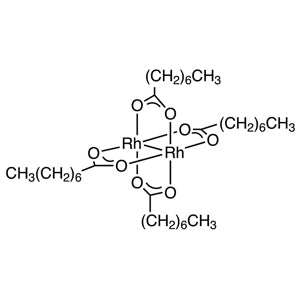
Rhodium(II)OctanoateDimer TCI R0161
Regular price From Rp 5.855.850,00Regular priceRp 4.110.750,00Sale price From Rp 5.855.850,00