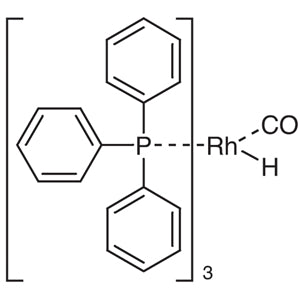
Carbonylbis(triphenylphosphine)rhodium(I) Chloride is a chemical compound widely used in catalytic reactions, particularly in C-H activation processes. This material plays a crucial role in organic and inorganic chemistry by enabling efficient and selective chemical transformations. It is a metal-based catalyst that is essential for advancing research in complex molecule synthesis and molecular modification. Its unique catalytic properties make it a valuable tool for scientists aiming to optimize reaction conditions and improve yield in various chemical processes.
The compound is known for its high stability and catalytic activity, which are key factors in its popularity among researchers. Its complex chemical structure, consisting of a rhodium(I) ion coordinated with a carbonyl group and two tripheylphosphine ligands, contributes to its effectiveness. This structure allows it to maintain its integrity under various reaction conditions while promoting efficient catalytic activity. The compound's resistance to degradation and its ability to interact with a wide range of substrates further enhance its utility in laboratory settings.
In Indonesian laboratories, this compound is commonly used in organic chemistry, catalysis, and the synthesis of complex compounds. It is a preferred choice for researchers involved in advanced chemical studies due to its reliability and performance. Institutions and research centers in Indonesia rely on this material for its consistent results and its role in cutting-edge chemical research. Its application spans various fields, making it an essential component in modern laboratory practices.
TCI brochures (PDF)
- C-H Bond Activation Reaction 2025-06-20 · p. 5
- Transition Metal Catalysts 2026-04-10 · p. 10
Related TCI products
- TCI T0931 14694-95-2 Tris(triphenylphosphine)rhodium(I) Chloride
- TCI N0453 12257-42-0 Norbornadiene Rhodium(I) Chloride Dimer
- TCI C1383 17185-29-4 Carbonylhydridotris(triphenylphosphine)rhodium(I)
- TCI B4549 819050-89-0 Bis[rhodium(alpha,alpha,alpha',alpha'-tetramethyl-1,3-benzenedipropionic Acid)]
- TCI B3961 35138-22-8 Bis(1,5-cyclooctadiene)rhodium(I) Tetrafluoroborate
- TCI B2091 36620-11-8 Bis[eta-(2,5-norbornadiene)]rhodium(I) Tetrafluoroborate
- C-H Activation Reactions: This compound is ideal for C-H activation due to its ability to facilitate selective bond cleavage and formation, making it a key reagent in synthetic chemistry.
- Organic Synthesis: Its catalytic properties make it suitable for complex molecule synthesis, where precise control over reaction pathways is essential.
- Inorganic Chemistry Research: It is used in studies involving metal-based catalysts, contributing to the development of new chemical methodologies.
- Molecular Modification Studies: Its unique structure allows it to interact with diverse substrates, making it valuable for modifying molecular structures.
- Catalytic Efficiency Testing: Researchers use it to evaluate the performance of different catalysts under varying reaction conditions.
| Brand | TCI |
|---|---|
| CAS number | 13938-94-8 |
| Molecular formula | — |
| Purity | — |
| Category | Chemistry > Catalysis and Inorganic Chemistry > C-H Activation [Catalysis] |
| Pack sizes | Available in various quantities as per standard laboratory supply |
| Physical form | Solid powder |
| Storage | Store in a cool, dry place away from moisture and direct sunlight |
This compound should be stored in a cool, dry environment to maintain its stability and catalytic activity. It is recommended to keep it in a sealed container to prevent exposure to moisture and air, which could affect its performance. Due to its chemical nature, it should be handled with care, using appropriate personal protective equipment such as gloves and safety goggles. It is advisable to store it in a well-ventilated area to minimize any potential risks associated with its use. Proper storage ensures that the compound remains effective for its intended applications in laboratory research.
—
Produk Terkait
-
Tris(triphenylphosphine)rhodium(I)Chloride TCI T0931
Regular price Rp 5.485.200,00Regular priceRp 3.851.400,00Sale price Rp 5.485.200,00 -
NorbornadieneRhodium(I)ChlorideDimer TCI N0453
Regular price Rp 6.573.000,00Regular priceRp 4.611.600,00Sale price Rp 6.573.000,00 -
Carbonylhydridotris(triphenylphosphine)rhodium(I) TCI C1383
Regular price From Rp 5.352.900,00Regular priceRp 3.759.000,00Sale price From Rp 5.352.900,00 -
Bis[rhodium(alpha,alpha,alpha',alpha'-tetramethyl-1,3-benzenedipropionicAcid)] TCI B4549
Regular price Rp 2.464.350,00Regular priceRp 1.738.800,00Sale price Rp 2.464.350,00 -
Bis(1,5-cyclooctadiene)rhodium(I)Tetrafluoroborate TCI B3961
Regular price From Rp 2.411.850,00Regular priceRp 1.702.050,00Sale price From Rp 2.411.850,00 -
Bis[eta-(2,5-norbornadiene)]rhodium(I)Tetrafluoroborate TCI B2091
Regular price Rp 2.702.700,00Regular priceRp 1.905.750,00Sale price Rp 2.702.700,00 -
Chloro(1,5-cyclooctadiene)rhodium(I)Dimer TCI B1045
Regular price From Rp 2.942.100,00Regular priceRp 2.072.700,00Sale price From Rp 2.942.100,00 -
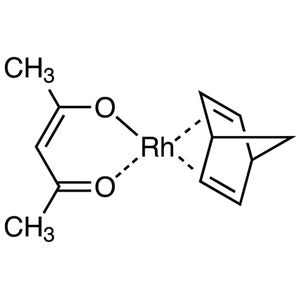
(Acetylacetonato)(norbornadiene)rhodium(I) TCI A2761
Regular price From Rp 3.472.350,00Regular priceRp 2.443.350,00Sale price From Rp 3.472.350,00