Chloro(1,5-cyclooctadiene)rhodium(I) Dimer is a specialized chemical compound used in catalytic reactions, particularly in C-H activation processes. This material plays a crucial role in organic chemistry by enabling the selective activation of carbon-hydrogen bonds, which is essential for various synthetic transformations. In the laboratory, it serves as a powerful catalyst for reactions that require high specificity and efficiency, making it indispensable in advanced chemical research. Its unique structure allows it to facilitate complex reactions with minimal side products, enhancing the overall yield and purity of the desired compounds.
The compound is favored for its stability under controlled conditions and its ability to maintain catalytic activity without degradation. Its high reactivity and selectivity make it an ideal choice for applications where precision and efficiency are paramount. The dimeric structure of rhodium, combined with the cyclooctadiene ligand, contributes to its effectiveness in promoting complex organic transformations. This combination ensures that the compound can be used repeatedly in multiple reaction cycles, reducing waste and increasing the cost-effectiveness of laboratory experiments.
In Indonesian laboratories, this compound is widely utilized in organic chemistry research, especially in catalytic and C-H activation studies. It is commonly found in academic and industrial research settings where advanced synthetic methods are required. Its reliability and performance have made it a preferred material for scientists working on innovative chemical processes and drug development projects. The compound's versatility and effectiveness continue to make it a key component in modern chemical research in Indonesia.
TCI brochures (PDF)
- Cyclic Alkyl Amino Carbene (CAAC) Precursors 2025-12-23 · p. 1
- Easily-preparable N-Heterocyclic Carbene (NHC) Precursors 2021-09-14 · p. 1
- C-H Bond Activation Reaction 2025-06-20 · p. 5
- Transition Metal Catalysts 2026-04-10 · p. 10
Related TCI products
- TCI B3961 35138-22-8 Bis(1,5-cyclooctadiene)rhodium(I) Tetrafluoroborate
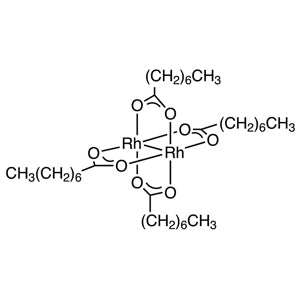
- TCI R0161 73482-96-9 Rhodium(II) Octanoate Dimer
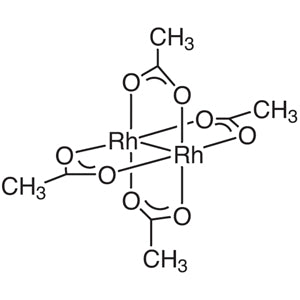
- TCI R0069 15956-28-2 Rhodium(II) Acetate Dimer
- TCI P1788 12354-85-7 (Pentamethylcyclopentadienyl)rhodium(III) Dichloride Dimer
- TCI N0453 12257-42-0 Norbornadiene Rhodium(I) Chloride Dimer
- TCI H1562 73468-85-6 Hydroxy(1,5-cyclooctadiene)rhodium(I) Dimer
- C-H Activation Reactions: This compound is ideal for C-H activation due to its ability to selectively activate carbon-hydrogen bonds, enabling the synthesis of complex organic molecules with high efficiency.
- Organic Synthesis: It is widely used in organic synthesis to facilitate the formation of new chemical bonds, particularly in reactions requiring high selectivity and catalytic activity.
- Hydrodefluorination Processes: Its catalytic properties make it suitable for hydrodefluorination reactions, where it helps in the conversion of fluorinated compounds into more stable organic products.
- Catalytic Research: It is a preferred catalyst in catalytic research due to its stability and ability to maintain activity over multiple reaction cycles, making it suitable for long-term studies.
- Industrial Chemical Processes: It is used in industrial settings for chemical processes that require high-performance catalysts, contributing to the production of various organic compounds.
From the TCI brochure
- CAAC-Rhodium Complexation
| Brand | TCI |
|---|---|
| CAS number | 12092-47-6 |
| Molecular formula | — |
| Purity | — |
| Category | Chemistry > Catalysis and Inorganic Chemistry > C-H Activation [Catalysis] |
| Pack sizes | Available in various quantities as per standard laboratory requirements |
| Physical form | Solid or liquid, depending on the specific formulation and packaging |
| Storage | — |
This compound should be stored in a cool, dry, and well-ventilated area away from moisture and direct sunlight. It is recommended to use airtight containers made of inert materials such as glass or polyethylene to prevent contamination and degradation. Due to its reactivity, it should be handled with care using appropriate personal protective equipment, including gloves and safety goggles. The compound should not be exposed to incompatible substances or strong oxidizing agents. Regular inspection of storage conditions is essential to ensure the material remains stable and effective for use in laboratory applications.
References cited in the TCI brochure
- Mario P. Wiesenfeldt. Hydrogenation of fluoroarenes: Direct access to all- cis -(multi)fluorinated cycloalkanes Science, 2017. doi:10.1126/science.aao0270
- Adelina M. Voutchkova. Disubstituted Imidazolium-2-Carboxylates as Efficient Precursors to N-Heterocyclic Carbene Complexes of Rh, Ru, Ir, and Pd Journal of the American Chemical Society, 2005. doi:10.1021/ja056625k
Produk Terkait
-
Bis(1,5-cyclooctadiene)rhodium(I)Tetrafluoroborate TCI B3961
Regular price From Rp 2.411.850,00Regular priceRp 1.702.050,00Sale price From Rp 2.411.850,00 -
Rhodium(II)OctanoateDimer TCI R0161
Regular price From Rp 5.855.850,00Regular priceRp 4.110.750,00Sale price From Rp 5.855.850,00 -
Rhodium(II)AcetateDimer TCI R0069
Regular price From Rp 3.895.500,00Regular priceRp 2.739.450,00Sale price From Rp 3.895.500,00 -
(Pentamethylcyclopentadienyl)rhodium(III)DichlorideDimer TCI P1788
Regular price From Rp 4.399.500,00Regular priceRp 3.092.250,00Sale price From Rp 4.399.500,00 -
NorbornadieneRhodium(I)ChlorideDimer TCI N0453
Regular price Rp 6.573.000,00Regular priceRp 4.611.600,00Sale price Rp 6.573.000,00 -
Hydroxy(1,5-cyclooctadiene)rhodium(I)Dimer TCI H1562
Regular price From Rp 4.161.150,00Regular priceRp 2.925.300,00Sale price From Rp 4.161.150,00 -
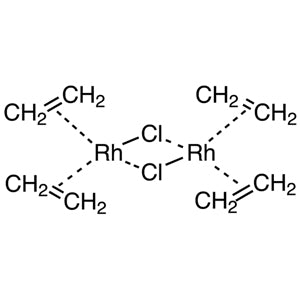
Chlorobis(ethylene)rhodium(I)Dimer TCI C2461
Regular price Rp 5.565.000,00Regular priceRp 3.907.050,00Sale price Rp 5.565.000,00 -
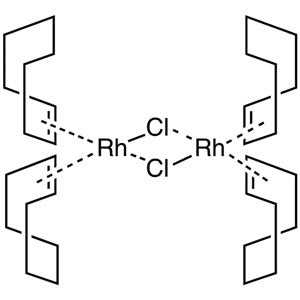
Chlorobis(cyclooctene)rhodium(I)Dimer TCI C2253
Regular price From Rp 2.862.300,00Regular priceRp 2.017.050,00Sale price From Rp 2.862.300,00