

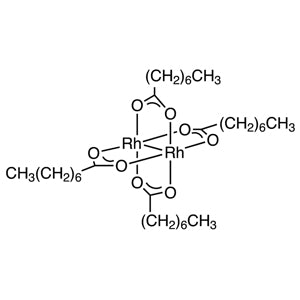
Rhodium(II) Octanoate Dimer is a chemical compound widely used in catalytic reactions, particularly in carbon-hydrogen (C-H) activation processes. This material plays a crucial role in laboratory settings where precise control over chemical reactions is required. Its unique structure enables it to act as an effective catalyst in various synthetic pathways, making it an essential tool for researchers working in organic and inorganic chemistry. Due to its ability to facilitate complex transformations, it is highly valued in modern chemical research and development.
The compound is known for its chemical stability under specific conditions, which makes it reliable for use in controlled environments. However, it is sensitive to moisture and oxidation, requiring careful handling and storage. These properties make it a preferred choice for applications that demand high reactivity and specificity. Its dimeric form also enhances its usability across a range of reaction scales, from small-scale experiments to larger industrial processes. This versatility ensures its continued relevance in both academic and applied research settings.
In Indonesian laboratories, Rhodium(II) Octanoate Dimer is commonly used in organic and inorganic chemistry research, especially in catalysis and C-H activation studies. It is a key component in the development of innovative and sustainable chemical technologies. Many research institutions and universities in Indonesia rely on this compound for advancing their work in synthetic chemistry and catalytic processes. Its application is particularly prominent in the field of C-H activation, where it supports the synthesis of aromatic and heterocyclic compounds.
TCI brochures (PDF)
- Binuclear Rhodium Complexes Effective for Small and Medium-ring Formation 2025-06-05 · p. 1
- C-H Bond Activation Reaction 2025-06-20 · p. 5
- Transition Metal Catalysts 2026-04-10 · p. 11
Related TCI products
- TCI B1045 12092-47-6 Chloro(1,5-cyclooctadiene)rhodium(I) Dimer
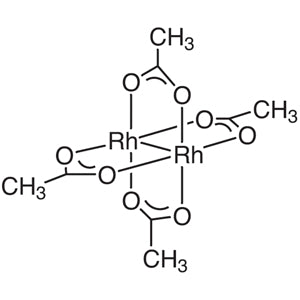
- TCI R0069 15956-28-2 Rhodium(II) Acetate Dimer
- TCI P1788 12354-85-7 (Pentamethylcyclopentadienyl)rhodium(III) Dichloride Dimer
- TCI N0453 12257-42-0 Norbornadiene Rhodium(I) Chloride Dimer
- TCI H1562 73468-85-6 Hydroxy(1,5-cyclooctadiene)rhodium(I) Dimer
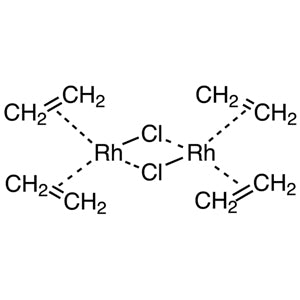
- TCI C2461 12081-16-2 Chlorobis(ethylene)rhodium(I) Dimer
- C-H Activation Reactions: This compound is ideal for C-H activation due to its ability to facilitate selective bond-breaking in hydrocarbon molecules, enabling the synthesis of complex organic structures.
- Organic Synthesis: It serves as a catalyst in the synthesis of aromatic and heterocyclic compounds, offering high reactivity and specificity in reaction conditions.
- Inorganic Chemistry Research: It is used in studies involving transition metal complexes, where its catalytic properties contribute to the formation of new chemical bonds.
- Catalytic Processes in Industrial Chemistry: Its dimeric form allows for efficient use in both small and large-scale reactions, making it suitable for industrial applications.
- Sustainable Chemical Development: It supports the creation of environmentally friendly chemical processes by enabling more efficient and selective reactions.
| Brand | TCI |
|---|---|
| CAS number | 73482-96-9 |
| Molecular formula | — |
| Purity | — |
| Category | Chemistry > Catalysis and Inorganic Chemistry > C-H Activation [Catalysis] |
| Pack sizes | Available in various quantities as per supplier specifications |
| Physical form | Solid or liquid, depending on the specific formulation |
| Storage | Requires storage in a dry, cool environment away from moisture and oxidizing agents |
Rhodium(II) Octanoate Dimer should be stored in a dry, cool environment to prevent degradation due to moisture exposure. It is recommended to use airtight containers made of materials that resist chemical interaction, such as glass or high-density polyethylene. The compound is sensitive to oxidation, so it should be kept away from air and light. Proper labeling and containment are essential to ensure safe handling. In laboratory settings, it is important to use appropriate personal protective equipment when handling this material to minimize exposure risks. Regular monitoring of storage conditions is advised to maintain the integrity and effectiveness of the compound.
—
Produk Terkait
-
Chloro(1,5-cyclooctadiene)rhodium(I)Dimer TCI B1045
Regular price From Rp 2.889.600,00Regular price -
Rhodium(II)AcetateDimer TCI R0069
Regular price From Rp 3.843.000,00Regular price -
(Pentamethylcyclopentadienyl)rhodium(III)DichlorideDimer TCI P1788
Regular price From Rp 4.347.000,00Regular price -
NorbornadieneRhodium(I)ChlorideDimer TCI N0453
Regular price Rp 6.520.500,00Regular price -
Hydroxy(1,5-cyclooctadiene)rhodium(I)Dimer TCI H1562
Regular price From Rp 4.108.650,00Regular price -
Chlorobis(ethylene)rhodium(I)Dimer TCI C2461
Regular price Rp 5.512.500,00Regular price -
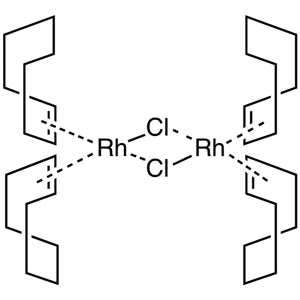
Chlorobis(cyclooctene)rhodium(I)Dimer TCI C2253
Regular price From Rp 2.809.800,00Regular price -
[1,3-Bis(ethoxycarbonyl)-2,4,5-trimethylcyclopentadien-1-yl]rhodium(III)DichlorideDimer TCI B6169
Regular price Rp 10.838.100,00Regular price



![[1,3-Bis(ethoxycarbonyl)-2,4,5-trimethylcyclopentadien-1-yl]rhodium(III) Dichloride Dimer (CAS 1352745-18-6) - TCI B6169 - AMI Scientific](http://amiscientific.com/cdn/shop/files/TCI2510B6169.jpg?v=1767093258&width=533)