(1R,2s,3S)-Cyclohexane-1,2,3-triol from TCI is a saturated six-membered carbocyclic compound carrying three adjacent hydroxyl groups at positions 1, 2, and 3. Its stereochemical descriptors define a specific relative configuration among the three hydroxyl groups, which makes this compound the meso form of cyclohexanetriol. In the laboratory, it serves as a non-heterocyclic building block for constructing molecules that need a hydroxylated cyclohexane framework with a clear, well-defined spatial arrangement. Researchers who need a reliable carbocyclic polyol starting point for multistep synthesis will find it useful.
The main appeal of this compound is the combination of a rigid ring framework with three neighbouring hydroxyl groups. This arrangement opens the way to selective transformations, such as partial protection of the hydroxyl groups, formation of cyclic acetals or ketals, esterification, and directed oxidation. Because the stereochemistry is already fixed, chemists can plan synthetic routes without first separating a mixture of isomers. That saves time, reduces purification work, and makes results easier to interpret. The polyhydroxy structure also resembles the cyclitol family, so the compound is a relevant model for studying the behaviour of cyclic sugars and inositol derivatives.
In Indonesian laboratories, this compound suits research groups working in synthetic organic chemistry, carbohydrate chemistry, and stereochemistry, at universities as well as at research institutes. Graduate students and lecturers can use it in projects on selective protecting-group strategies, conformational analysis of substituted cyclohexanes, or the preparation of cyclitol-like intermediates. Industrial R&D teams exploring polyol-based intermediates can also use it as a defined reference structure when they evaluate new synthetic routes or analytical methods.
Related TCI products
- TCI B5497 17385-36-3 [1,1'-Bi(cyclohexane)]-2,2'-diol (mixture of isomers)
- TCI C1431 17351-75-6 1,4-Bis[(vinyloxy)methyl]cyclohexane (mixture of isomers)
- TCI B5147 10029-07-9 trans-1,4-Bis(aminomethyl)cyclohexane
- TCI B5146 10029-09-1 cis-1,4-Bis(aminomethyl)cyclohexane
- TCI A3510 259535-77-8 cis-2-[[2-(Acryloyloxy)ethoxy]carbonyl]cyclohexane-1-carboxylic Acid (stabilized with MEHQ)
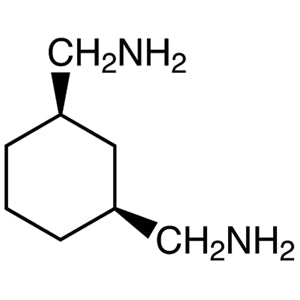
- TCI B4176 10340-00-8 cis-1,3-Bis(aminomethyl)cyclohexane
- Selective protection studies: three adjacent hydroxyl groups on a rigid ring let researchers explore regioselective protection and deprotection strategies with predictable stereochemical outcomes.
- Cyclic acetal and ketal formation: the neighbouring hydroxyl groups are well placed to form cyclic acetals or ketals, which are useful for locking conformation or masking diol units during synthesis.
- Esterification and derivatization work: each hydroxyl group can be esterified or otherwise derivatized, so the compound works as a scaffold for building functionalized cyclohexane derivatives with a defined spatial arrangement.
- Directed oxidation experiments: the fixed meso configuration makes it a suitable substrate for studying selective oxidation of secondary alcohols on a carbocyclic framework without interference from isomer mixtures.
- Cyclitol and inositol model studies: its polyhydroxylated cyclohexane structure resembles cyclitols, so it is a practical, simpler model for studying the behaviour of cyclic sugars and inositol derivatives.
| Brand | TCI |
|---|---|
| CAS number | 2630-64-0 |
| Molecular formula | — |
| Purity | — |
| Category | Chemistry > Building Blocks > Non-Heterocyclic Building Blocks |
| Pack sizes | available in the pack sizes offered by TCI; please confirm the size when ordering |
| Physical form | refer to the TCI label and Certificate of Analysis for the physical form and recommended storage conditions |
| Storage | — |
- Product code: C3754
Store this compound in its original, tightly closed container in a cool, dry, well-ventilated place, away from direct sunlight, heat sources, and incompatible materials such as strong oxidizing agents. Polyhydroxy compounds can take up moisture from the air, so reseal the container promptly after use and consider a desiccator for long-term storage. Follow the storage temperature on the TCI label or Safety Data Sheet. Handle the material according to good laboratory practice. Wear safety glasses, gloves, and a lab coat, avoid creating dust or inhaling it, and work in a fume hood when appropriate. Read the Safety Data Sheet before first use, and dispose of waste according to institutional and local regulations.
—
Produk Terkait
-
[1,1'-Bi(cyclohexane)]-2,2'-diol(mixtureofisomers) TCI B5497
Regular price Rp 6.386.100,00Regular priceRp 4.481.400,00Sale price Rp 6.386.100,00 -
1,4-Bis[(vinyloxy)methyl]cyclohexane(mixtureofisomers) TCI C1431
Regular price From Rp 3.127.950,00Regular priceRp 2.187.150,00Sale price From Rp 3.127.950,00 -
trans-1,4-Bis(aminomethyl)cyclohexane TCI B5147
Regular price From Rp 7.366.800,00Regular priceRp 5.167.050,00Sale price From Rp 7.366.800,00 -
cis-1,4-Bis(aminomethyl)cyclohexane TCI B5146
Regular price From Rp 8.267.700,00Regular priceRp 5.797.050,00Sale price From Rp 8.267.700,00 -
cis-2-[[2-(Acryloyloxy)ethoxy]carbonyl]cyclohexane-1-carboxylicAcid(stabilizedwithMEHQ) TCI A3510
Regular price From Rp 664.650,00Regular priceRp 464.100,00Sale price From Rp 664.650,00 -
cis-1,3-Bis(aminomethyl)cyclohexane TCI B4176
Regular price From Rp 5.485.200,00Regular priceRp 3.851.400,00Sale price From Rp 5.485.200,00 -
1,1-Bis[4-[N,N-di(p-tolyl)amino]phenyl]cyclohexane TCI B2079
Regular price Rp 3.074.400,00Regular priceRp 2.165.100,00Sale price Rp 3.074.400,00 -
1,1-Bis(4-aminophenyl)cyclohexane TCI B2076
Regular price From Rp 4.001.550,00Regular priceRp 2.814.000,00Sale price From Rp 4.001.550,00