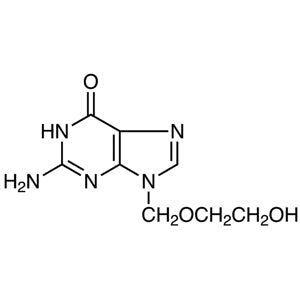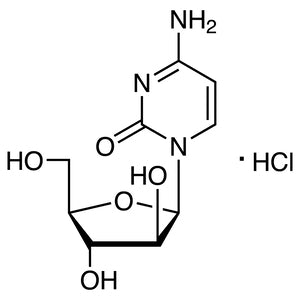
Cytarabine Hydrochloride TCI C3838 is a chemical compound widely utilized in laboratory settings, particularly in biochemical and pharmacological research. It plays a crucial role in the development and testing of antitumor drugs, especially in the treatment of leukemia. Its chemical properties make it an essential reagent for studying the mechanisms of drug action and evaluating therapeutic efficacy. This compound is commonly used in both academic and industrial research to advance understanding of cancer treatments and improve pharmaceutical formulations.
One of the key attributes that make Cytarabine Hydrochloride a preferred choice is its stability under controlled conditions. It is a solid substance that dissolves easily in water, making it convenient for various experimental applications. However, it is sensitive to moisture and light, which requires careful handling and storage. These properties ensure its reliability in laboratory experiments while also highlighting the need for proper preservation to maintain its effectiveness.
In Indonesian laboratories, Cytarabine Hydrochloride is extensively used in scientific research and pharmaceutical product development. It is a common component in studies related to cancer treatment and the testing of new compounds. Many research institutions and universities rely on this compound for experiments that aim to improve therapeutic outcomes and develop innovative medical solutions.
- Antitumor Drug Efficacy Testing: Cytarabine Hydrochloride is ideal for assessing the effectiveness of chemotherapy agents in cancer research.
- Cancer Treatment Research: Its antitumor activity makes it a key reagent in experiments focused on leukemia and other malignancies.
- Pharmaceutical Formulation Development: It is used to create solutions for testing the bioavailability and stability of new drug compounds.
- Mechanism of Action Studies: Its chemical properties allow researchers to investigate how it interacts with cellular processes in targeted therapies.
- Drug Screening Protocols: It supports high-throughput screening methods to identify potential therapeutic agents for various diseases.
| Brand | TCI |
|---|---|
| CAS number | 69-74-9 |
| Molecular formula | — |
| Purity | — |
| Category | Life Science > Biochemicals and Reagents > Antibiotics |
| Pack sizes | Available in standard laboratory quantities |
| Physical form | Solid |
| Storage | Requires protection from moisture and light |
Cytarabine Hydrochloride should be stored in a cool, dry place away from direct sunlight and sources of moisture. It is recommended to use airtight containers to prevent exposure to humidity, which can degrade its quality. Due to its sensitivity, it should be kept in a controlled environment to maintain its chemical integrity. Laboratory personnel should handle the compound with care, using appropriate personal protective equipment when necessary. Proper storage conditions are essential to ensure its effectiveness in experimental applications and to comply with safety standards in laboratory settings.
—
Product Categories
- Biochemicals and ReagentsAntibioticsAntibiotics (by Application)
- Biochemicals and ReagentsNucleosides, Nucleotides, OligonucleotidesNucleosides
- Biochemicals and ReagentsPharmaceutical Research Reagents (for Experimental Use)Antitumor Research Reagents (for Experimental Use)
- Biochemicals and ReagentsPharmaceutical Research Reagents (for Experimental Use)Antiviral Research Reagents (for Experimental Use)
- MicrobiologyAntibioticsAntibiotics (by Application)
- Pharmaceutical Development and Drug Discovery ResearchPharmaceutical Research Reagents (for Experimental Use)Antitumor Research Reagents (for Experimental Use)
- Pharmaceutical Development and Drug Discovery ResearchPharmaceutical Research Reagents (for Experimental Use)Antiviral Research Reagents (for Experimental Use)
- Pharmaceutical Development and Drug Discovery ResearchAntibioticsAntibiotics (by Application)
Produk Terkait
-
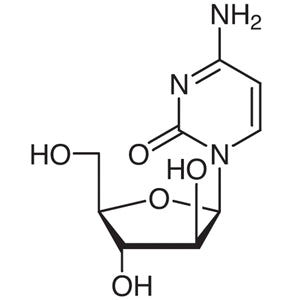
Cytarabine TCI C2035
Regular price From Rp 823.200,00Regular price -
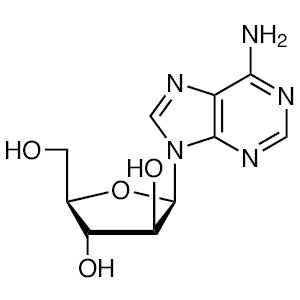
Vidarabine TCI V0175
Regular price Rp 1.803.900,00Regular price -
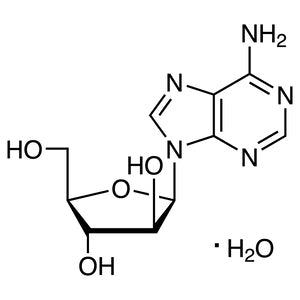
VidarabineMonohydrate TCI V0098
Regular price From Rp 3.658.200,00Regular price -
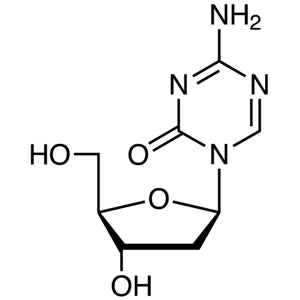
5-Aza-2'-deoxycytidine TCI A2232
Regular price From Rp 3.367.350,00Regular price -
ValacyclovirHydrochloride TCI V0111
Regular price From Rp 2.094.750,00Regular price -
Trifluorothymidine TCI T2511
Regular price From Rp 3.180.450,00Regular price -
Acyclovir TCI A1915
Regular price From Rp 477.750,00Regular price -
Penciclovir TCI P2164
Regular price Rp 2.359.350,00Regular price