
![(1,5-Cyclooctadiene)[2-(2-diphenylphosphinophenyl)pyrrolido]iridium(I) (CAS 2895434-86-1) - TCI C4021 - AMI Scientific](http://amiscientific.com/cdn/shop/files/TCI2510C4021.jpg?v=1769180469&width=1946)
![(1,5-Cyclooctadiene)[2-(2-diphenylphosphinophenyl)pyrrolido]iridium(I) (CAS 2895434-86-1) - TCI C4021 - AMI Scientific](http://amiscientific.com/cdn/shop/files/TCI2510C4021.jpg?v=1769180469&width=1445)
TCI C4021 2895434-86-1 is a complex iridium-based compound used in advanced catalytic reactions within laboratory settings. This material is specifically designed for use in organic chemistry and inorganic chemistry applications, particularly in catalysis involving transition metals. Its unique structure allows it to act as a highly efficient catalyst in a variety of chemical processes. The compound is particularly valuable in reactions that require precise control over electron activation and selectivity. It is widely used in research and development environments where high-performance catalysts are essential for achieving desired chemical transformations.
The compound’s properties make it a preferred choice for laboratory chemists. It exhibits strong catalytic activity, enabling it to facilitate complex organic reactions with high efficiency and selectivity. The presence of 1,5-cyclooctadiene and diphenylphosphinophenyl groups contributes to its stability and reactivity. These structural features allow the compound to maintain its integrity under harsh reaction conditions, such as high temperatures and pressures. Additionally, its ability to bind with various ligands enhances its versatility in different catalytic systems. This adaptability makes it a valuable tool in both academic and industrial research settings.
In Indonesian laboratories, this compound is commonly used in organic synthesis and catalytic studies. It is an essential component in research focused on heterocyclic compound synthesis and hydroformylation reactions. Many institutions and research centers in Indonesia rely on this material for advancing their understanding of catalytic mechanisms and developing new chemical processes. Its application spans across various fields, including pharmaceutical and materials science research.
Advantages (TCI brochure)
- Decomposes urea derivatives into formamides and amines
- Can be used under mild conditions
- Applicable on gram scale or with very low amount of catalyst (0.09 mol%)
TCI brochures (PDF)
- Iridium Catalyst for Hydrogenolysis of Urea Derivatives to Formamides and Amines under Mild Conditions 2024-01-25 · p. 1
- Transition Metal Catalysts 2026-04-10 · p. 11
Related TCI products
- TCI A2981 12154-84-6 (Acetylacetonato)(1,5-cyclooctadiene)iridium(I)
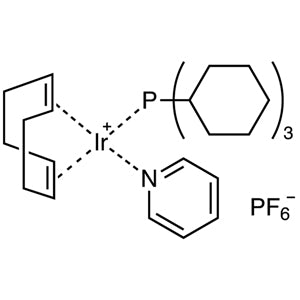
- TCI C2824 64536-78-3 (1,5-Cyclooctadiene)(pyridine)(tricyclohexylphosphine)iridium(I) Hexafluorophosphate
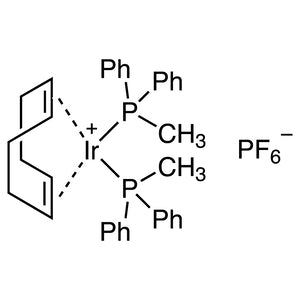
- TCI C1808 38465-86-0 (1,5-Cyclooctadiene)bis(methyldiphenylphosphine)iridium(I) Hexafluorophosphate
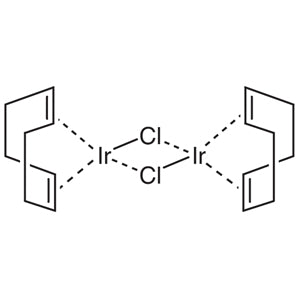
- TCI C1807 12112-67-3 Chloro(1,5-cyclooctadiene)iridium(I) Dimer
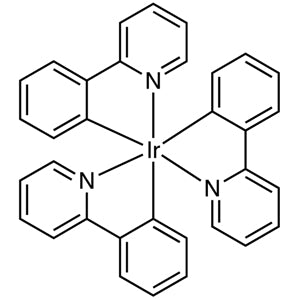
- TCI T3716 94928-86-6 Tris(2-phenylpyridinato)iridium(III)
- TCI T2685 435293-93-9 Tris[1-phenylisoquinoline-C2,N]iridium(III) (purified by sublimation)
- Organic synthesis reactions benefit from this compound’s ability to promote selective and efficient chemical transformations, making it ideal for complex molecule construction.
- Heterocyclic compound synthesis relies on its catalytic properties to facilitate the formation of ring structures with high precision and yield.
- Hydroformylation processes utilize its unique structure to activate carbon monoxide and hydrogen, enabling the production of aldehydes under controlled conditions.
- Catalytic studies in academic research require its high reactivity and stability to explore new reaction pathways and mechanisms.
- Industrial process development leverages its performance in harsh environments, ensuring reliable results in large-scale chemical manufacturing.
From the TCI brochure
- Decomposition of symmetric urea derivatives
- Decomposition of asymmetric urea derivatives
- Decomposition of polyurea
| Brand | TCI |
|---|---|
| CAS number | 2895434-86-1 |
| Molecular formula | — |
| Purity | — |
| Category | Chemistry > Catalysis and Inorganic Chemistry > Transition Elements [Catalysis and Inorganic Chemistry] |
| Pack sizes | Available in various quantities as per standard laboratory supply options |
| Physical form | Solid or liquid, depending on the specific formulation |
| Storage | Store in a cool, dry place away from light and moisture |
Data from the TCI brochure
| Kondisi A: C4021 | 3 mol% (H2 (1 MPa), THF, 130˚C) |
|---|---|
| Kondisi B: C4021 | 1-10 mol% (tBuOK 10-33 mol%, H2 (1 MPa), Toluene, 130˚C) |
| Dekomposisi poliurea: C4021 | 3 mol% (tBuOK 10 mol%, H2 (1 MPa), THF, 130˚C) |
Source: TCI brochure RR196 (2024-01-25)
This compound should be stored in a cool, dry environment, away from direct sunlight and moisture. It is recommended to use airtight containers made of materials that are chemically inert, such as glass or high-density polyethylene. Due to its catalytic nature, it should be handled with care to avoid contamination. In laboratory settings, it is essential to use appropriate personal protective equipment, including gloves and safety goggles, when handling this material. Proper ventilation should be maintained to ensure safe working conditions. The compound is not flammable but should be kept away from incompatible substances to prevent any potential chemical interactions.
References cited in the TCI brochure
- Takanori Iwasaki. Chemoselectivity change in catalytic hydrogenolysis enabling urea-reduction to formamide/amine over more reactive carbonyl compounds Nature Communications, 2023. doi:10.1038/s41467-023-38997-2
Produk Terkait
-
(Acetylacetonato)(1,5-cyclooctadiene)iridium(I) TCI A2981
Regular price From Rp 1.936.200,00Regular price -
(1,5-Cyclooctadiene)(pyridine)(tricyclohexylphosphine)iridium(I)Hexafluorophosphate TCI C2824
Regular price Rp 2.199.750,00Regular price -
(1,5-Cyclooctadiene)bis(methyldiphenylphosphine)iridium(I)Hexafluorophosphate TCI C1808
Regular price Rp 2.889.600,00Regular price -
Chloro(1,5-cyclooctadiene)iridium(I)Dimer TCI C1807
Regular price From Rp 3.021.900,00Regular price -
Tris(2-phenylpyridinato)iridium(III) TCI T3716
Regular price From Rp 5.062.050,00Regular price -
Tris[1-phenylisoquinoline-C2,N]iridium(III)(purifiedbysublimation) TCI T2685
Regular price Rp 10.733.100,00Regular price -
Tris(2,4-pentanedionato)iridium(III) TCI T2557
Regular price Rp 10.599.750,00Regular price -
Tris(2-phenylpyridinato)iridium(III)(purifiedbysublimation) TCI T1946
Regular price Rp 8.187.900,00Regular price

![435293-93-9 Tris[1-phenylisoquinoline-C2,N]iridium(III) (purified by sublimation) - AMI Scientific](http://amiscientific.com/cdn/shop/files/TCI2510T2685.jpg?v=1767143248&width=533)

