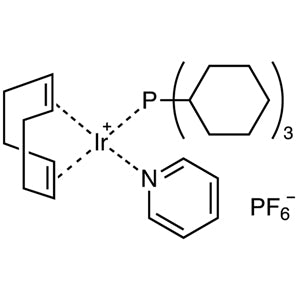
This material is a metal complex compound containing iridium(I) coordinated with 1,5-cyclooctadiene, pyridine, and tricyclohexylphosphine. It functions as a catalyst in various chemical reactions, particularly in C-H activation processes. As a catalyst, it enables the acceleration of chemical reactions without being consumed in the final product. This compound is widely used in both organic and inorganic chemistry research, especially in modern catalytic applications that demand high efficiency and reaction specificity. Its unique ability to facilitate complex chemical transformations makes it a valuable asset in advanced laboratory settings.
The compound exhibits remarkable chemical stability under specific conditions, although it remains highly sensitive to moisture and oxidation. These properties make it a preferred choice for applications requiring precise control over reaction pathways. Its effectiveness in C-H activation is a key factor in its popularity among researchers. The compound’s ability to produce high-purity products with minimal by-products further enhances its appeal in both academic and industrial research environments.
In Indonesian laboratories, this material is frequently used in organic chemistry research, especially in the development of environmentally friendly and efficient catalytic methods. Its role in advancing modern catalytic techniques has made it a staple in chemical research, particularly in areas where precision and control over reaction mechanisms are critical.
Advantages (TCI brochure)
- Can hydrogenate alkenes and alkynes selectively.
- Hydrogenates stereoselectively due to its coordinating functional groups.
TCI brochures (PDF)
- Hydrogenation Catalysts 2025-11-10 · p. 2
- C-H Bond Activation Reaction 2025-06-20 · p. 5
- Transition Metal Catalysts 2026-04-10 · p. 11
Related TCI products
- TCI A2981 12154-84-6 (Acetylacetonato)(1,5-cyclooctadiene)iridium(I)
- TCI D5817 870987-63-6 (4,4'-Di-tert-butyl-2,2'-bipyridine)bis[3,5-difluoro-2-[5-trifluoromethyl-2-pyridinyl-kappaN)phenyl-kappaC]iridium(III) Hexafluorophosphate
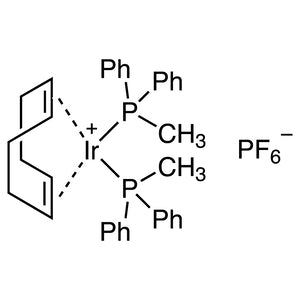
- TCI C1808 38465-86-0 (1,5-Cyclooctadiene)bis(methyldiphenylphosphine)iridium(I) Hexafluorophosphate
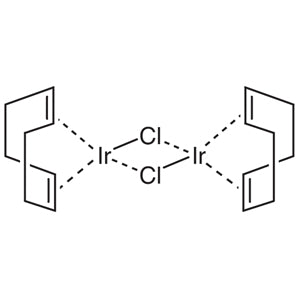
- TCI C1807 12112-67-3 Chloro(1,5-cyclooctadiene)iridium(I) Dimer
- TCI T2557 15635-87-7 Tris(2,4-pentanedionato)iridium(III)
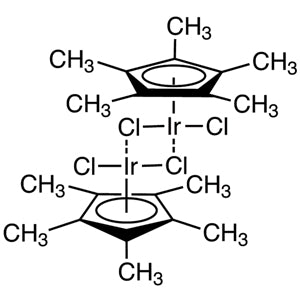
- TCI P1763 12354-84-6 (Pentamethylcyclopentadienyl)iridium(III) Dichloride Dimer
- C-H Activation Reactions: This compound is ideal for C-H activation due to its unique ability to facilitate selective bond cleavage, making it essential for synthesizing complex organic molecules.
- Catalytic Organic Synthesis: It is widely used in organic synthesis to improve reaction efficiency and reduce by-product formation, supporting green chemistry initiatives.
- Inorganic Chemistry Research: Its role in inorganic chemistry allows for the study of metal-ligand interactions and catalytic mechanisms in various chemical environments.
- Environmental Catalysis Studies: The compound's efficiency in promoting clean reactions aligns with research focused on sustainable and eco-friendly chemical processes.
- Advanced Catalytic Method Development: It is a preferred catalyst for developing new and efficient catalytic methods that meet modern scientific and industrial needs.
From the TCI brochure
- Hydrogenation of a cyclic alkene bearing a hydroxyl group, giving stereoisomeric products (H2).
| Brand | TCI |
|---|---|
| CAS number | 64536-78-3 |
| Molecular formula | — |
| Purity | — |
| Category | Chemistry > Catalysis and Inorganic Chemistry > C-H Activation [Catalysis] |
| Pack sizes | Available in various quantities as per standard laboratory supply |
| Physical form | Solid or liquid, depending on the specific formulation |
| Storage | Store in a dry, cool, and dark place away from moisture and oxidizing agents |
This compound should be stored in a dry, cool, and dark environment to prevent degradation due to moisture and oxidation. It is recommended to use airtight containers made of materials such as glass or polyethylene to minimize exposure to air and humidity. Due to its sensitivity, it should be handled with care, using appropriate personal protective equipment such as gloves and safety goggles. In laboratory settings, it is important to ensure that storage areas are well-ventilated and free from potential contaminants. Regular monitoring of storage conditions is advised to maintain the compound's stability and effectiveness for research applications.
—
Product Categories
- Catalysis and Inorganic ChemistryC-H Activation [Catalysis]Iridium Compounds [C-H Activation]
- Catalysis and Inorganic ChemistryHydrogenation [Catalysis]Hydrogenation Catalysts
- Catalysis and Inorganic ChemistryTransition Elements [Catalysis and Inorganic Chemistry]Iridium [Catalysis and Inorganic Chemistry]
Produk Terkait
-
(Acetylacetonato)(1,5-cyclooctadiene)iridium(I) TCI A2981
Regular price From Rp 1.936.200,00Regular price -
(4,4'-Di-tert-butyl-2,2'-bipyridine)bis[3,5-difluoro-2-[5-trifluoromethyl-2-pyridinyl-kappaN)phenyl-kappaC]iridium(III)Hexafluorophosphate TCI D5817
Regular price From Rp 3.710.700,00Regular price -
(1,5-Cyclooctadiene)bis(methyldiphenylphosphine)iridium(I)Hexafluorophosphate TCI C1808
Regular price Rp 2.889.600,00Regular price -
Chloro(1,5-cyclooctadiene)iridium(I)Dimer TCI C1807
Regular price From Rp 3.021.900,00Regular price -
Tris(2,4-pentanedionato)iridium(III) TCI T2557
Regular price Rp 10.599.750,00Regular price -
(Pentamethylcyclopentadienyl)iridium(III)DichlorideDimer TCI P1763
Regular price Rp 8.055.600,00Regular price -
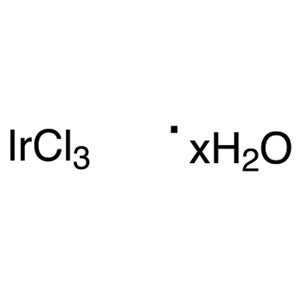
Iridium(III)ChlorideHydrate TCI I0616
Regular price From Rp 8.506.050,00Regular price -
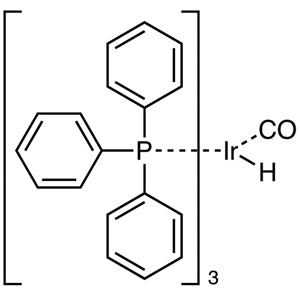
Carbonylhydridotris(triphenylphosphine)iridium(I) TCI C3040
Regular price From Rp 2.411.850,00Regular price

![(4,4'-Di-tert-butyl-2,2'-bipyridine)bis[3,5-difluoro-2-[5-trifluoromethyl-2-pyridinyl-kappaN)phenyl-kappaC]iridium(III) Hexafluorophosphate (CAS 870987-63-6) - TCI D5817 - AMI Scientific](http://amiscientific.com/cdn/shop/files/TCI2510D5817.jpg?v=1767109244&width=533)