2-Chloro-1,3-bis(methoxycarbonyl)guanidine from TCI is a guanidine-based electrophilic chlorinating reagent, widely known among researchers as Palau'Chlor. It was developed and reported by the research group of Phil Baran as an alternative to conventional chlorinating reagents. In the laboratory, this compound belongs to the class of synthetic reagents for carbon-halogen bond formation. Its main use is introducing chlorine atoms into heteroaromatic rings and electron-rich aromatic rings, which makes it a useful tool in modern organic synthesis.
Its main advantage is that it can chlorinate many heterocyclic substrates that are difficult to chlorinate with reagents such as N-chlorosuccinimide. It often does this under milder conditions and with good selectivity. Because it comes in an easy-to-weigh form, it is more practical to handle than chlorine gas or corrosive liquid reagents. The two methoxycarbonyl groups stabilise the chlorine-bearing nitrogen and also moderate its reactivity. This gives more controlled reactions and makes the reagent well suited to late-stage steps in the synthesis of complex molecules.
In Indonesia, this reagent is relevant to medicinal chemistry laboratories, the pharmaceutical industry, and organic synthesis research groups that need to halogenate heteroaromatic scaffolds. University research laboratories working on new synthetic methods can use it to explore selective chlorination, and pharmaceutical development teams can apply it when modifying advanced intermediates. Its practical handling and controlled reactivity also make it a good fit for teaching and research settings where safety and reproducibility matter.
Advantages (TCI brochure)
- Easy-to-handle solid
- Enables regioselective halogenation of drug-like complicated hetero aromatics in mild conditions
- Applicable to multi-gram scale synthesis and continuous flow technique
- Suitable for late-stage functionalization in drug discovery research
TCI brochures (PDF)
- High-Performance Chlorinating Agents and Brominating Agent for Regioselective Halogenation of (Hetero)arenes 2025-03-13 · p. 1
- Halogenation Reagents 2026-04-03 · p. 3
Related TCI products
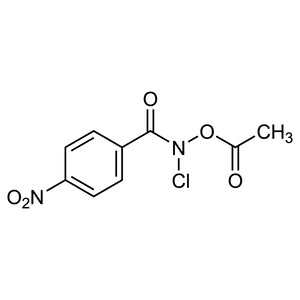
- TCI A3694 2991507-62-9 N-Acetoxy-N-chloro-4-nitrobenzamide
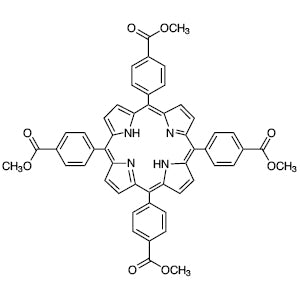
- TCI T3918 22112-83-0 5,10,15,20-Tetrakis(4-methoxycarbonylphenyl)porphyrin
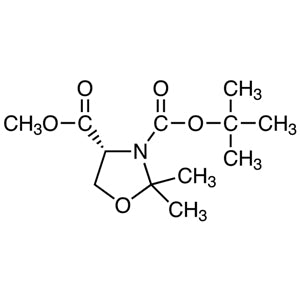
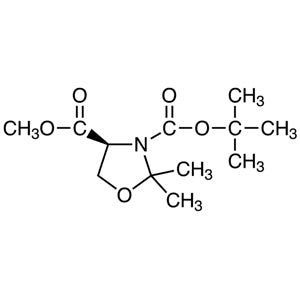
- TCI B5352 95715-86-9 (R)-(+)-3-(tert-Butoxycarbonyl)-4-methoxycarbonyl-2,2-dimethyl-1,3-oxazolidine
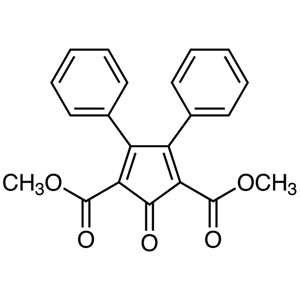
- TCI B1962 16691-79-5 2,5-Bis(methoxycarbonyl)-3,4-diphenylcyclopentadienone
- TCI B1755 108149-60-6 (S)-(-)-3-tert-Butoxycarbonyl-4-methoxycarbonyl-2,2-dimethyl-1,3-oxazolidine
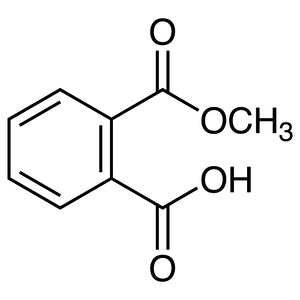
- TCI M3783 4376-18-5 2-(Methoxycarbonyl)benzoic Acid
- Chlorination of heteroaromatic rings: the reagent can introduce chlorine into many heterocyclic substrates that are hard to chlorinate with N-chlorosuccinimide, often under milder conditions.
- Chlorination of electron-rich aromatic compounds: as an electrophilic chlorine source, it reacts with electron-rich arenes and offers good selectivity for building carbon-chlorine bonds.
- Late-stage functionalisation of complex molecules: the methoxycarbonyl groups moderate its reactivity, so chlorination stays controlled when it is applied to advanced, highly functionalised intermediates.
- Medicinal chemistry and drug discovery: chemists can add chlorine to heteroaromatic scaffolds to prepare analogues for structure-activity studies in pharmaceutical research programmes.
- Synthetic methodology research: as a practical alternative to chlorine gas and corrosive liquid reagents, it is well suited to academic groups developing and comparing new halogenation methods.
From the TCI brochure
- Synthesis of halogenated building blocks
- Late-stage functionalization of biologically active compounds
- Regioselective chlorination of (hetero)arenes in CHCl3 or CH3CN, r.t. - 60 C
| Brand | TCI (product code C4028) |
|---|---|
| CAS number | 1596379-00-8 |
| Molecular formula | — |
| Purity | — |
| Category | Chemistry > Synthetic Reagents > C-X(Halogen) Bond Formation [Synthetic Reagents] |
| Pack sizes | see the available options on the product page |
| Physical form | easy-to-weigh reagent, more practical to handle than chlorine gas or liquid chlorinating agents |
| Storage | keep tightly closed and follow the storage conditions on the TCI label and Safety Data Sheet |
Store this reagent in its original, tightly sealed container, away from moisture, heat, and direct light, and follow the storage temperature given on the TCI label and Safety Data Sheet. As an electrophilic chlorinating agent, keep it away from reducing agents, strong bases, and incompatible materials. Handle it in a well-ventilated fume hood and wear safety glasses, chemical-resistant gloves, and a laboratory coat. Use clean, dry spatulas and glassware when weighing it, reseal the container promptly after use, and dispose of residues according to local laboratory and environmental regulations.
References cited in the TCI brochure
- Rodrigo A. Rodriguez. Palau’chlor: A Practical and Reactive Chlorinating Reagent Journal of the American Chemical Society, 2014. doi:10.1021/ja5031744
Produk Terkait
-
N-Acetoxy-N-chloro-4-nitrobenzamide TCI A3694
Regular price From Rp 2.411.000,00Regular priceRp 1.656.000,00Sale price From Rp 2.411.000,00 -
5,10,15,20-Tetrakis(4-methoxycarbonylphenyl)porphyrin TCI T3918
Regular price Rp 1.166.000,00Regular priceRp 809.000,00Sale price Rp 1.166.000,00 -
(R)-(+)-3-(tert-Butoxycarbonyl)-4-methoxycarbonyl-2,2-dimethyl-1,3-oxazolidine TCI B5352
Regular price From Rp 1.608.000,00Regular priceRp 1.109.000,00Sale price From Rp 1.608.000,00 -
2,5-Bis(methoxycarbonyl)-3,4-diphenylcyclopentadienone TCI B1962
Regular price From Rp 2.619.000,00Regular priceRp 1.798.000,00Sale price From Rp 2.619.000,00 -
(S)-(-)-3-tert-Butoxycarbonyl-4-methoxycarbonyl-2,2-dimethyl-1,3-oxazolidine TCI B1755
Regular price From Rp 518.000,00Regular priceRp 368.000,00Sale price From Rp 518.000,00 -
2-(Methoxycarbonyl)benzoicAcid TCI M3783
Regular price From Rp 1.246.000,00Regular priceRp 848.000,00Sale price From Rp 1.246.000,00 -
4-(Methoxycarbonyl)bicyclo[2.1.1]hexane-1-carboxylicAcid TCI M3703
Regular price Rp 5.240.000,00Regular priceRp 3.565.000,00Sale price Rp 5.240.000,00 -
5-(Methoxycarbonyl)bicyclo[3.1.1]heptane-1-carboxylicAcid TCI M3701
Regular price Rp 5.137.000,00Regular priceRp 3.495.000,00Sale price Rp 5.137.000,00