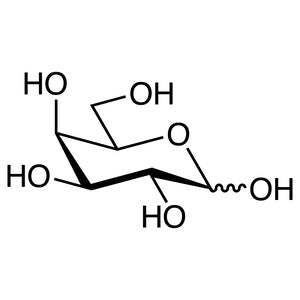
2-Deoxy-D-galactose (TCI D0050) is a deoxy sugar. It is an analog of D-galactose that lacks the hydroxyl group on the second carbon atom. This small structural change makes it very useful in glycoscience and chemical biology. Cells and enzymes still recognize the compound as galactose-like, but it cannot take part in reactions that need the 2-OH group. Researchers therefore use it as a tool to study galactose metabolism, glycoconjugate biosynthesis, and the role of specific hydroxyl groups in carbohydrate recognition.
Researchers choose this compound because it can act both as an analog and as an inhibitor. The literature reports that 2-deoxy-D-galactose can interfere with fucosylation. Fucose residues are usually linked to the 2-OH group of galactose, and this analog does not have that group. Enzymes of the Leloir pathway, such as galactokinase, can also process the compound, which makes it useful for substrate specificity studies. It is a solid that dissolves readily in water, so stock solutions for cell culture and enzymatic assays are easy to prepare. The CAS number, 1949-89-9, makes the compound easy to identify for procurement and documentation.
In Indonesia, glycobiology, biochemistry, and biotechnology research continues to grow at universities and national research institutions. Researchers who study protein glycosylation, cell-surface carbohydrates, or galactose metabolic pathways can use 2-Deoxy-D-galactose as a well-defined probe in their experiments. University biochemistry laboratories, molecular biology groups, and biotechnology research centers can include it in cell culture work, enzyme assays, and studies of carbohydrate–protein interactions. It also fits teaching and thesis projects that explore how small changes in sugar structure affect biological recognition.
TCI brochures (PDF)
Related TCI products
- TCI G0267 15572-79-9 L-(-)-Galactose
- TCI G0008 59-23-4 D-(+)-Galactose Anhydrous
- TCI T1932 94189-64-7 3,4,6-Tri-O-benzyl-2-deoxy-D-galactopyranose
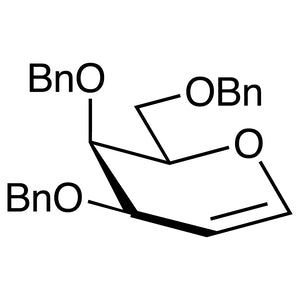
- TCI T1858 80040-79-5 Tri-O-benzyl-D-galactal
- TCI T1734 4098-06-0 Tri-O-acetyl-D-galactal
- TCI B3470 97753-82-7 5-Bromo-3-indolyl beta-D-Galactopyranoside [for Biochemical Research]
- Fucosylation inhibition studies: Because it lacks the 2-OH group where fucose is normally attached, this analog is reported to interfere with fucosylation of galactose-containing glycans.
- Galactose metabolism research: Cells still recognize it as galactose-like, so it can be used to follow and perturb galactose metabolic pathways and see how they respond to a modified substrate.
- Leloir pathway enzyme specificity: Enzymes such as galactokinase can process this compound, so it is useful for comparing substrate specificity against natural D-galactose in enzymatic assays.
- Glycoconjugate biosynthesis studies: It can be introduced into biosynthetic systems to examine how missing the C-2 hydroxyl group affects the assembly of glycoproteins and glycolipids.
- Carbohydrate recognition research: Its single, defined structural change from D-galactose helps researchers test how a specific hydroxyl group contributes to binding by lectins, enzymes, and other carbohydrate-recognizing proteins.
| Brand | TCI (product code D0050) |
|---|---|
| CAS number | 1949-89-9 |
| Molecular formula | — |
| Purity | — |
| Category | Chemistry > Chemical Biology > Glycoscience |
| Pack sizes | see the available options listed on this product page |
| Physical form | solid, readily soluble in water |
| Storage | follow the conditions stated on the product label and the TCI Safety Data Sheet |
Store 2-Deoxy-D-galactose in its original, tightly closed container under the conditions given on the product label and the supplier's Safety Data Sheet. Keep it in a clean, dry area away from moisture, heat, and incompatible substances. After each use, reseal the container promptly to protect the solid from humidity. Prepare aqueous stock solutions with clean labware, label them clearly with the contents and preparation date, and store them as your laboratory protocol specifies. Follow good laboratory practice when handling the compound. Wear gloves, a lab coat, and eye protection, avoid creating dust, and do not inhale or ingest it. Wash your hands after handling, and dispose of waste according to your institution's chemical waste procedures.
—
Produk Terkait
-
L-(-)-Galactose TCI G0267
Regular price From Rp 3.472.350,00Regular priceRp 2.443.350,00Sale price From Rp 3.472.350,00 -
D-(+)-GalactoseAnhydrous TCI G0008
Regular price From Rp 505.050,00Regular priceRp 368.550,00Sale price From Rp 505.050,00 -
3,4,6-Tri-O-benzyl-2-deoxy-D-galactopyranose TCI T1932
Regular price Rp 5.777.100,00Regular priceRp 4.055.100,00Sale price Rp 5.777.100,00 -
Tri-O-benzyl-D-galactal TCI T1858
Regular price Rp 2.411.850,00Regular priceRp 1.702.050,00Sale price Rp 2.411.850,00 -
Tri-O-acetyl-D-galactal TCI T1734
Regular price From Rp 1.643.250,00Regular priceRp 1.164.450,00Sale price From Rp 1.643.250,00 -
5-Bromo-3-indolylbeta-D-Galactopyranoside[forBiochemicalResearch] TCI B3470
Regular price From Rp 795.900,00Regular priceRp 572.250,00Sale price From Rp 795.900,00 -
5-Bromo-4-chloro-3-indolylbeta-D-Galactopyranoside[forBiochemicalResearch] TCI B3201
Regular price From Rp 1.378.650,00Regular priceRp 979.650,00Sale price From Rp 1.378.650,00 -
Phenyl2-O-Acetyl-3,4,6-tri-O-benzyl-1-thio-beta-D-galactopyranoside TCI P2078
Regular price Rp 10.281.600,00Regular priceRp 7.205.100,00Sale price Rp 10.281.600,00