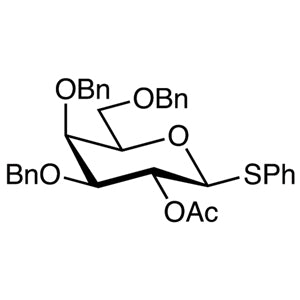
Phenyl 2-O-Acetyl-3,4,6-tri-O-benzyl-1-thio-beta-D-galactopyranoside is a complex chemical compound widely used in chemical biology and glycoscience research. This compound is a derivative of galactose, with structural modifications involving benzyl and acetyl groups at specific positions. It plays a crucial role in laboratory settings, particularly in enzymatic reactions related to glycosides. Its unique molecular structure enables it to act as a substrate or inhibitor in various biochemical processes, making it indispensable for advanced research.
The compound's reactivity is largely attributed to the presence of a thioglycoside group, which allows it to participate in specific chemical reactions. Its high purity and solid form make it a preferred choice for experiments requiring precision and consistency. Additionally, its structural complexity ensures that it remains stable under controlled laboratory conditions, enhancing its reliability in research applications. These properties make it a valuable tool for scientists working in the field of glycoscience.
In Indonesian laboratories, this compound is commonly used in biochemical studies, particularly in carbohydrate metabolism and drug development research. It is also a key component in molecular interaction studies, where its ability to interact with specific enzymes is essential. Its availability and chemical stability make it a go-to material for researchers aiming to explore glycosidic interactions and enzymatic mechanisms.
- Glycoscience Research – This compound is ideal for studying glycosidic linkages and enzymatic activity due to its structural complexity and reactivity.
- Enzymatic Reaction Studies – Its role as a substrate or inhibitor makes it suitable for investigating enzyme kinetics and substrate specificity.
- Drug Development – The compound is used in the synthesis of glycosidic derivatives, which are important in pharmaceutical research and therapeutic applications.
- Molecular Interaction Analysis – Its ability to interact with specific enzymes makes it useful for studying molecular recognition and binding mechanisms.
- Carbohydrate Metabolism Studies – It serves as a model compound for understanding metabolic pathways involving glycosides and their enzymatic processing.
| Brand | — |
|---|---|
| CAS number | — |
| Molecular formula | — |
| Purity | — |
| Category | — |
| Pack sizes | — |
| Physical form | — |
| Storage | — |
- Brand – TCI
- CAS Number – 183875-28-7
- Category – Chemistry > Chemical Biology > Glycoscience
- Pack Sizes – Available in various quantities as per supplier specifications
- Physical Form – Solid
- Storage Note – Store in a cool, dry place away from light and moisture
This compound should be stored in a cool, dry environment to maintain its chemical integrity and prevent degradation. It is recommended to keep it in a sealed container to avoid exposure to moisture and air, which could affect its stability. Due to its reactivity, it should be handled with care, using appropriate personal protective equipment such as gloves and safety goggles. It is advisable to store it in a well-ventilated area to minimize any potential risk of inhalation. Proper labeling of storage containers is essential to ensure safe handling and prevent accidental exposure. Regular monitoring of storage conditions is recommended to maintain the compound's quality and usability in laboratory settings.
—
Produk Terkait
-
TCI B5774 5,10-Bis(4,4,5,5-tetramethyl-1,3,2-dioxaborolan-2-yl)naphtho[1,2-c:5,6-c']bis([1,2,5]oxadiazole)
Regular price Rp 10.255.350,00Regular price -
Dihydroiodide TCI B6569
Regular price From Rp 1.936.200,00Regular price -
Trifluoromethanesulfonate TCI B7003
Regular price From Rp 1.936.200,00Regular price
![5,10-Bis(4,4,5,5-tetramethyl-1,3,2-dioxaborolan-2-yl)naphtho[1,2-c:5,6-c']bis([1,2,5]oxadiazole) - TCI B5774 - AMI Scientific](http://amiscientific.com/cdn/shop/files/TCI2510B5774.jpg?v=1769180228&width=533)