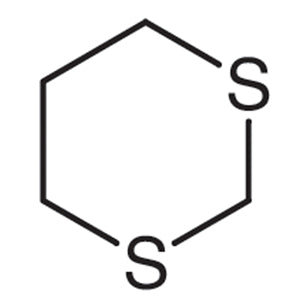
1,3-Dithiane is a chemical compound with a heterocyclic structure containing two sulfur atoms within a cyclic chain. It plays a crucial role in organic synthesis as a fundamental building block for constructing complex molecules. In the laboratory, this compound serves as a versatile reagent, particularly in reactions involving sulfur reactivity. Its unique structure enables it to participate in a wide range of chemical transformations, making it an essential component in synthetic pathways.
The chemical properties of 1,3-Dithiane make it a preferred choice for researchers. It exhibits reactivity under appropriate chemical conditions, allowing the formation of diverse heterocyclic structures. Despite its reactivity, it maintains stability in specific environments, offering a balance between reactivity and controllability. These characteristics make it ideal for applications requiring sulfur-based compounds in organic synthesis. Its ability to engage in substitution and cyclic reactions further enhances its utility in laboratory settings.
In Indonesian laboratories, 1,3-Dithiane is widely used in organic chemistry research, especially in academic institutions and research centers. It is a key reagent in the development of new compounds with applications in pharmaceuticals, materials science, and chemical industries. Its availability and reliability make it a standard component in synthetic processes, supporting innovation and discovery in various scientific fields.
- Organic synthesis applications benefit from 1,3-Dithiane due to its ability to form complex heterocyclic structures, making it ideal for constructing sulfur-containing compounds.
- It is frequently used in pharmaceutical research to develop new drug molecules, as its reactivity supports the creation of diverse chemical frameworks.
- In materials science, 1,3-Dithiane contributes to the synthesis of advanced polymers and functional materials through its participation in cyclic reactions.
- Its role in academic research is significant, as it enables students and researchers to explore sulfur chemistry and develop new synthetic methodologies.
- Industrial chemical processes incorporate 1,3-Dithiane for the production of specialized compounds, leveraging its reactivity and structural versatility.
| Brand | TCI |
|---|---|
| CAS number | 505-23-7 |
| Molecular formula | — |
| Purity | — |
| Category | Chemistry > Building Blocks > Heterocyclic Building Blocks |
| Pack sizes | — |
| Physical form | — |
| Storage | Store in a cool, dry place away from moisture and incompatible materials |
1,3-Dithiane should be stored in a cool, dry environment to maintain its chemical stability. It is recommended to keep it in a tightly sealed container to prevent exposure to moisture and air. Due to its reactivity, it should be stored away from incompatible substances such as strong oxidizers or acids. Proper ventilation is essential when handling this compound to minimize the risk of inhalation. Laboratory personnel should wear appropriate personal protective equipment, including gloves and safety goggles, when working with 1,3-Dithiane. Regular monitoring of storage conditions ensures the compound remains safe and effective for use in chemical synthesis.
—
Produk Terkait
-
2-(p-Tolyl)-1,3-dithiane TCI T3887
Regular price Rp 1.431.150,00Regular price -
2-Trimethylsilyl-1,3-dithiane TCI T1514
Regular price From Rp 4.081.350,00Regular price -
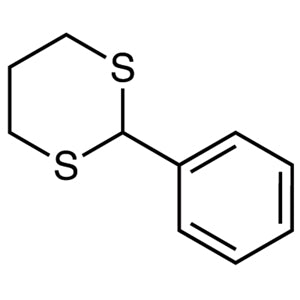
2-Phenyl-1,3-dithiane TCI P2660
Regular price From Rp 1.326.150,00Regular price -
2-Methyl-1,3-dithiane TCI M3590
Regular price From Rp 2.518.950,00Regular price -
2-(4-Methoxyphenyl)-1,3-dithiane TCI M3278
Regular price From Rp 955.500,00Regular price -
2,5-Dihydroxy-1,4-dithiane TCI D1761
Regular price From Rp 823.200,00Regular price -
Ethyl1,3-Dithiane-2-carboxylate TCI D1648
Regular price From Rp 1.035.300,00Regular price -
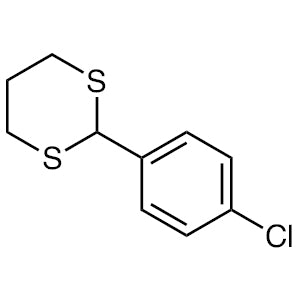
2-(4-Chlorophenyl)-1,3-dithiane TCI C3649
Regular price From Rp 795.900,00Regular price