2,5-Dihydroxy-1,4-dithiane is a chemical compound with a heterocyclic structure containing two sulfur atoms and two oxygen atoms. This compound plays a crucial role in laboratory settings as a building block for the synthesis of complex molecules. Its unique reactivity allows it to participate in various chemical reactions, making it a valuable tool for researchers working in organic chemistry and pharmaceutical development. Due to its structural versatility and chemical properties, it is widely used in the creation of new compounds with specific biological activities.
The compound's preference in laboratory applications stems from its ability to engage in nucleophilic, electrophilic, and substitution reactions. Its chemical stability under certain conditions, combined with its reactivity toward organic reagents, makes it a versatile component in synthetic pathways. The presence of both sulfur and oxygen atoms enhances its potential for forming new bonds and participating in diverse chemical transformations, which is highly beneficial for advanced research in synthetic chemistry.
In Indonesian laboratories, 2,5-Dihydroxy-1,4-dithiane is commonly used in scientific research, particularly in organic chemistry and pharmaceutical synthesis. Its role as a building block enables researchers to develop new compounds with targeted biological activities. The compound’s chemical properties make it an essential resource for those seeking to explore innovative chemical structures and reactivity patterns in their experiments.
Related TCI products
- Organic synthesis applications benefit from this compound’s reactivity and structural versatility, enabling the creation of complex molecules.
- Pharmaceutical research utilizes its ability to form new bonds, supporting the development of compounds with specific biological activities.
- Heterocyclic compound synthesis relies on its unique structure, allowing for the construction of diverse chemical frameworks.
- Bioactive compound development leverages its chemical properties to design molecules with targeted therapeutic effects.
- Advanced chemical research employs this compound for exploring new synthetic pathways and reactivity patterns.
| Brand | TCI |
|---|---|
| CAS number | 40018-26-6 |
| Molecular formula | — |
| Purity | — |
| Category | Chemistry > Building Blocks > Heterocyclic Building Blocks |
| Pack sizes | — |
| Physical form | — |
| Storage | Store in a cool, dry place away from moisture and direct sunlight |
This compound should be stored in a cool, dry environment to maintain its chemical stability. It is recommended to keep it in a sealed container to prevent exposure to moisture and air. Due to its reactivity, it should be handled with care in a well-ventilated laboratory setting. Suitable containers should be made of materials that do not react with the compound, such as glass or inert polymer. General laboratory precautions include wearing appropriate personal protective equipment when handling the material. Proper storage and handling ensure the compound remains effective for its intended applications in research and development.
—
Produk Terkait
-
2-(p-Tolyl)-1,3-dithiane TCI T3887
Regular price Rp 1.431.150,00Regular price -
2-Trimethylsilyl-1,3-dithiane TCI T1514
Regular price From Rp 4.081.350,00Regular price -
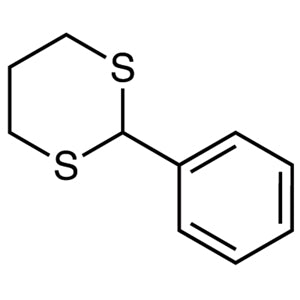
2-Phenyl-1,3-dithiane TCI P2660
Regular price From Rp 1.326.150,00Regular price -
2-Methyl-1,3-dithiane TCI M3590
Regular price From Rp 2.518.950,00Regular price -
2-(4-Methoxyphenyl)-1,3-dithiane TCI M3278
Regular price From Rp 955.500,00Regular price -
Ethyl1,3-Dithiane-2-carboxylate TCI D1648
Regular price From Rp 1.035.300,00Regular price -
1,3-Dithiane TCI D0119
Regular price From Rp 1.936.200,00Regular price -
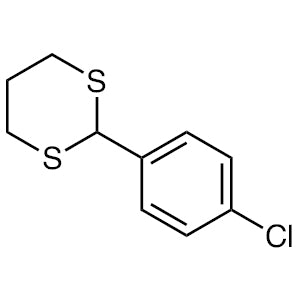
2-(4-Chlorophenyl)-1,3-dithiane TCI C3649
Regular price From Rp 795.900,00Regular price