N,N'-Dibenzoylhydrazine (TCI D0150, CAS 787-84-8) is a diacylhydrazine compound. Each nitrogen atom of the hydrazine core carries one benzoyl group. Organic chemistry laboratories use it as a non-heterocyclic building block, and it is valued most as a direct precursor to diphenyl-substituted 1,3,4-oxadiazole and 1,3,4-thiadiazole rings. The diacylhydrazine framework is also known in agrochemistry, because several insect growth regulator insecticides share a similar structural motif. This makes the compound a useful reference structure for researchers working at the boundary of synthesis and applied chemistry.
Researchers choose this compound because it is symmetrical, stable and easy to convert. Cyclodehydration with phosphoryl chloride or another dehydrating reagent joins the two carbonyl groups and the nitrogen atoms into a 2,5-diphenyl-1,3,4-oxadiazole ring. That ring is widely studied in optoelectronic materials and in medicinal chemistry. Treatment with a thionating reagent leads instead to the corresponding thiadiazole. The adjacent amide NH groups also make the molecule an interesting ligand and hydrogen-bond donor for coordination chemistry and crystal studies. Because the structure is symmetrical, reaction outcomes are predictable and products are easier to characterise.
In Indonesia, this material suits organic chemistry and materials laboratories at universities that study heterocyclic compounds, luminescent materials or candidate bioactive compounds. Final-year undergraduate projects, master's and doctoral theses, and funded research groups can use it as a dependable starting point for synthesising oxadiazole and thiadiazole derivatives. It also works well as a model substrate for teaching and optimising cyclodehydration methods. AMI Scientific supplies the original TCI product to research and teaching laboratories across Indonesia.
- Synthesis of 2,5-diphenyl-1,3,4-oxadiazole: cyclodehydration with phosphoryl chloride or another dehydrating reagent closes the diacylhydrazine framework directly into the oxadiazole ring.
- Preparation of 1,3,4-thiadiazole derivatives: reaction with a thionating reagent turns the symmetrical diacylhydrazine into the corresponding diphenyl-substituted thiadiazole for further heterocyclic studies.
- Optoelectronic and luminescent materials research: the compound gives a straightforward route to oxadiazole cores, which are widely studied as components of optoelectronic and light-emitting materials.
- Medicinal chemistry exploration: the oxadiazole and thiadiazole rings made from this building block are common scaffolds when researchers screen candidate bioactive compounds in university laboratories.
- Coordination and crystal engineering studies: the adjacent amide NH groups act as hydrogen-bond donors and potential ligand sites, which makes the molecule useful for studying coordination complexes and crystal packing.
| Brand | TCI (product code D0150) |
|---|---|
| CAS number | 787-84-8 |
| Molecular formula | — |
| Purity | — |
| Category | Chemistry > Building Blocks > Non-Heterocyclic Building Blocks |
| Pack sizes | available in the pack sizes listed for TCI D0150; contact AMI Scientific to confirm current options |
| Physical form | solid; see the TCI product label and Safety Data Sheet for full details |
| Storage | keep tightly closed in a cool, dry place; follow the storage conditions on the TCI label and SDS |
Store N,N'-Dibenzoylhydrazine in its original, tightly closed container in a cool, dry and well-ventilated area, away from direct sunlight, heat sources and moisture. Keep it separate from strong oxidising agents and from reactive reagents such as phosphoryl chloride and thionating agents. Handle the solid in a fume hood or another well-ventilated area to avoid inhaling dust. Wear a laboratory coat, safety glasses and chemical-resistant gloves. Avoid contact with skin and eyes, and wash hands thoroughly after use. Label all secondary containers clearly. Before first use, read the TCI Safety Data Sheet and follow your institution's chemical hygiene and waste disposal procedures.
—
Produk Terkait
-
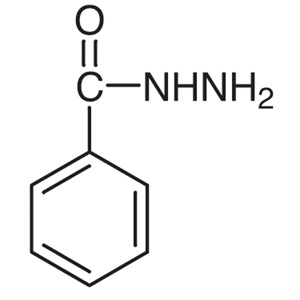
Benzoylhydrazine TCI B0205
Regular price From Rp 795.900,00Regular priceRp 572.250,00Sale price From Rp 795.900,00 -
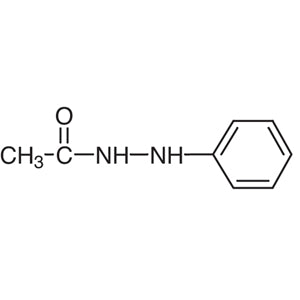
1-Acetyl-2-phenylhydrazine TCI A0107
Regular price Rp 1.246.350,00Regular priceRp 887.250,00Sale price Rp 1.246.350,00 -
2-Tosylhydrazine-1-carboxamide TCI T4226
Regular price Rp 1.272.600,00Regular priceRp 905.100,00Sale price Rp 1.272.600,00 -
HydrazinecarbohydrazonohydrazideHydrochloride TCI T4080
Regular price From Rp 2.677.500,00Regular priceRp 1.887.900,00Sale price From Rp 2.677.500,00 -
1,3-Dibenzoyloxybenzene TCI D5207
Regular price From Rp 822.150,00Regular priceRp 590.100,00Sale price From Rp 822.150,00 -
1,2-Diformylhydrazine TCI D4595
Regular price Rp 2.279.550,00Regular priceRp 1.609.650,00Sale price Rp 2.279.550,00 -
1,4-Dibenzoylbenzene TCI D4196
Regular price Rp 3.870.300,00Regular priceRp 2.705.850,00Sale price Rp 3.870.300,00 -
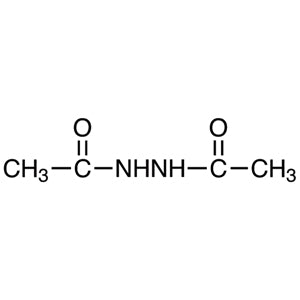
N,N'-Diacetylhydrazine TCI D2796
Regular price Rp 2.173.500,00Regular priceRp 1.535.100,00Sale price Rp 2.173.500,00