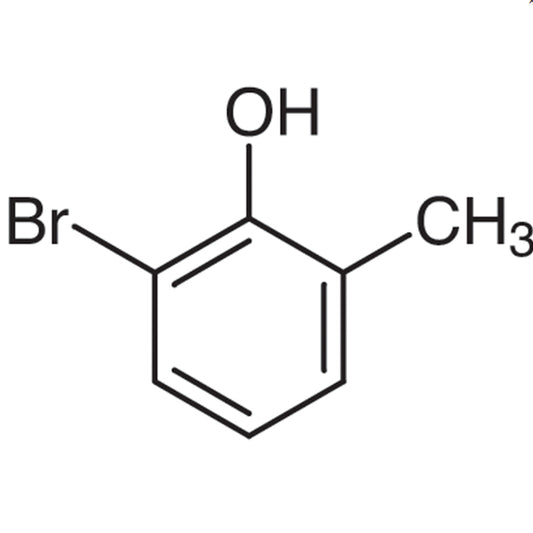
4,6-Dichloro-o-cresol from TCI is a cresol derivative, meaning a methylated phenol, that carries two chlorine atoms at positions 4 and 6 relative to the hydroxyl group. As a non-heterocyclic building block, it provides a chlorinated phenol scaffold that chemists can develop into aryl ethers, esters, and other substituted aromatic compounds. Chlorophenols and chlorocresols are well established in agrochemical and antimicrobial chemistry. This makes the compound useful both as a starting material for synthesis and as an analytical reference compound in the laboratory.
Researchers choose this compound because its phenolic hydroxyl group is easy to modify, while the methyl group and the two chlorine atoms fix a specific substitution pattern on the aromatic ring. The chlorine atoms make the phenol more acidic and more lipophilic than plain o-cresol. These changes affect how the molecule reacts and how it behaves in biological and environmental systems. Because of this structure, the compound suits structure-activity relationship studies on halogenated phenolic compounds, where small changes in substitution can be compared directly.
In Indonesia, 4,6-Dichloro-o-cresol is relevant to laboratories that synthesize agrochemical intermediates, given the size and importance of the country's agricultural sector. It also serves analytical and environmental laboratories that need a defined chlorinated phenol as a reference compound. University research groups in organic and medicinal chemistry can use it as a building block for teaching projects, method development, and studies of how halogen substitution changes the properties of phenols.
- Synthesis of aryl ethers and esters: the phenolic hydroxyl group can be alkylated or acylated easily, which gives chemists a straightforward way to build larger molecules on a chlorinated cresol core.
- Agrochemical intermediate research: chlorophenols and chlorocresols are widely used in agrochemical chemistry, so this compound is a practical starting point for preparing and screening candidate intermediates.
- Antimicrobial compound studies: the chlorocresol class is known in antimicrobial chemistry, so this compound is useful for preparing analogues and comparing how substitution affects activity.
- Structure-activity relationship studies: its defined pattern of methyl and chlorine substituents lets researchers compare acidity, lipophilicity, and reactivity against o-cresol and other halogenated phenols.
- Analytical and environmental reference work: as a defined chlorinated phenol, it can serve as a reference compound when laboratories develop or check methods for detecting halogenated phenolic compounds.
| Brand | TCI (product code D0353) |
|---|---|
| CAS number | 1570-65-6 |
| Molecular formula | — |
| Purity | — |
| Category | Chemistry > Building Blocks > Non-Heterocyclic Building Blocks |
| Pack sizes | TCI standard pack sizes; check the product listing for the options currently offered |
| Physical form | not stated here; refer to the TCI product specification and Safety Data Sheet |
| Storage | follow the storage conditions on the TCI label and Safety Data Sheet |
Store 4,6-Dichloro-o-cresol in its original, tightly closed TCI container in a cool, dry, well-ventilated area, away from direct sunlight, heat sources, and incompatible materials such as strong oxidizing agents and strong bases. Always follow the storage temperature given on the product label. Chlorinated phenols can irritate the skin, eyes, and respiratory tract, so handle the material in a fume hood and wear nitrile gloves, safety glasses, and a lab coat. Avoid creating dust or vapor, and wash your hands after handling. Read the TCI Safety Data Sheet before first use, and dispose of waste as halogenated organic waste according to local regulations.
—
Produk Terkait
-
2,6-Dichloro-p-cresol TCI D2173
Regular price From Rp 1.988.700,00Regular priceRp 1.390.200,00Sale price From Rp 1.988.700,00 -
3,4,5,6-Tetrabromo-o-cresol TCI T1528
Regular price Rp 610.050,00Regular priceRp 426.300,00Sale price Rp 610.050,00 -
2,3,5,6-Tetrabromo-p-cresol TCI T1430
Regular price From Rp 2.147.250,00Regular priceRp 1.501.500,00Sale price From Rp 2.147.250,00 -
4-Bromo-o-cresol TCI B3677
Regular price From Rp 1.590.750,00Regular priceRp 1.111.950,00Sale price From Rp 1.590.750,00 -
6-Bromo-o-cresol TCI B3126
Regular price From Rp 3.683.400,00Regular priceRp 2.575.650,00Sale price From Rp 3.683.400,00 -
2-tert-Butyl-p-cresol TCI B0910
Regular price From Rp 557.550,00Regular priceRp 405.300,00Sale price From Rp 557.550,00 -
2-Bromo-p-cresol TCI B0808
Regular price From Rp 2.782.500,00Regular priceRp 1.945.650,00Sale price From Rp 2.782.500,00 -
6-tert-Butyl-o-cresol TCI B0728
Regular price From Rp 795.900,00Regular priceRp 572.250,00Sale price From Rp 795.900,00