3,5-Dichlorosulfanilamide is a chemical compound widely used as a building block in the synthesis of complex organic molecules. It plays a crucial role in laboratory settings where organic synthesis and chemical reactions are conducted. This compound is particularly valuable for its ability to participate in substitution and electrophilic reactions, making it a versatile reagent in various synthetic pathways. Its stability and controlled reactivity allow chemists to manipulate its properties effectively in different experimental conditions.
The compound's unique molecular structure, featuring two chlorine atoms at positions 3 and 5 on the sulfanilamide ring, contributes to its distinct solubility and reactivity profiles. These properties make it a preferred choice for chemists seeking to achieve specific reaction outcomes. Its solubility in organic solvents simplifies handling and integration into synthetic processes, enhancing efficiency in laboratory workflows. The predictable behavior of 3,5-Dichlorosulfanilamide ensures reliable results in both research and industrial applications.
In Indonesian laboratories, 3,5-Dichlorosulfanilamide is extensively used in chemical research, especially in the fields of organic synthesis and analytical chemistry. It is commonly found in academic and research institutions where it supports the development of new compounds and the analysis of chemical structures. Its widespread use highlights its importance in advancing scientific knowledge and innovation in the chemical sciences.
Related TCI products
- Organic synthesis: This compound is ideal for creating complex organic molecules due to its reactivity and structural versatility.
- Electrophilic substitution reactions: Its ability to participate in such reactions makes it valuable in synthetic pathways.
- Analytical chemistry: It is used in the identification and quantification of chemical compounds in various samples.
- Pharmaceutical research: It serves as a precursor in the development of new drug compounds and therapeutic agents.
- Structural analysis: Its distinct properties aid in the study of molecular structures and chemical behavior.
| Brand | TCI |
|---|---|
| CAS number | 22134-75-4 |
| Molecular formula | — |
| Purity | — |
| Category | Chemistry > Building Blocks > Non-Heterocyclic Building Blocks |
| Pack sizes | Available in various quantities as per supplier specifications |
| Physical form | Liquid |
| Storage | Store in a cool, dry place away from light and incompatible materials |
3,5-Dichlorosulfanilamide should be stored in a cool, dry environment, away from direct sunlight and sources of heat. It is recommended to use airtight containers made of materials compatible with organic solvents to prevent contamination and evaporation. The compound should be kept away from incompatible substances such as strong oxidizers and acids to avoid chemical reactions. Proper ventilation is essential when handling this material to ensure a safe working environment. Laboratory personnel should wear appropriate personal protective equipment, including gloves and safety goggles, to minimize exposure. Regular monitoring of storage conditions is advised to maintain the compound's integrity and ensure safe usage in research settings.
—
Produk Terkait
-
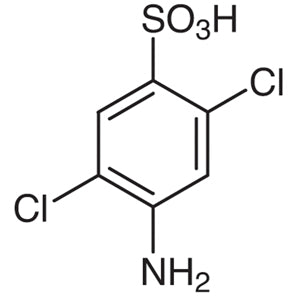
2,5-DichlorosulfanilicAcid TCI D0415
Regular price From Rp 2.545.200,00Regular priceRp 1.779.750,00Sale price From Rp 2.545.200,00 -
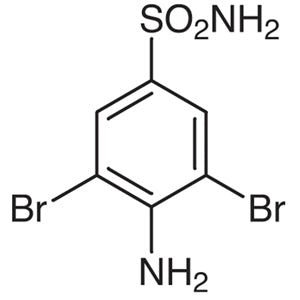
3,5-Dibromosulfanilamide TCI D0212
Regular price Rp 2.384.550,00Regular priceRp 1.683.150,00Sale price Rp 2.384.550,00 -
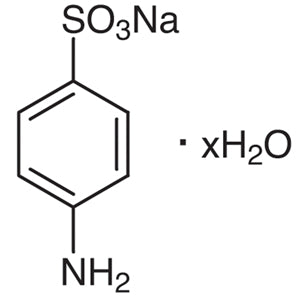
SodiumSulfanilateHydrate TCI S0121
Regular price Rp 955.500,00Regular priceRp 667.800,00Sale price Rp 955.500,00 -
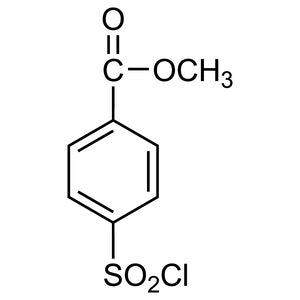
Methyl4-(Chlorosulfonyl)benzoate TCI M3910
Regular price From Rp 2.411.850,00Regular priceRp 1.702.050,00Sale price From Rp 2.411.850,00 -
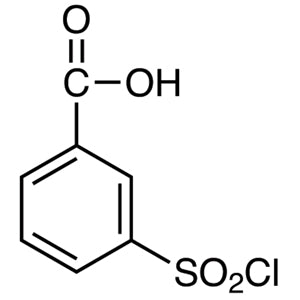
3-(Chlorosulfonyl)benzoicAcid TCI C3466
Regular price From Rp 1.113.000,00Regular priceRp 793.800,00Sale price From Rp 1.113.000,00 -
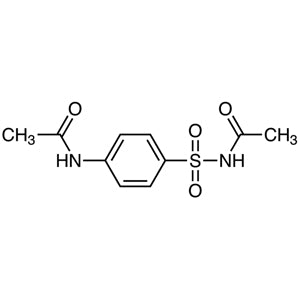
N,N'-Diacetylsulfanilamide TCI D1773
Regular price From Rp 1.167.600,00Regular priceRp 831.600,00Sale price From Rp 1.167.600,00 -
Sulfanilamide[forBiochemicalResearch] TCI S0833
Regular price Rp 1.113.000,00Regular priceRp 793.800,00Sale price Rp 1.113.000,00 -
Sulfanilamide TCI S0119
Regular price From Rp 557.550,00Regular priceRp 405.300,00Sale price From Rp 557.550,00