

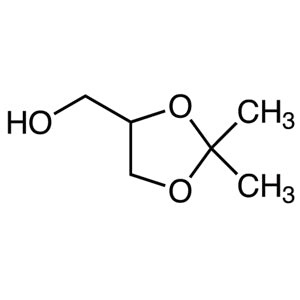
2,2-Dimethyl-1,3-dioxolane-4-methanol is a chemical compound widely used as a building block in the synthesis of complex organic compounds. This versatile reagent plays a crucial role in laboratory settings, particularly in organic chemistry research. Its unique molecular structure allows it to act as a precursor in various chemical reactions, enabling the creation of compounds with specific functional groups and properties. Due to its stability and controlled reactivity, it is a preferred choice for chemists seeking to develop new materials and pharmaceuticals.
The compound is known for its solubility in organic solvents, which simplifies processing and purification steps in laboratory procedures. This solubility, combined with its chemical stability, makes it an ideal candidate for use in both academic and industrial research environments. Its ability to participate in a variety of synthetic pathways further enhances its utility in the development of heterocyclic compounds and complex carbon chains. These properties make it a reliable and efficient tool for researchers working on advanced chemical synthesis projects.
In Indonesian laboratories, 2,2-Dimethyl-1,3-dioxolane-4-methanol is commonly used in organic chemistry research, especially in higher education institutions and research centers. It is a key component in the development of new compounds with potential applications in pharmaceuticals, materials science, and chemical industries. Its widespread use reflects its importance in both fundamental and applied research within the scientific community in Indonesia.
Related TCI products
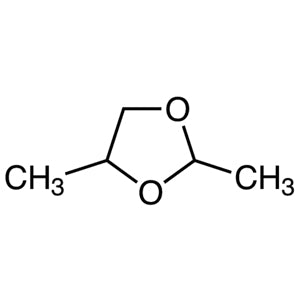
- TCI D5748 3390-12-3 2,4-Dimethyl-1,3-dioxolane (cis- and trans- mixture)
- TCI D1652 18871-66-4 N,N-Dimethylacetamide Dimethyl Acetal (stabilized with 5-10% Methanol)
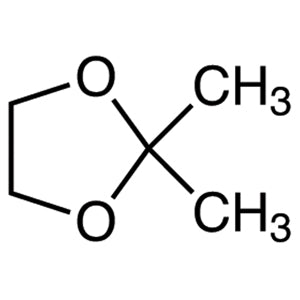
- TCI D0709 2916-31-6 2,2-Dimethyl-1,3-dioxolane
- TCI T2965 14774-37-9 Tetrahydropyran-4-methanol
- TCI B4251 107017-73-2 [1-(tert-Butoxycarbonylamino)cyclopropyl]methanol
- TCI N0979 95-12-5 5-Norbornen-2-methanol (mixture of isomers)
- Synthesis of heterocyclic compounds for the development of new pharmaceuticals due to its ability to form stable intermediates in complex reaction pathways.
- Preparation of organic compounds with specific functional groups, as it provides a flexible platform for chemical modifications and derivatization.
- Research in material science for the creation of advanced polymers and functional materials through controlled chemical reactions.
- Development of chemical intermediates used in industrial applications, leveraging its reactivity and solubility in organic solvents.
- Educational use in undergraduate and graduate chemistry courses to teach synthetic methods and reaction mechanisms in organic chemistry.
| Brand | TCI |
|---|---|
| CAS number | 100-79-8 |
| Molecular formula | — |
| Purity | — |
| Category | Chemistry > Building Blocks > Non-Heterocyclic Building Blocks |
| Pack sizes | Available in various quantities as per standard laboratory supply options |
| Physical form | Liquid |
| Storage | Store in a cool, dry place away from direct sunlight |
This compound should be stored in a cool, dry environment, away from direct sunlight and sources of heat. It is recommended to use airtight containers made of materials that are chemically inert, such as glass or polyethylene, to prevent contamination and degradation. Due to its solubility in organic solvents, it should be handled in a well-ventilated area to minimize exposure. Laboratory personnel should wear appropriate personal protective equipment, including gloves and safety goggles, when handling the compound. Regular monitoring of storage conditions is essential to ensure the compound remains stable and suitable for use in chemical synthesis processes.
—
Produk Terkait
-
2,4-Dimethyl-1,3-dioxolane(cis-andtrans-mixture) TCI D5748
Regular price Rp 1.220.100,00Regular price -
N,N-DimethylacetamideDimethylAcetal(stabilizedwith5-10%Methanol) TCI D1652
Regular price From Rp 3.419.850,00Regular price -
2,2-Dimethyl-1,3-dioxolane TCI D0709
Regular price Rp 1.696.800,00Regular price -
Tetrahydropyran-4-methanol TCI T2965
Regular price From Rp 1.856.400,00Regular price -
[1-(tert-Butoxycarbonylamino)cyclopropyl]methanol TCI B4251
Regular price From Rp 1.008.000,00Regular price -
5-Norbornen-2-methanol(mixtureofisomers) TCI N0979
Regular price From Rp 955.500,00Regular price -
Norbornane-2-methanol(endo-andexo-mixture) TCI N0553
Regular price Rp 2.889.600,00Regular price -
3-Cyclohexene-1-methanol TCI C2435
Regular price From Rp 3.100.650,00Regular price


![107017-73-2 [1-(tert-Butoxycarbonylamino)cyclopropyl]methanol - AMI Scientific](http://amiscientific.com/cdn/shop/files/TCI2510B4251.jpg?v=1769179981&width=533)


