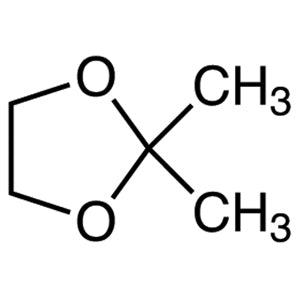
2,2-Dimethyl-1,3-dioxolane is an organic compound widely used in chemical synthesis as a building block for the creation of complex molecules. It is a versatile intermediate that plays a crucial role in various laboratory applications, particularly in the development of heterocyclic compounds, pharmaceuticals, and industrial chemicals. Its unique structure, featuring a stable oxirane ring, makes it a valuable component in synthetic pathways where controlled reactivity is essential. This compound is commonly found in research settings where precise chemical transformations are required, supporting both academic and industrial chemical innovation.
The compound’s chemical stability and solubility in organic solvents such as ethyl acetate and ethanol make it a preferred choice for synthetic chemists. Its ability to participate in nucleophilic and substitution reactions under controlled conditions enhances its utility in laboratory environments. The relatively high boiling point of 2,2-Dimethyl-1,3-dioxolane facilitates efficient evaporation and separation processes, which are critical in purification and reaction optimization. These properties ensure that it remains a reliable and effective reagent in a wide range of chemical applications.
In Indonesian laboratories, 2,2-Dimethyl-1,3-dioxolane is frequently used in pharmaceutical and materials research. Local researchers rely on this compound for experiments involving oxirane ring structures, particularly in the development of new drugs and advanced materials. Its availability and consistent performance make it a staple in chemical laboratories across Indonesia, supporting both fundamental and applied research efforts.
Related TCI products
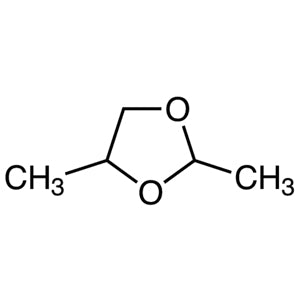
- TCI D5748 3390-12-3 2,4-Dimethyl-1,3-dioxolane (cis- and trans- mixture)
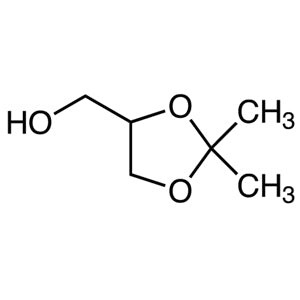
- TCI D0710 100-79-8 2,2-Dimethyl-1,3-dioxolane-4-methanol
- TCI T2575 1193-11-9 2,2,4-Trimethyl-1,3-dioxolane
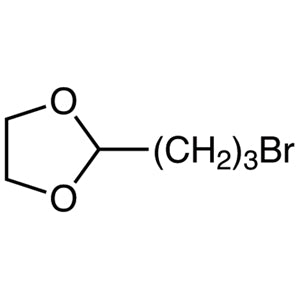
- TCI B3463 62563-07-9 2-(3-Bromopropyl)-1,3-dioxolane
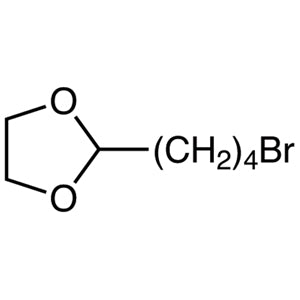
- TCI B2128 87227-41-6 2-(4-Bromobutyl)-1,3-dioxolane
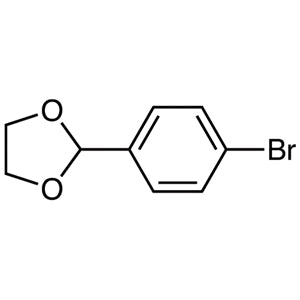
- TCI B2100 10602-01-4 2-(4-Bromophenyl)-1,3-dioxolane
- Pharmaceutical research utilizes 2,2-Dimethyl-1,3-dioxolane for the synthesis of complex drug molecules due to its stable oxirane ring and reactivity.
- Organic synthesis applications benefit from its ability to participate in nucleophilic and substitution reactions, making it ideal for creating diverse chemical structures.
- Materials science research employs this compound to develop new polymers and functional materials through controlled chemical modifications.
- Analytical chemistry laboratories use it as a standard reference compound for calibration and reaction testing in various analytical techniques.
- Industrial chemical production relies on its solubility and stability for the manufacture of specialty chemicals and intermediate products.
| Brand | TCI |
|---|---|
| CAS number | 2916-31-6 |
| Molecular formula | — |
| Purity | — |
| Category | Chemistry > Building Blocks > Non-Heterocyclic Building Blocks |
| Pack sizes | Available in various quantities as per standard laboratory supply |
| Physical form | Liquid |
| Storage | Store in a cool, dry place away from direct sunlight and incompatible materials |
2,2-Dimethyl-1,3-dioxolane should be stored in a cool, dry location, away from direct sunlight and sources of heat. It is recommended to use sealed containers made of materials compatible with organic solvents, such as glass or high-density polyethylene. The compound should be kept in a well-ventilated area to prevent the accumulation of vapors. Avoid contact with strong oxidizing agents or incompatible substances to ensure safety. Proper labeling and storage conditions are essential to maintain its stability and effectiveness in laboratory settings. Always follow standard chemical handling protocols to minimize risks associated with its use.
—
Produk Terkait
-
2,4-Dimethyl-1,3-dioxolane(cis-andtrans-mixture) TCI D5748
Regular price Rp 1.220.100,00Regular price -
2,2-Dimethyl-1,3-dioxolane-4-methanol TCI D0710
Regular price From Rp 477.750,00Regular price -
2,2,4-Trimethyl-1,3-dioxolane TCI T2575
Regular price Rp 1.803.900,00Regular price -
2-(3-Bromopropyl)-1,3-dioxolane TCI B3463
Regular price From Rp 1.856.400,00Regular price -
2-(4-Bromobutyl)-1,3-dioxolane TCI B2128
Regular price From Rp 4.373.250,00Regular price -
2-(4-Bromophenyl)-1,3-dioxolane TCI B2100
Regular price From Rp 5.407.500,00Regular price -
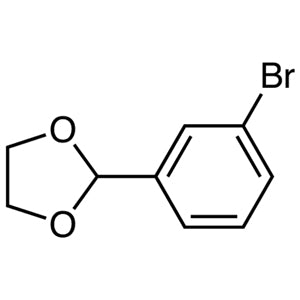
2-(3-Bromophenyl)-1,3-dioxolane TCI B2098
Regular price From Rp 1.035.300,00Regular price -
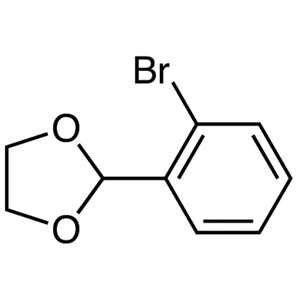
2-(2-Bromophenyl)-1,3-dioxolane TCI B2084
Regular price From Rp 1.087.800,00Regular price