2-(4-Bromophenyl)-1,3-dioxolane is a chemical compound widely used in organic reactions, particularly in the synthesis of heterocyclic and aromatic compounds. It serves as a key building block in laboratory settings, enabling the creation of complex molecules through substitution or electrophilic reactions. This compound is essential for researchers aiming to develop new chemical structures with specific functionalities. Its stability and reactivity make it a versatile tool in synthetic chemistry, supporting a wide range of experimental applications.
The compound's bromo group on the aromatic ring makes it highly suitable for substitution and catalytic reactions, enhancing its utility in synthetic pathways. Its molecular structure allows for controlled reactivity under specific reaction conditions, making it a preferred choice for chemists working on functionalized compounds. The compound’s predictable behavior and compatibility with various reagents contribute to its reliability in laboratory environments. Its role in the synthesis of pharmaceuticals, industrial chemicals, and analytical compounds further underscores its importance.
In Indonesian laboratories, 2-(4-Bromophenyl)-1,3-dioxolane is commonly used in organic chemistry research, especially in the development of new compounds. It is frequently found in experiments requiring precision and consistency. Its availability and reliability make it a staple in chemical synthesis processes, supporting both academic and industrial research efforts. Researchers in Indonesia rely on this compound for its proven performance and adaptability in diverse chemical applications.
Related TCI products
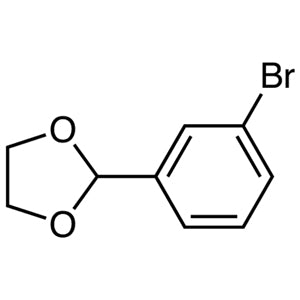
- TCI B2098 17789-14-9 2-(3-Bromophenyl)-1,3-dioxolane
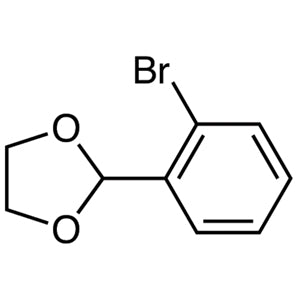
- TCI B2084 34824-58-3 2-(2-Bromophenyl)-1,3-dioxolane
- TCI T2575 1193-11-9 2,2,4-Trimethyl-1,3-dioxolane
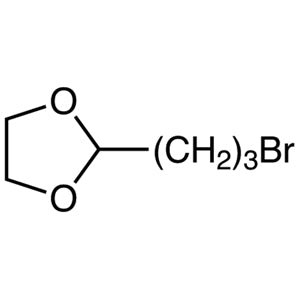
- TCI B3463 62563-07-9 2-(3-Bromopropyl)-1,3-dioxolane
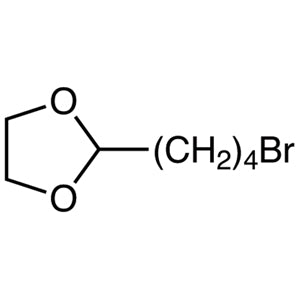
- TCI B2128 87227-41-6 2-(4-Bromobutyl)-1,3-dioxolane
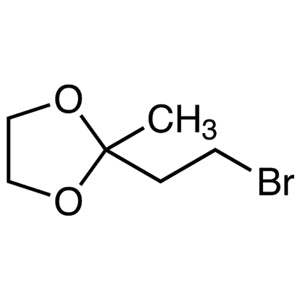
- TCI B1598 37865-96-6 2-(2-Bromoethyl)-2-methyl-1,3-dioxolane
- Organic synthesis of heterocyclic compounds due to its reactive bromo group and stable dioxolane ring.
- Development of pharmaceuticals and industrial chemicals through controlled substitution reactions.
- Preparation of aromatic derivatives for analytical and functionalized compound synthesis.
- Use in catalytic reactions where bromo-substituted aromatic rings are required.
- Support for research in medicinal chemistry involving functionalized aromatic systems.
| Brand | TCI |
|---|---|
| CAS number | 10602-01-4 |
| Molecular formula | — |
| Purity | — |
| Category | Chemistry > Building Blocks > Non-Heterocyclic Building Blocks |
| Pack sizes | Available in standard laboratory quantities |
| Physical form | Solid or liquid, depending on supplier packaging |
| Storage | Store in a cool, dry place away from light and incompatible materials |
This compound should be stored in a cool, dry environment, away from direct sunlight and sources of heat. It is recommended to use airtight containers made of glass or high-density polyethylene to prevent contamination and maintain stability. As a brominated compound, it should be kept separate from strong oxidizing agents and incompatible substances to avoid potential chemical reactions. Proper labeling and safe handling procedures are essential to ensure laboratory safety. Regular monitoring of storage conditions is advised to maintain the compound’s integrity and usability in research applications.
—
Produk Terkait
-
2-(3-Bromophenyl)-1,3-dioxolane TCI B2098
Regular price From Rp 1.087.800,00Regular priceRp 775.950,00Sale price From Rp 1.087.800,00 -
2-(2-Bromophenyl)-1,3-dioxolane TCI B2084
Regular price From Rp 1.140.300,00Regular priceRp 812.700,00Sale price From Rp 1.140.300,00 -
2,2,4-Trimethyl-1,3-dioxolane TCI T2575
Regular price Rp 1.856.400,00Regular priceRp 1.313.550,00Sale price Rp 1.856.400,00 -
2-(3-Bromopropyl)-1,3-dioxolane TCI B3463
Regular price From Rp 1.908.900,00Regular priceRp 1.350.300,00Sale price From Rp 1.908.900,00 -
2-(4-Bromobutyl)-1,3-dioxolane TCI B2128
Regular price From Rp 4.425.750,00Regular priceRp 3.110.100,00Sale price From Rp 4.425.750,00 -
2-(2-Bromoethyl)-2-methyl-1,3-dioxolane TCI B1598
Regular price From Rp 5.460.000,00Regular priceRp 3.833.550,00Sale price From Rp 5.460.000,00 -
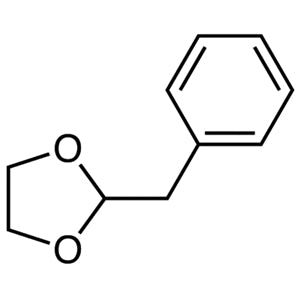
2-Benzyl-1,3-dioxolane TCI B1404
Regular price Rp 1.749.300,00Regular priceRp 1.239.000,00Sale price Rp 1.749.300,00 -
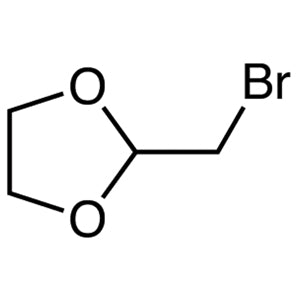
2-Bromomethyl-1,3-dioxolane TCI B1152
Regular price From Rp 1.749.300,00Regular priceRp 1.239.000,00Sale price From Rp 1.749.300,00