2-Bromomethyl-1,3-dioxolane is a chemical compound widely used as a building block in the synthesis of complex organic compounds. This versatile reagent plays a crucial role in organic chemistry laboratories, where it serves as a key component in various synthetic pathways. Its unique structure, featuring a five-membered heterocyclic ring with two oxygen atoms and a brominated methyl group, makes it a valuable tool for chemists seeking to introduce bromine functionality into organic molecules. Due to its chemical stability and controlled reactivity, it is often chosen for applications requiring precise control over reaction conditions.
The compound's high polarity allows it to dissolve readily in polar organic solvents such as ethyl acetate and ethanol, which facilitates its use in purification and separation processes. This solubility profile is particularly advantageous in multi-step syntheses where efficient solvent compatibility is essential. Additionally, its reactivity in electrophilic substitution reactions makes it a preferred choice for researchers aiming to modify molecular structures with brominated side chains. These properties contribute to its popularity among both academic and industrial chemists.
In Indonesian laboratories, 2-Bromomethyl-1,3-dioxolane is commonly utilized in pharmaceutical and organic chemistry research. It is a key reagent in the development of new drugs and organic-based chemical materials. Its presence in laboratory settings supports the advancement of chemical research, particularly in areas requiring the synthesis of complex organic molecules. Its utility spans across multiple disciplines, making it an essential compound for modern chemical investigations.
Related TCI products
- TCI T4215 21852-50-6 5-(Bromomethyl)-1,2,3-trimethoxybenzene
- TCI B4057 19184-65-7 2-(Bromomethyl)-2-(hydroxymethyl)-1,3-propanediol
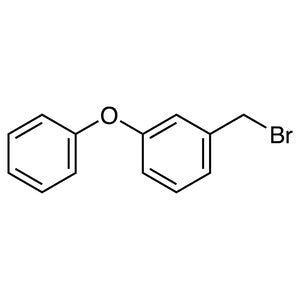
- TCI P2948 51632-16-7 1-(Bromomethyl)-3-phenoxybenzene
- TCI D1808 3296-90-0 2,2-Bis(bromomethyl)-1,3-propanediol
- TCI T2575 1193-11-9 2,2,4-Trimethyl-1,3-dioxolane
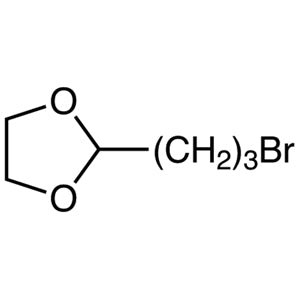
- TCI B3463 62563-07-9 2-(3-Bromopropyl)-1,3-dioxolane
- Pharmaceutical research utilizes 2-Bromomethyl-1,3-dioxolane for the synthesis of drug molecules due to its brominated functionality and reactivity in electrophilic substitution reactions.
- Organic chemistry laboratories use this compound as a building block for creating complex organic structures, leveraging its stable heterocyclic framework.
- Industrial chemical development benefits from its solubility in polar solvents, enabling efficient purification and reaction processes in large-scale synthesis.
- Research in medicinal chemistry employs it to modify molecular structures, enhancing the potential for drug discovery and development.
- Analytical chemistry applications take advantage of its chemical stability and reactivity to study reaction mechanisms and synthetic pathways.
| Brand | TCI |
|---|---|
| CAS number | 4360-63-8 |
| Molecular formula | — |
| Purity | — |
| Category | Chemistry > Building Blocks > Non-Heterocyclic Building Blocks |
| Pack sizes | Available in various quantities as per standard laboratory supply |
| Physical form | Liquid |
| Storage | Store in a cool, dry place away from light and incompatible materials |
This compound should be stored in a cool, dry environment, away from direct sunlight and sources of heat. It is recommended to keep it in a tightly sealed container to prevent exposure to air and moisture. Due to its reactivity, it should be handled with care, using appropriate personal protective equipment such as gloves and safety goggles. It is important to store it separately from strong oxidizing agents and incompatible substances to avoid any potential chemical reactions. In laboratory settings, it should be kept in a well-ventilated area to ensure safe handling and minimize any risk of inhalation. Proper labeling and storage practices are essential to maintain the integrity and safety of the compound during use and storage.
—
Produk Terkait
-
5-(Bromomethyl)-1,2,3-trimethoxybenzene TCI T4215
Regular price Rp 3.419.850,00Regular priceRp 2.390.850,00Sale price Rp 3.419.850,00 -
2-(Bromomethyl)-2-(hydroxymethyl)-1,3-propanediol TCI B4057
Regular price From Rp 1.644.300,00Regular priceRp 1.149.750,00Sale price From Rp 1.644.300,00 -
1-(Bromomethyl)-3-phenoxybenzene TCI P2948
Regular price From Rp 3.155.250,00Regular priceRp 2.206.050,00Sale price From Rp 3.155.250,00 -
2,2-Bis(bromomethyl)-1,3-propanediol TCI D1808
Regular price From Rp 452.550,00Regular priceRp 316.050,00Sale price From Rp 452.550,00 -
2,2,4-Trimethyl-1,3-dioxolane TCI T2575
Regular price Rp 1.856.400,00Regular priceRp 1.313.550,00Sale price Rp 1.856.400,00 -
2-(3-Bromopropyl)-1,3-dioxolane TCI B3463
Regular price From Rp 1.908.900,00Regular priceRp 1.350.300,00Sale price From Rp 1.908.900,00 -
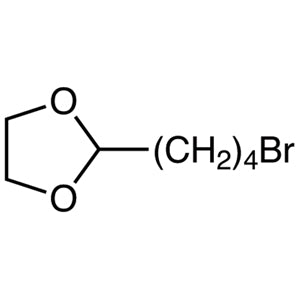
2-(4-Bromobutyl)-1,3-dioxolane TCI B2128
Regular price From Rp 4.425.750,00Regular priceRp 3.110.100,00Sale price From Rp 4.425.750,00 -
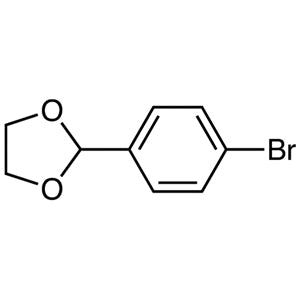
2-(4-Bromophenyl)-1,3-dioxolane TCI B2100
Regular price From Rp 5.460.000,00Regular priceRp 3.833.550,00Sale price From Rp 5.460.000,00