2-(2-Bromoethyl)-2-methyl-1,3-dioxolane is a chemical compound widely used in organic reactions, particularly in the synthesis of heterocyclic compounds and complex organic molecules. This compound plays a crucial role in laboratory settings as a building block for various synthetic pathways. Its unique molecular structure, consisting of a 1,3-dioxolane ring linked to a bromoethyl group, makes it a versatile reagent for chemical modifications. It is commonly employed in substitution reactions, coupling reactions, and structural modifications due to its reactivity and functional group versatility.
The compound is known for its high reactivity, especially in nucleophilic and electrophilic reactions. The presence of the bromoethyl group provides it with the potential to participate in a variety of chemical reactions such as SN2, SN1, or radical reactions. Its 1,3-dioxolane ring offers a degree of stability, allowing it to be used under diverse reaction conditions. This combination of reactivity and stability makes it a preferred choice for organic chemists seeking to synthesize new compounds with complex structures.
In Indonesian laboratories, this compound is frequently used in research projects aimed at developing new organic molecules. Its availability and chemical properties make it an essential component in both academic and industrial research. It is commonly found in chemical synthesis laboratories where the creation of complex structures is required. Its role in the synthesis of heterocyclic compounds is particularly notable, contributing to the advancement of chemical research in Indonesia.
Related TCI products
- Organic synthesis of heterocyclic compounds due to its reactive bromoethyl group and stable dioxolane ring.
- Coupling reactions where the bromoethyl group can act as a leaving group for substitution processes.
- Structural modification of complex molecules by introducing functional groups through nucleophilic attack.
- Radical reaction systems where the bromoethyl group can participate in free radical mechanisms.
- Research in medicinal chemistry for the development of new pharmaceutical compounds with complex structures.
| Brand | TCI |
|---|---|
| CAS number | 37865-96-6 |
| Molecular formula | — |
| Purity | — |
| Category | Chemistry > Building Blocks > Non-Heterocyclic Building Blocks |
| Pack sizes | Available in various quantities as per supplier specifications |
| Physical form | Liquid |
| Storage | Store in a cool, dry place away from light and incompatible materials |
This compound should be stored in a cool, dry place, away from direct sunlight and sources of heat. It is recommended to use airtight containers made of glass or high-density polyethylene to prevent contamination and evaporation. Due to its reactivity, it should be handled in a well-ventilated area, preferably under a fume hood. Avoid contact with incompatible substances such as strong oxidizers or bases. Always wear appropriate personal protective equipment, including gloves and safety goggles, when handling this material. Ensure that storage conditions are consistent to maintain the compound's stability and effectiveness in laboratory applications.
—
Produk Terkait
-
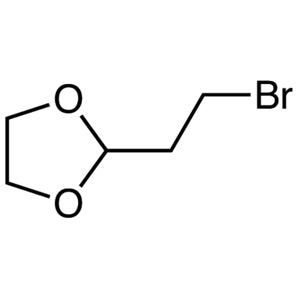
2-(2-Bromoethyl)-1,3-dioxolane TCI B1132
Regular price From Rp 2.093.700,00Regular priceRp 1.479.450,00Sale price From Rp 2.093.700,00 -
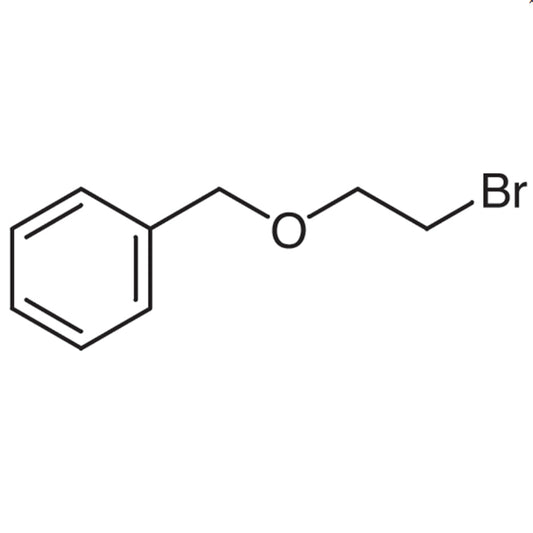
Benzyl2-BromoethylEther TCI B2817
Regular price From Rp 2.174.550,00Regular priceRp 1.520.400,00Sale price From Rp 2.174.550,00 -
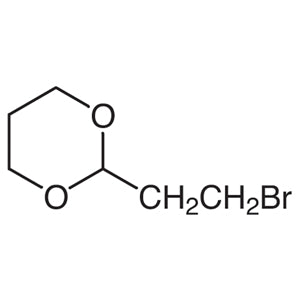
2-(2-Bromoethyl)-1,3-dioxane TCI B1182
Regular price From Rp 1.298.850,00Regular priceRp 924.000,00Sale price From Rp 1.298.850,00 -
2,2,4-Trimethyl-1,3-dioxolane TCI T2575
Regular price Rp 1.856.400,00Regular priceRp 1.313.550,00Sale price Rp 1.856.400,00 -
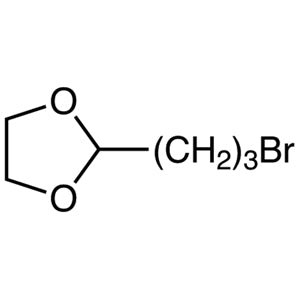
2-(3-Bromopropyl)-1,3-dioxolane TCI B3463
Regular price From Rp 1.908.900,00Regular priceRp 1.350.300,00Sale price From Rp 1.908.900,00 -
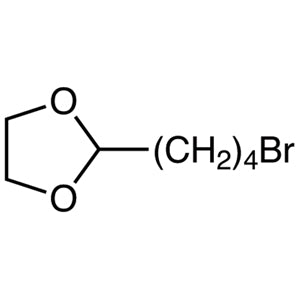
2-(4-Bromobutyl)-1,3-dioxolane TCI B2128
Regular price From Rp 4.425.750,00Regular priceRp 3.110.100,00Sale price From Rp 4.425.750,00 -
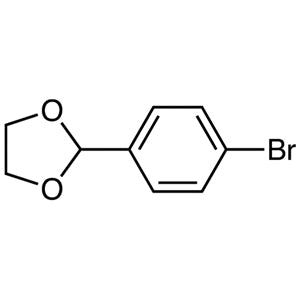
2-(4-Bromophenyl)-1,3-dioxolane TCI B2100
Regular price From Rp 5.460.000,00Regular priceRp 3.833.550,00Sale price From Rp 5.460.000,00 -
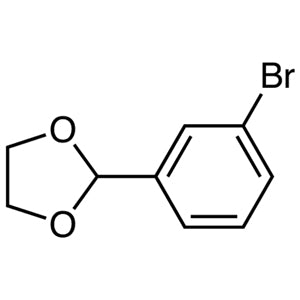
2-(3-Bromophenyl)-1,3-dioxolane TCI B2098
Regular price From Rp 1.087.800,00Regular priceRp 775.950,00Sale price From Rp 1.087.800,00