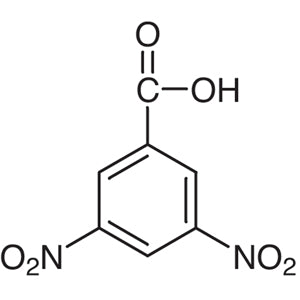
3,5-Dinitrobenzoic Acid is a chemical compound widely used in laboratory settings for its versatile applications in organic chemistry. This compound serves as a key building block in the synthesis of various organic molecules, particularly those with specific biological or chemical properties. Its aromatic structure, featuring two nitro groups at positions 3 and 5 on the benzene ring, along with a carboxylic acid group at position 1, makes it a valuable reagent in chemical reactions. Due to its reactivity and functional group diversity, it is often employed in synthetic pathways that require controlled chemical transformations.
The compound's chemical properties make it a preferred choice for laboratory use. The nitro groups contribute to its electron-withdrawing nature, enhancing its reactivity in electrophilic substitution and oxidation reactions. Its stability under certain conditions allows for controlled handling, while its sensitivity to high temperatures and UV light necessitates careful storage. Additionally, the presence of the carboxylic acid group enables it to participate in a wide range of chemical interactions, making it adaptable to various synthetic strategies.
In Indonesian laboratories, 3,5-Dinitrobenzoic Acid is commonly used in organic chemistry research, especially in pharmaceutical and analytical chemistry fields. It plays a crucial role in the development of new compounds and the testing of chemical properties. Its application extends to quality testing and research projects that require precise chemical reagents with predictable behavior.
- Organic synthesis applications benefit from 3,5-Dinitrobenzoic Acid due to its reactivity and structural versatility, enabling the creation of complex organic molecules with specific functional groups.
- Pharmaceutical research utilizes this compound for the development of drugs with targeted biological activities, leveraging its chemical properties for compound modification.
- Analytical chemistry relies on its stability and reactivity to perform accurate chemical analyses and detect specific compounds in samples.
- Quality control testing incorporates this material for assessing the purity and reactivity of other chemical substances in industrial and research settings.
- Environmental studies may use it to evaluate the degradation of organic compounds under various chemical and environmental conditions.
| Brand | TCI |
|---|---|
| CAS number | 99-34-3 |
| Molecular formula | — |
| Purity | — |
| Category | Chemistry > Building Blocks > Non-Heterocyclic Building Blocks |
| Pack sizes | Available in standard laboratory quantities as per supplier specifications |
| Physical form | Solid, typically in crystalline or powder form |
| Storage | Store in a cool, dark place away from heat and direct sunlight |
3,5-Dinitrobenzoic Acid should be stored in a cool, dry environment to maintain its chemical stability. It is recommended to keep it in airtight containers to prevent moisture absorption and contamination. Due to its corrosive nature, it should be handled with appropriate personal protective equipment, such as gloves and safety goggles. Avoid exposure to high temperatures and UV light to prevent degradation. In laboratory settings, it is essential to follow standard safety protocols when handling this compound to ensure the safety of personnel and the integrity of experimental results. Proper labeling and storage conditions are critical to maintaining its effectiveness and minimizing risks.
—
Produk Terkait
-
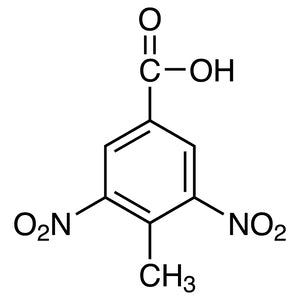
4-Methyl-3,5-dinitrobenzoicAcid TCI D3291
Regular price Rp 2.147.250,00Regular price -
3,4-DinitrobenzoicAcid TCI D0823
Regular price From Rp 1.298.850,00Regular price -
4-Chloro-3,5-dinitrobenzoicAcid TCI C0607
Regular price From Rp 1.326.150,00Regular price -
2,4-Dinitrobenzaldehyde TCI D6153
Regular price From Rp 1.193.850,00Regular price -
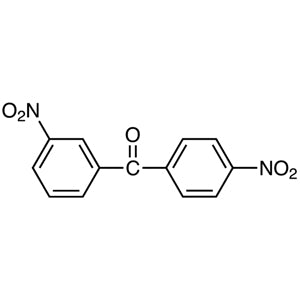
3,4'-Dinitrobenzophenone TCI D2551
Regular price From Rp 1.458.450,00Regular price -
3,3'-Dinitrobenzophenone TCI D1688
Regular price From Rp 6.440.700,00Regular price -
1,2-Dimethoxy-4,5-dinitrobenzene TCI D6509
Regular price Rp 4.771.200,00Regular price -
1,5-Dichloro-2,4-dinitrobenzene TCI D4205
Regular price Rp 2.094.750,00Regular price