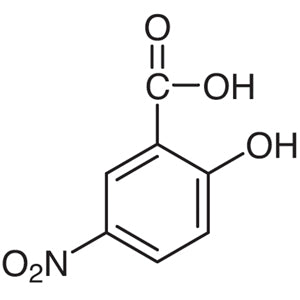
3,5-Dinitrosalicylic Acid is a chemical compound widely used in laboratory experiments and analytical processes. It is a key reagent in various chemical reactions, particularly in reduction and oxidation processes. Its unique molecular structure, featuring two nitro groups attached to the 3 and 5 positions of salicylic acid, makes it a versatile compound in synthetic chemistry. This compound is essential for the preparation of intermediate compounds that serve as building blocks for the synthesis of more complex chemical structures. Its chemical stability under certain conditions ensures reliable performance in laboratory settings, contributing to its popularity among researchers.
One of the main reasons for its preference is its solubility in organic solvents such as ethyl acetate and acetone. This property allows for broader application across different experimental setups. Additionally, its consistent chemical and physical properties make it a dependable reagent for experiments requiring precision and reliability. The compound's stability and solubility characteristics enable it to be used in a wide range of chemical processes without significant degradation, enhancing its utility in both research and industrial applications.
In Indonesian laboratories, 3,5-Dinitrosalicylic Acid is commonly used in chemical, pharmaceutical, and chemical manufacturing sectors. It plays a crucial role in the development of new compounds and the analysis of chemical reactions. Its reliability and effectiveness in various laboratory procedures make it an essential component in the toolkit of chemists and researchers in Indonesia.
- Used in chemical synthesis for the preparation of intermediate compounds due to its reactivity and stability.
- Applied in analytical chemistry for its role in oxidation and reduction reactions, providing accurate results.
- Utilized in pharmaceutical research for the development of new drug compounds through synthetic pathways.
- Employed in industrial chemical production for the creation of complex chemical structures from simpler building blocks.
- Integrated into quality control processes to ensure the consistency and purity of chemical products.
| Brand | TCI |
|---|---|
| CAS number | 609-99-4 |
| Molecular formula | — |
| Purity | — |
| Category | Chemistry > Building Blocks > Non-Heterocyclic Building Blocks |
| Pack sizes | Available in various quantities as per standard laboratory requirements |
| Physical form | Solid powder |
| Storage | Store in a cool, dry place away from direct sunlight and moisture |
3,5-Dinitrosalicylic Acid should be stored in a cool, dry environment to maintain its chemical stability and prevent degradation. It is recommended to keep it in airtight containers to avoid exposure to moisture and air, which could affect its performance. The compound is typically stored in a well-ventilated laboratory area to ensure safety. While it is not highly reactive under normal conditions, it should be handled with care to avoid contamination. Proper labeling and storage practices are essential to ensure its availability and usability in laboratory settings. Always follow standard laboratory safety protocols when handling and storing chemical reagents.
—
Produk Terkait
-
5-NitrosalicylicAcid TCI N0257
Regular price From Rp 1.485.750,00Regular price -
4-NitrosalicylicAcid TCI N0256
Regular price From Rp 3.605.700,00Regular price -
3-NitrosalicylicAcid TCI N0251
Regular price From Rp 2.174.550,00Regular price -
3-Bromo-5-nitrosalicylaldehyde TCI B3198
Regular price From Rp 1.167.600,00Regular price -
5-Bromo-3-nitrosalicylaldehyde TCI B0908
Regular price From Rp 769.650,00Regular price -
3-Nitrosalicylaldehyde TCI N0823
Regular price From Rp 477.750,00Regular price -
5-Nitrosalicylaldehyde TCI N0255
Regular price From Rp 875.700,00Regular price -
5-Chloro-3-nitrosalicylaldehyde TCI C2249
Regular price Rp 1.246.350,00Regular price