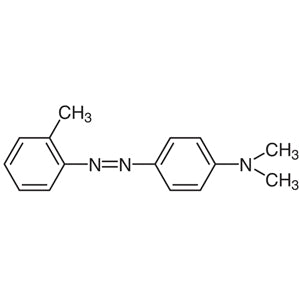
4-(Dimethylamino)-2-methylazobenzene is a chemical compound widely used in laboratory settings for its unique reactivity and structural versatility. It serves as a key building block in organic chemistry, particularly in the synthesis of complex molecules and the development of new chemical compounds. This compound is valued for its ability to participate in various chemical reactions, making it essential for researchers and students engaged in synthetic chemistry. Its presence in laboratory experiments underscores its importance in advancing chemical research and innovation.
The compound's azobenzene structure provides it with specific chemical properties that make it a preferred choice in laboratory applications. It exhibits stability under certain conditions but is sensitive to light and high temperatures, which influences its handling and storage requirements. Its molecular complexity allows for a range of chemical transformations, including substitution and addition reactions, which are critical in the development of new materials and pharmaceuticals. These characteristics make it a versatile reagent in both academic and industrial research environments.
In Indonesian laboratories, 4-(Dimethylamino)-2-methylazobenzene is commonly used in experiments requiring reactive and specific chemical building blocks. It plays a crucial role in the study of azo compounds and their applications in pharmaceuticals and chemical materials. Researchers and students rely on this compound for its reliability and effectiveness in chemical synthesis, contributing to the advancement of scientific knowledge in the region.
Related TCI products
- Azo Compound Synthesis: This compound is ideal for creating azo derivatives due to its stable azobenzene core, enabling controlled chemical modifications.
- Organic Chemistry Research: Its reactivity and structural versatility make it suitable for a wide range of synthetic reactions in organic chemistry.
- Pharmaceutical Development: It is used in the synthesis of pharmaceutical intermediates, contributing to drug discovery and formulation.
- Material Science Studies: Its chemical properties are valuable in the development of new materials, particularly in polymer and dye chemistry.
- Educational Experiments: It serves as a key reagent in teaching labs, helping students understand complex chemical reactions and synthesis techniques.
| Brand | TCI |
|---|---|
| CAS number | 54-88-6 |
| Molecular formula | — |
| Purity | — |
| Category | Chemistry > Building Blocks > Non-Heterocyclic Building Blocks |
| Pack sizes | Available in various quantities as per supplier specifications |
| Physical form | Solid (may vary depending on supplier) |
| Storage | Store in a cool, dark place away from light and heat |
This compound should be stored in a cool, dark environment to prevent degradation due to light and high temperatures. It is recommended to use airtight containers made of glass or inert materials to maintain its chemical integrity. Due to its sensitivity, it should be handled with care, using appropriate personal protective equipment such as gloves and safety goggles. Avoid exposure to direct sunlight and ensure proper ventilation in the laboratory. Regular monitoring of storage conditions is essential to maintain the compound's effectiveness and safety during use.
—
Produk Terkait
-
4-(Dimethylamino)-2'-methylazobenzene TCI M0789
Regular price Rp 2.518.950,00Regular price -
4-(Dimethylamino)-3'-methylazobenzene TCI M0207
Regular price Rp 2.837.100,00Regular price -
Azobenzene TCI A0565
Regular price From Rp 2.411.850,00Regular price -
4-(Methylamino)azobenzene TCI M0143
Regular price Rp 4.028.850,00Regular price -
3,3'-Dimethylazobenzene TCI D0676
Regular price From Rp 2.837.100,00Regular price -
4-Amino-4'-(N,N-dimethylamino)stilbene TCI A0291
Regular price From Rp 1.936.200,00Regular price -
Tris[2-(dimethylamino)ethyl]amine TCI T2898
Regular price From Rp 2.254.350,00Regular price -
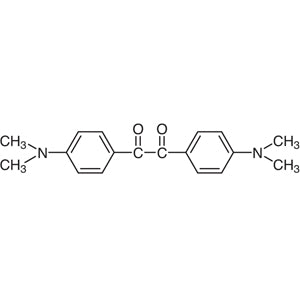
4,4'-Bis(dimethylamino)benzil TCI B1212
Regular price From Rp 3.683.400,00Regular price


![33527-91-2 Tris[2-(dimethylamino)ethyl]amine - AMI Scientific](http://amiscientific.com/cdn/shop/files/TCI2510T2898.jpg?v=1767143487&width=533)