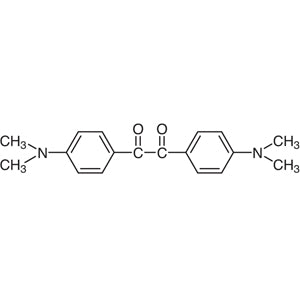
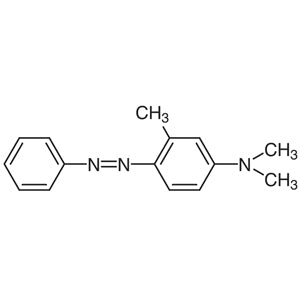
4-(Dimethylamino)-2'-methylazobenzene is a chemical compound widely used in laboratory settings for its versatile applications in organic chemistry. As a building block in synthetic chemistry, it plays a crucial role in the development of complex organic molecules. Its azobenzene structure provides a stable yet reactive platform for various chemical transformations, making it a valuable tool for researchers. This compound is commonly utilized in the synthesis of aromatic compounds and organic complexes, supporting a wide range of experimental needs in both academic and industrial research environments.
The compound's non-heterocyclic nature and stable azo group contribute to its popularity among chemists. These characteristics allow for controlled reactivity and compatibility with different reaction conditions, which is essential for precise chemical synthesis. Additionally, its optical properties make it suitable for advanced applications in materials science and chemical sensing. The compound's ability to maintain structural integrity under various conditions ensures its reliability in laboratory experiments, enhancing its appeal for both routine and specialized research.
In Indonesian laboratories, 4-(Dimethylamino)-2'-methylazobenzene is frequently used in organic chemistry research, particularly in academic institutions and research centers. Its availability and consistent quality make it a preferred choice for scientists working on projects involving pigment synthesis, pharmaceutical development, and industrial chemical production. Its role in supporting diverse chemical applications underscores its importance in the Indonesian scientific community.
Related TCI products
- Organic synthesis: This compound is ideal for creating aromatic and complex organic molecules due to its stable azo group and reactive nature.
- Pigment development: Its optical properties make it suitable for synthesizing dyes and pigments used in various industrial applications.
- Pharmaceutical research: It serves as a building block for the development of active pharmaceutical ingredients in drug synthesis.
- Chemical sensing: The compound's optical characteristics are useful in the design of chemical sensors for detecting specific analytes.
- Material science: It is employed in the creation of optically active materials for use in advanced technological applications.
| Brand | TCI |
|---|---|
| CAS number | 3731-39-3 |
| Molecular formula | — |
| Purity | — |
| Category | Chemistry > Building Blocks > Non-Heterocyclic Building Blocks |
| Pack sizes | Available in standard laboratory quantities as per supplier specifications |
| Physical form | Solid, typically in crystalline form |
| Storage | Store in a cool, dry place away from light and incompatible substances |
This compound should be stored in a cool, dry environment, away from direct sunlight and sources of heat. It is recommended to keep it in a sealed container to prevent moisture absorption and contamination. Due to its chemical nature, it should be stored separately from strong oxidizing agents and acids to avoid potential reactions. Laboratory personnel should handle it with appropriate personal protective equipment, including gloves and safety goggles, to ensure safety during use and storage. Proper ventilation is also advised when working with this compound to minimize exposure to vapors. Regular inspection of storage conditions is essential to maintain the compound's integrity and ensure safe handling practices.
—
Produk Terkait
-
4-(Dimethylamino)-3'-methylazobenzene TCI M0207
Regular price Rp 2.837.100,00Regular price -
4-(Dimethylamino)-2-methylazobenzene TCI D1351
Regular price Rp 1.670.550,00Regular price -
Azobenzene TCI A0565
Regular price From Rp 2.411.850,00Regular price -
4-(Methylamino)azobenzene TCI M0143
Regular price Rp 4.028.850,00Regular price -
3,3'-Dimethylazobenzene TCI D0676
Regular price From Rp 2.837.100,00Regular price -
4-Amino-4'-(N,N-dimethylamino)stilbene TCI A0291
Regular price From Rp 1.936.200,00Regular price -
Tris[2-(dimethylamino)ethyl]amine TCI T2898
Regular price From Rp 2.254.350,00Regular price -
4,4'-Bis(dimethylamino)benzil TCI B1212
Regular price From Rp 3.683.400,00Regular price



![33527-91-2 Tris[2-(dimethylamino)ethyl]amine - AMI Scientific](http://amiscientific.com/cdn/shop/files/TCI2510T2898.jpg?v=1767143487&width=533)