2,5-Dimethylbenzoic Acid is a chemical compound widely used as a foundational building block in various chemical reactions and the synthesis of complex molecules. It plays a crucial role in organic chemistry laboratories, where it serves as a versatile intermediate in the creation of aromatic compounds and their derivatives. This compound is essential for the development of pharmaceuticals, industrial chemicals, and organic synthesis precursors due to its structural versatility and reactivity. Its presence in laboratory settings supports both research and educational activities, contributing to the advancement of chemical sciences.
The compound is valued for its stable molecular structure and high reactivity, making it suitable for a range of chemical processes such as esterification, hydrolysis, and substitution reactions. Its consistent chemical and physical properties ensure reliable performance in laboratory experiments, enhancing reproducibility and accuracy. The ease of handling and availability in solid form further contribute to its popularity among researchers and educators. These characteristics make it a preferred choice for those requiring a dependable and high-quality chemical building block.
In Indonesian laboratories, 2,5-Dimethylbenzoic Acid is commonly used in organic synthesis, chemical development, and academic research. It is a key component in experiments that require a stable and reactive starting material. Many research institutions and universities rely on this compound for its reliability and quality, supporting both teaching and advanced scientific investigations. Its application spans across various fields, including pharmaceutical research and industrial chemical production.
Related TCI products
- Organic Synthesis: This compound is ideal for creating complex organic molecules due to its versatile functional groups and reactivity.
- Pharmaceutical Research: It serves as a building block for developing new drug compounds and medicinal agents.
- Industrial Chemistry: It is used in the production of various industrial chemicals and materials.
- Academic Teaching: It is commonly used in educational settings to demonstrate chemical reactions and synthesis techniques.
- Chemical Development: It supports the innovation of new chemical products and formulations in research laboratories.
| Brand | TCI |
|---|---|
| CAS number | 610-72-0 |
| Molecular formula | — |
| Purity | — |
| Category | Chemistry > Building Blocks > Non-Heterocyclic Building Blocks |
| Pack sizes | Available in various quantities as per standard laboratory supply |
| Physical form | Solid |
| Storage | Store in a cool, dry place away from direct sunlight |
This compound should be stored in a cool, dry environment to maintain its stability and prevent degradation. It is recommended to keep it in airtight containers to minimize exposure to moisture and air. Due to its chemical nature, it should be handled with appropriate personal protective equipment, such as gloves and safety goggles, to ensure laboratory safety. Avoid storing near incompatible materials to prevent potential chemical reactions. Regular inspection of storage conditions is advised to ensure the compound remains in optimal condition for use. Proper labeling of containers is essential for safe handling and identification.
—
Produk Terkait
-
4-Methoxy-3,5-dimethylbenzoicAcid TCI M2139
Regular price From Rp 452.550,00Regular price -
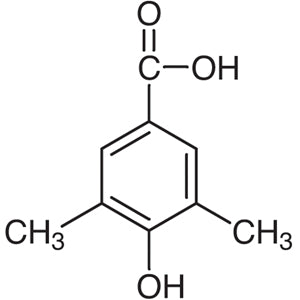
4-Hydroxy-3,5-dimethylbenzoicAcid TCI H0938
Regular price Rp 3.419.850,00Regular price -
2,6-DimethylbenzoicAcid TCI D2260
Regular price From Rp 1.193.850,00Regular price -
2,3-DimethylbenzoicAcid TCI D2221
Regular price From Rp 637.350,00Regular price -
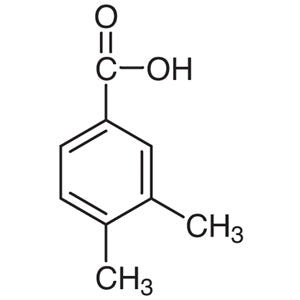
3,4-DimethylbenzoicAcid TCI D1439
Regular price From Rp 955.500,00Regular price -
2,4-DimethylbenzoicAcid TCI D1438
Regular price Rp 1.115.100,00Regular price -
3,5-DimethylbenzoicAcid TCI D0684
Regular price From Rp 2.199.750,00Regular price