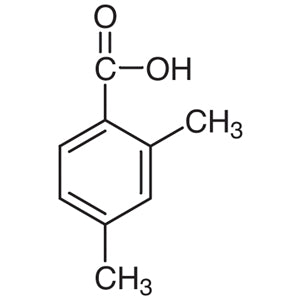
2,4-Dimethylbenzoic Acid is a chemical compound widely used in laboratory settings for various synthetic reactions, particularly in the synthesis of organic compounds. As a fundamental building block in chemistry, it plays a crucial role in the development of more complex molecular structures. Its simple molecular structure makes it a versatile starting material for numerous chemical transformations, including substitution reactions, esterification, and other processes that require carboxylic acid functionality. This compound is essential in both academic and industrial research environments due to its reactivity and stability.
The chemical properties of 2,4-Dimethylbenzoic Acid make it a preferred choice for laboratory use. It is chemically stable and exhibits good solubility in organic solvents, which facilitates its use in a wide range of experimental conditions. Its ability to react with various reagents allows it to be incorporated into multiple synthetic pathways. Additionally, its non-toxic nature and relatively safe handling profile make it suitable for routine laboratory applications, ensuring both efficiency and safety in chemical experimentation.
In Indonesian laboratories, 2,4-Dimethylbenzoic Acid is commonly used in educational and research settings. It is an integral part of chemistry practical courses in higher education institutions and is frequently employed in research projects that require the synthesis of organic compounds. Its availability and reliability make it a go-to material for both teaching and advanced scientific investigations.
Related TCI products
- Organic synthesis applications benefit from its reactivity and role as a building block in creating complex molecules.
- It is ideal for esterification reactions due to its carboxylic acid functionality and solubility in organic solvents.
- Educational institutions use it in practical chemistry courses to teach fundamental synthetic techniques and reaction mechanisms.
- Research laboratories incorporate it into studies involving substitution reactions and functional group modifications.
- It supports the development of new compounds in pharmaceutical and materials science research due to its versatility and stability.
| Brand | TCI |
|---|---|
| CAS number | 611-01-8 |
| Molecular formula | — |
| Purity | — |
| Category | Chemistry > Building Blocks > Non-Heterocyclic Building Blocks |
| Pack sizes | Available in various quantities as per standard laboratory supply |
| Physical form | Solid |
| Storage | Store in a cool, dry place away from direct sunlight |
This compound should be stored in a cool, dry environment to maintain its chemical stability. It is recommended to keep it in a sealed container to prevent moisture absorption and contamination. As it is non-toxic and relatively safe to handle, standard laboratory precautions such as wearing gloves and safety goggles are sufficient. It is compatible with most organic solvents and can be safely used in routine chemical procedures. Proper labeling of storage containers is essential to ensure safe handling and prevent accidental exposure. The compound does not require special refrigeration or inert atmosphere storage under normal conditions.
—
Produk Terkait
-
4-Methoxy-3,5-dimethylbenzoicAcid TCI M2139
Regular price From Rp 452.550,00Regular price -
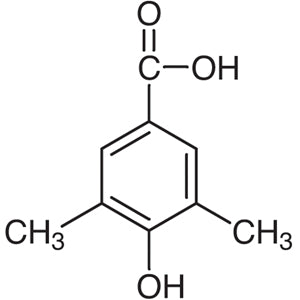
4-Hydroxy-3,5-dimethylbenzoicAcid TCI H0938
Regular price Rp 3.419.850,00Regular price -
2,6-DimethylbenzoicAcid TCI D2260
Regular price From Rp 1.193.850,00Regular price -
2,3-DimethylbenzoicAcid TCI D2221
Regular price From Rp 637.350,00Regular price -
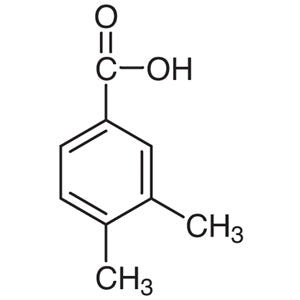
3,4-DimethylbenzoicAcid TCI D1439
Regular price From Rp 955.500,00Regular price -
2,5-DimethylbenzoicAcid TCI D1433
Regular price From Rp 795.900,00Regular price -
3,5-DimethylbenzoicAcid TCI D0684
Regular price From Rp 2.199.750,00Regular price