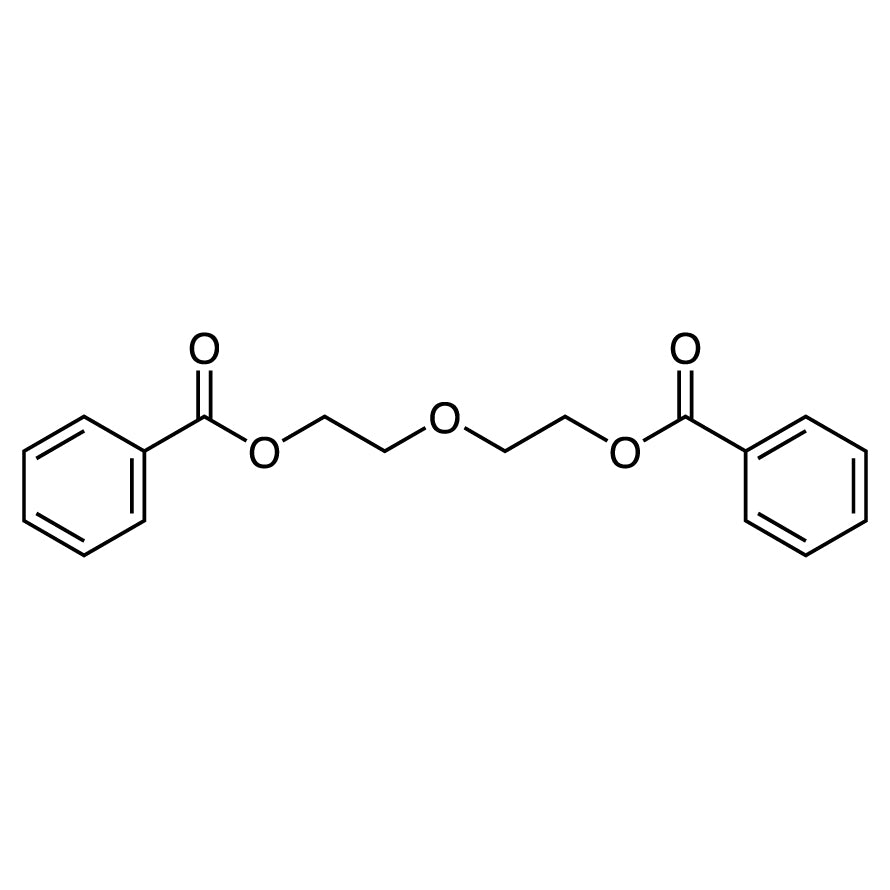
Diethylene Glycol Dibenzoate (DEGDB), with the CAS number 120-55-8, is a chemical compound widely used in laboratory settings related to materials science and polymer research. This compound plays a crucial role in the development and modification of polymer materials, particularly in enhancing mechanical and thermal properties. Its molecular structure consists of a diethylene glycol backbone connected to two benzoate groups, which contribute to its unique chemical behavior. In the laboratory, DEGDB is valued for its stability and controlled reactivity, making it a reliable reagent for various synthetic processes.
One of the key properties that make DEGDB a preferred choice is its chemical neutrality and resistance to degradation under standard laboratory conditions. It does not readily decompose, ensuring consistent performance in experiments. Additionally, DEGDB has a high boiling point, which facilitates heating processes in chemical reactions without compromising its integrity. Its non-toxic nature in normal dosages further enhances its safety profile, allowing for broader application in both academic and industrial research environments.
In Indonesian laboratories, DEGDB is commonly used in polymer research and development, particularly in academic institutions and research centers. Its ability to improve polymer solubility and stability makes it a popular choice for studying material properties. Due to its non-reactive nature and ease of measurement, DEGDB is a favored reagent for material scientists and polymer chemists working on innovative material formulations.
Related TCI products
- TCI D1230 628-68-2 Diethylene Glycol Diacetate
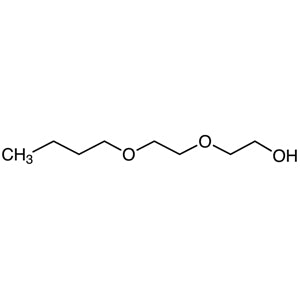
- TCI B0699 112-34-5 Diethylene Glycol Monobutyl Ether
- TCI M0537 111-77-3 Diethylene Glycol Monomethyl Ether (stabilized with BHT)
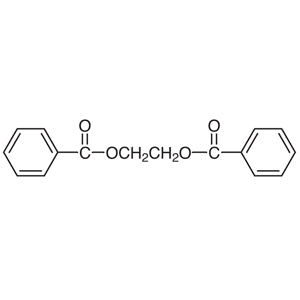
- TCI E0300 94-49-5 Ethylene Glycol Dibenzoate
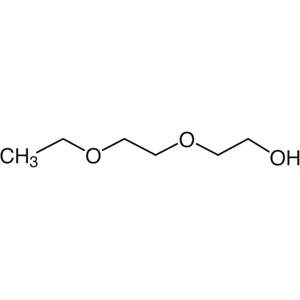
- TCI E0048 111-90-0 Diethylene Glycol Monoethyl Ether
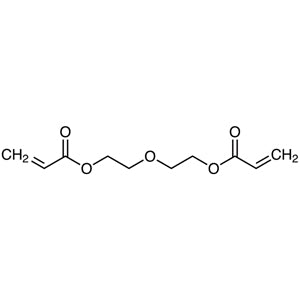
- TCI D5381 4074-88-8 Diethylene Glycol Diacrylate (stabilized with HQ + MEHQ)
- Polymer Additive Research - DEGDB is ideal for modifying polymer properties, enhancing mechanical and thermal stability in synthetic material development.
- Material Stability Testing - Its chemical neutrality and high boiling point make it suitable for experiments requiring consistent performance under varying conditions.
- Solubility Studies - DEGDB’s ability to improve polymer solubility allows for detailed investigations into material compatibility and dispersion behavior.
- Thermal Analysis - The compound’s thermal stability supports experiments involving differential scanning calorimetry and thermogravimetric analysis.
- Industrial Coating Formulation - DEGDB is used in developing coatings with improved durability and resistance to environmental factors.
| Brand | — |
|---|---|
| CAS number | — |
| Molecular formula | — |
| Purity | — |
| Category | — |
| Pack sizes | — |
| Physical form | — |
| Storage | — |
- Brand - TCI
- CAS Number - 120-55-8
- Category - Materials Science > Polymer/Macromolecule Reagents > Polymer Additives
- Pack Sizes - Available in various sizes as per supplier specifications
- Physical Form - Solid, crystalline appearance
- Storage Note - Store in a cool, dry place away from direct sunlight
DEGDB should be stored in a cool, dry environment, away from direct sunlight and sources of heat. It is recommended to use airtight containers to prevent moisture absorption and contamination. As a non-reactive compound, it does not require special handling beyond standard laboratory safety protocols. However, it is advisable to work in a well-ventilated area to ensure proper air circulation. The compound is non-toxic in normal usage conditions, but standard personal protective equipment, such as gloves and safety goggles, should be worn during handling. Proper labeling and storage are essential to maintain the integrity of the material and ensure safe laboratory practices.
—
Produk Terkait
-
DiethyleneGlycolDiacetate TCI D1230
Regular price From Rp 980.700,00Regular price -
DiethyleneGlycolMonobutylEther TCI B0699
Regular price From Rp 477.750,00Regular price -
DiethyleneGlycolMonomethylEther(stabilizedwithBHT) TCI M0537
Regular price From Rp 505.050,00Regular price -
EthyleneGlycolDibenzoate TCI E0300
Regular price Rp 3.658.200,00Regular price -
DiethyleneGlycolMonoethylEther TCI E0048
Regular price From Rp 477.750,00Regular price -
DiethyleneGlycolDiacrylate(stabilizedwithHQ+MEHQ) TCI D5381
Regular price From Rp 848.400,00Regular price -
DiethyleneGlycolMonophenylEther TCI D5139
Regular price From Rp 717.150,00Regular price -
DiethyleneGlycolMono(2-propyn-1-yl)Ether TCI D4580
Regular price Rp 4.506.600,00Regular price